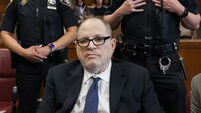
Gunman in live TV shooting ‘felt he was a victim in workplace’
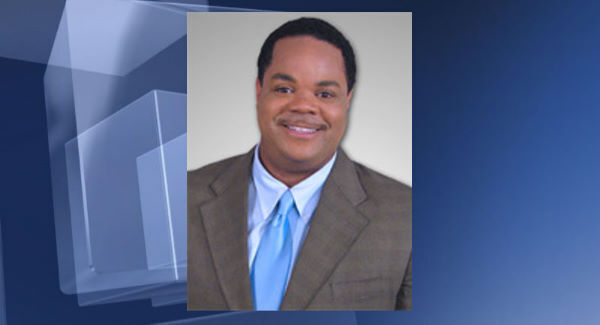
Dan Dennison described Flanagan, who shot and killed a reporter and a cameraman on live television last Wednesday, as a “professional victim” during his time at the station before being fired in 2013.
“He was victimised by everything and everyone and could never quite grasp the fact that he was the common denominator in all of these really sometimes serious interpersonal conflicts that he had with people,” Dennison said.
Flanagan, 41, interpreted efforts by the station to improve his performance and persuade him to work more cooperatively with colleagues as discrimination, said Dennison, who now works as a communications manager at the Hawaii state Department of Land and Natural Resources.
On the day he was fired, Flanagan pressed a wooden cross into Dennison’s hand and said, “You’ll need this,” as two police officers escorted him out. Flanagan’s departure then was filmed by Adam Ward, the cameraman who was killed along with reporter Alison Parker during an on-air interview on Wednesday morning.

Dennison said the station had no idea of his shortcomings before he was hired there and he had received positive recommendations.
Others who ran across Flanagan after he lost his job at WDBJ described a man increasingly irked by slights more often imagined than real.
A former co-worker at a UnitedHealthcare call centre where Flanagan worked until late 2014 said he tried to grab her shoulder and told her never to speak to him again after she offhandedly said he was unusually quiet.
Many of you are asking how we're holding up. We're not OK, to be honest. We are just trying to remember the good times. #WeAreWDBJ7
— WDBJ7 (@WDBJ7) August 28, 2015
The manager of a bar in Roanoke said Flanagan was so incensed when no one thanked him for his business as he left the tavern that he sent a nearly 20-page letter, lambasting employees’ behaviour.
Flanagan described himself in a court document as an aggrieved and unappreciated victim.
On Wednesday, after killing Parker, 24, and Ward, 27, he went online to claim they had wronged him in the past through sexual and racial discrimination.

But a file obtained by the New York Post, that was written by news editor Greg Baldwin read: ‘One (complaint) was something about ‘swinging’ by some place; the other was out in the ‘field’.’
Trevor Fair, a 33-year-old cameraman at WDBJ, told the newspaper the words Parker used are commonplace but that they would routinely anger Flanagan.
‘We would say stuff like, “The reporter’s out in the field.” And he would look at us and say, “What are you saying, cotton fields? That’s racist”.’
“We’d be like, ‘What?’ We all know what that means, but he took it as cotton fields, and therefore we’re all racists.”
Fair added: ‘This guy was a nightmare. ‘Management’s worst nightmare.’
The love shown to us from all around the world has been incredible. Thank you! #WeStandWithWDBJ pic.twitter.com/hMqguGgAv0
— WDBJ7 (@WDBJ7) August 28, 2015
Flanagan accused co-workers of racially harassing him by placing a watermelon around the office.
“The watermelon would appear, then disappear, then appear and disappear, then appear and disappear again only to appear again,” he wrote in a May 2014 letter to presiding Judge Francis Burkart.
“This was not an innocent incident. The watermelon was placed in a strategic location.”
Meanwhile. the husband of the surviving victim in the on-air attack says his wife was shot in the back as she dove away from the gunman.
Vicki Gardner’s husband, Tim Gardner, spoke to ABC News two days after the shooting.
Tim Gardner says the gunman fired at his wife after shooting Parker and Ward. Tim Gardner says the gunman missed his wife twice, and she then dove to the ground, curled up in a ball, and was shot in the back.
He says that after the attack, Vicki Gardner got up and walked to the ambulance after being shot, and she didn’t know the extent of her injuries at that point.
He adds: “But the surgeon told me that a couple of centimetres and she wouldn’t be walking, and a couple of centimetres more and she wouldn’t be alive.”