'Islamic State' claims destruction of 2,000-year-old temple
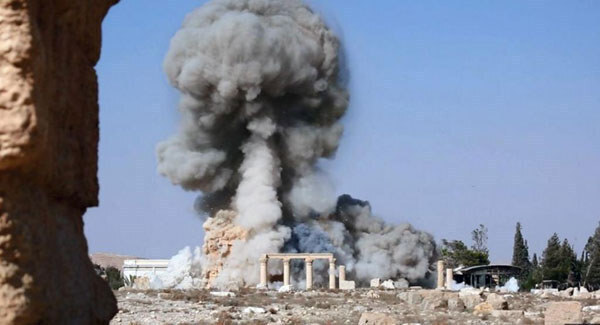
Syria’s antiquities chief Maamoun Abdulkarim said the images did appear to show the destruction of the ancient Baal Shamin temple and correlated with descriptions given by residents of the explosion detonated there on Sunday.
Five photos were distributed on social media showing explosives being carried inside, being planted around the walls of the temple, a large blast and then rubble.
The blast photo shows a huge cloud of grey smoke soaring above the temple, with ancient columns in the foreground.
Activists say the so-called Islamic State is tightly controlling communications in the central desert city.
Unesco has described the temple and Palmyra’s other sites as symbols of Syria’s historical cultural diversity, which it says the so-called Islamic State is seeking to obliterate.
“It stood as it was for more than 1,800 years. It was a beautiful tourist attraction,” antiquities chief Abdulkarim said by telephone.
He said IS had sought to destroy Palmyra’s culture and economy, as well as killing the long-serving keeper of its ancient ruins.
Abdulkarim said last week the group had beheaded Khaled al-Asaad, 82-year-old Syrian archaeologist who had looked after Palmyra’s ruins for four decades, and hung his body in public.
IS has proclaimed a caliphate to rule over all Muslims from territory it holds in Syria and Iraq.
It has a history of carrying out mass killings in places it captures and of demolishing monuments it considers idolatrous.
CONNECT WITH US TODAY



Be the first to know the latest news and updates