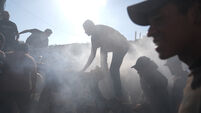
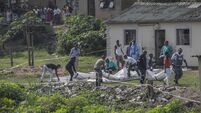
4,000 dead in shattered Nepalese landscape
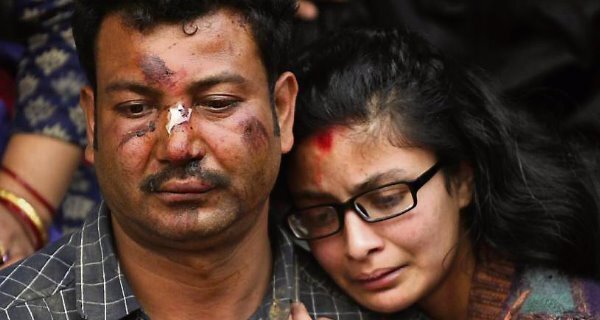
In much of the countryside, it was worse, though how much worse was only beginning to become apparent.
The death toll soared past 4,000, even without a full accounting from vulnerable mountain villages that rescue workers were still struggling to reach days after the disaster.
Udav Prashad Timalsina, the top official for the Gorkha district, where Saturday’s magnitude 7.8 quake was centred, said he was in desperate need of help.
“There are people who are not getting food and shelter,” he said. “I’ve had reports of villages where 70% of the houses have been destroyed.”
Aid group World Vision said its staff members were able to reach Gorkha, but gathering information from the villages remained a challenge. Even when roads are clear, the group said, some remote areas can be three days’ walk from Gorkha’s main disaster centre.
Some roads and trails have been blocked by landslides, the group said.
“In those villages that have been reached, the immediate needs are great including the need for search and rescue, food items, blankets and tarps, and medical treatment.”
Timalsina said 223 people had been confirmed dead in Gorkha district but he presumed “the number would go up because there are thousands who are injured.”
He said his district had not received enough help from the central government, but Jagdish Pokhrel, the clearly exhausted army spokesman, said nearly the entire 100,000-soldier army was involved in rescue operations.
“We have 90% of the army out there working on search and rescue. We are focusing our efforts on that, on saving lives,” said Pokhrel.
Saturday’s magnitude 7.8 earthquake spread horror from Kathmandu to small villages and to the slopes of Mount Everest, triggering an avalanche that buried part of the base camp packed with foreign climbers preparing to make their summit attempts.
Aid is coming from more than a dozen countries and many charities, but Lila Mani Poudyal, the government’s chief secretary and the rescue co-ordinator, said Nepal needed more.
He said the recovery was also being slowed because many workers — water tanker drivers, electricity company employees and labourers needed to clear debris — “are all gone to their families and staying with them, refusing to work”.
“We are appealing for tents, dry goods, blankets, mattresses, and 80 different medicines that the health department is seeking that we desperately need now,” said Poudyal. “We don’t have the helicopters that we need or the expertise to rescue the people trapped.”
As people are pulled from the wreckage, he noted, even more help is needed.
“Now we especially need orthopaedic [doctors], nerve specialists, anaesthetists, surgeons and paramedics,” he said. “We are appealing to foreign governments to send these specialised and smart teams.”
More than 6,300 people were injured in the quake, he said, estimating that tens of thousands of people had been left homeless.
“We have been under severe stress and pressure, and have not been able to reach the people who need help on time,” said Poudyal.
The arrival of international relief flights has caused major backups at Kathmandu’s small airport.
Four Indian air force aircraft delivering aid supplies and rescue personnel were forced to return to New Delhi on because of airport congestion, Indian defence ministry spokesman Sitanshu Kar said. India planned to resend the planes later last night when the situation was expected to have eased.
Nepal police confirmed in a statement that the country’s death toll had surpassed 4,000. That does not include the 18 people killed in the avalanche, which were counted by the mountaineering association. Another 61 people were killed in neighbouring India, and China reported 20 people dead in Tibet.
Well over 1,000 of the victims were in Kathmandu, the capital, where an eerie calm prevailed.
Tens of thousands of families slept outdoors, fearful of aftershocks that have not ceased. Camped in parks, open squares and a golf course, they cuddled children or pets against chilly Himalayan nighttime temperatures.
“It’s overwhelming. It’s too much to think about,” said 55-year-old Bijay Nakarmi, mourning his parents, whose bodies recovered from the rubble of what once was a three-story building.
DISCOVER MORE CONTENT LIKE THIS
CONNECT WITH US TODAY



Be the first to know the latest news and updates