US ‘deeply concerned’over nukes in N Korea
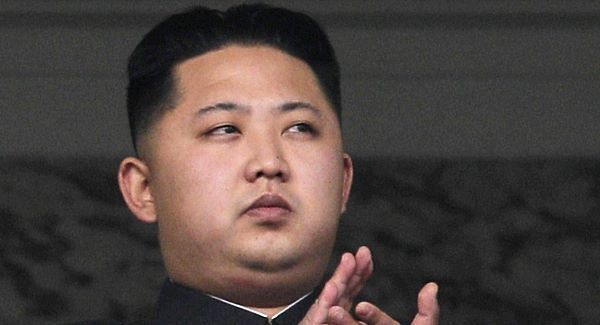
Sung Kim, US Special Representative for North Korea Policy, told a Washington seminar he could not comment on findings presented earlier by experts at the US-Korea Institute at Johns Hopkins University’s School of Advanced International Studies, because he had not seen the report and US government assessments were classified.
“(But) obviously we are deeply concerned about the fact that the North Koreans are continuing to advance their nuclear capabilities; we know that they are continuing to work on their nuclear programme,” Kim said when asked about the report.
Experts at the US-Korea Institute presented three scenarios for North Korea’s future nuclear stockpile, which they estimate amount to 10-16 weapons.
In the first, assuming minimal technological improvements, the stockpile was expected to grow to 20 weapons by 2020. In the second, it could grow to 50 and advances in miniaturisation would allow North Korea to mount warheads on intermediate- and shorter-range ballistic missiles.
The report’s co-author, Joel Wit, described a “worst-case scenario”, which would see an increase to 100 devices and technological advances allowing North Korea to deploy battlefield and tactical weapons if it chose to.
“This is a pretty scary scenario,” Wit said, adding that the more nuclear weapons North Korea had, the more difficult it would be to try to coerce it to rolling back its nuclear programme.
The report said North Korea’s existing missile systems were able to reach most of Northeast Asia, particularly its foes South Korea and Japan, and Pyongyang may also in the future be able to deploy a limited number of Taepodong missiles — a militarised version of a space-launch vehicle — that could reach the United States.
Kim said concern over North Korean advances was driving international diplomatic efforts “to find a credible path to negotiation so that we can stop North Korea’s development of their nuclear capabilities.”
He said Washington was “under no illusions” about North Korea’s willingness to denuclearise voluntarily and would “continue to apply pressure both multilaterally and unilaterally” through sanctions to increase the cost of failing to do so.