Putin accuses enemies of trying to carve up Russia
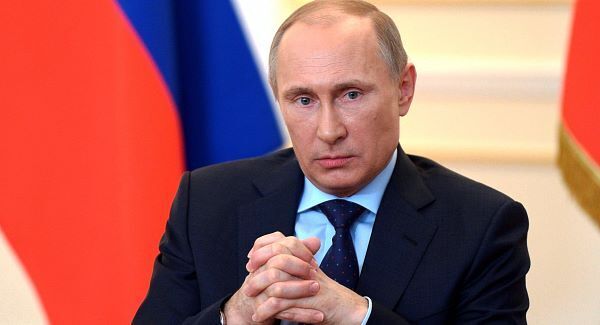
The Kremlin leader trumpeted his annexation of Ukraine’s Crimea peninsula, praised the Russian people for their strength, accused the West of “pure cynicism” in Ukraine and said economic sanctions must drive Russians to develop their own economy.
The rouble fell as he spoke to an ornate hall packed with dignitaries, delivering a speech that showed no sign of turning back from policies that have brought his country to confrontation with the West unseen since the Cold War.
Russia’s “enemies of yesterday” wished on it the same fate as Yugoslavia in the 1990s, he said in the speech, which ran for more than an hour and was interrupted repeatedly by applause.
“There is no doubt they would have loved to see the Yugoslavia scenario of collapse and dismemberment for us – with all the tragic consequences it would have for the peoples of Russia. This has not happened. We did not allow it,” he said.
So determined was the West to destroy Russia, he said, that sanctions would have been imposed even without the crisis in Ukraine.
“I am certain that if all this did not take place... they would come up with another reason to contain Russia’s growing capabilities,” he said. “Whenever anyone thinks Russia has become strong, they resort to this instrument.”
Even when he pledged to keep Russia open to the world, he adopted an aggressive posture: “We will never pursue the path of self-isolation, xenophobia, suspicion and search for enemies. All this is a manifestation of weakness, while we are strong and self-confident.”
The Russian leader is under pressure to show he has an answer for Russia’s worsening economy, with sanctions and the falling price of energy exports sending the rouble into a tailspin, culminating in an acknowledegment this week by the government that the country is headed for recession.
He promised an amnesty for capital repatriated to the country, saying that Russians who chose to bring money back would face no questions over how they earned it.
But his economic remarks were overshadowed by the aggressive posture he adopted at the opening of his address, in which he described Russia as in serious danger, surrounded by enemies who sought its destruction.
He said Crimea, which his troops seized and Russia then annexed after a pro-Russian president was toppled in a popular revolt in Kiev, held sacred meaning for Russians, forever.
Russia was justified in intervening in Ukraine because the West had supported a “coup” in Kiev. The war that has followed in the southeast, in which heavily armed Moscow-backed separatists have seized a region they now call “New Russia”, proved Moscow’s policy was right.