Spain seeks to halt Catalonia referendum
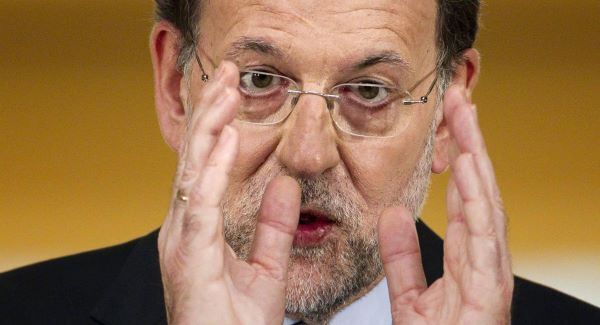
Prime minister Mariano Rajoy said the November 9 referendum called by Catalan regional leader Artur Mas represented “a grave attack on the rights of all Spaniards”, who, under the 1979 Spanish constitution, are the only ones who can vote on issues of sovereignty. He stressed the constitution “was based on the indissoluble unity of the Spanish state” and that while the charter could be amended in the future, right now the government’s priority is to defend it.
He spoke after a special cabinet meeting called to discuss the crisis.
He said the government was challenging both the referendum call and a law passed by the Catalan government that allowed Mas to call the vote.
If the Constitutional Court takes on the appeals, as it is widely expected to, both the law and the referendum will automatically be suspended while the court deliberates, a process that could take months or years.
Unhappy at Spain’s refusal to give it more powers, Catalonia has vowed for months to hold the referendum. The move is the latest secession push in Europe following Scotland’s recent vote to remain part of the UK.
Polls indicate most Catalans favour holding the referendum but are roughly evenly split on independence.
Mas insists that the vote will take place, but at the same time he says he will not do anything illegal.
Catalonia, whose capital is Barcelona, has prepared ballot boxes and begun publicity campaigns to inform the region’s five million voters about the referendum.
Rajoy said it is not too late for the Catalan government to change direction, adding that he remains opened to talks.
“You cannot use the law to prevent people indefinitely from stating their opinion,” Mas said in a television interview on Sunday in anticipation of yesterday’s appeal.
“Voting on November is the best thing for everyone because it will allow us and also the Spanish government to know what the Catalan people’s opinion is.”
Rajoy retorted on Monday that the right to decide on a region’s status belonged to “all of the Spanish people” under the country’s 1978 constitution — the keystone of Spain’s democracy after the death of the dictator Francisco Franco.
“There is nothing and no one, no power nor institution, that can break this principle of sole sovereignty,” Rajoy told reporters after an extraordinary cabinet meeting.
Catalonia is Spain’s economic powerhouse, accounting for about a fifth of the country’s economy. However, like the rest of Spain, it suffered from the 2008 property crash and resulting economic downturn.
Proud of their Catalan language and culture, many of the region’s 7.5m inhabitants feel short-changed by the government in Madrid, which redistributes their taxes.
The independence movement in Catalonia has gathered strength in recent years as Spain’s economic crisis has increased unemployment and hardship in the region and swelled its debts.
Catalonia formally adopted the status of a ‘nation’ in 2006, but the Constitutional Court overruled that claim.
The main opposition Socialist Party is calling for a constitutional reform instead of a vote to answer Catalan demands for greater autonomy.
The Socialists’ leader, Pedro Sanchez, said yesterday that the referendum plan “deeply damages Spanish democracy”.