Bigger iPhones and Pay but watch will come in time
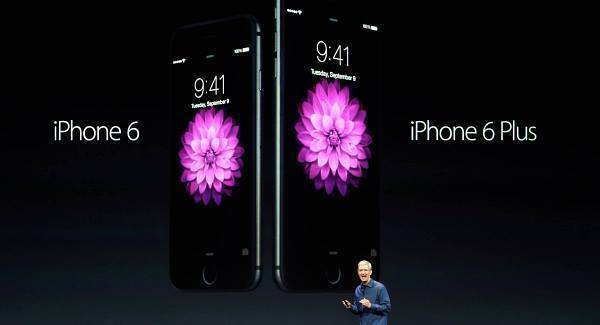
There’s been massive speculation and rumour-based hype leading up to the Apple Special Event yesterday. And finally, after a launch that included an exclusive live performance by U2, after which their new album, Songs of Innocence was made available on iTunes for free, three products were revealed — iPhone 6, iPhone 6 Plus and Apple Watch.
The iPhone 6 and iPhone 6 Plus measure 6.9m and 7.1mm respectively, making them the thinnest iPhones ever made. As expected, the iPhone 6 sports a 4.7-inch display and the Plus has a massive 5.5-inch screen.
Despite both phones being a lot larger than the iPhone 5, Apple have made them easy to use single-handedly, by introducing a new gesture called Reachability. This works by double-tapping the home button which, in turn, slides whatever is on the screen down to the lower half of the screen to make it easier to reach everything on the display.
Both new iPhones also come with a new A8 64-bit chip, using 2 billion transistors — which has a 25% faster CPU and 50% better graphics performance. Although faster, the A8 chip is claimed to be 50% more efficient than previous 5s. This is a key area for those tired of running out of battery on older generation iPhones — but only actual use will tell if it can live up to the claims.
New sensors include a barometer that works in conjunction with the new health app.
The camera too has been given an upgrade in several areas, including True Tone flash, f/2.2 aperture and Focus Pixels, which improve auto focus in the same way that high-end DSLRs do. This also helps to focus faster and is great for macro and landscapes alike. You can now also take 43MP photos with seamless stitching and time-lapse video. Other features include advanced face detection and blink-and-smile detection.
Both new phones feature image stabilisation, but whereas on the iPhone 6, this is done digitally, the Plus has hardware-enabled optical image stabilisation.
Both phones will be available for pre-order on September 12 for a September 19 release and in 115 countries by the end of 2014.
Although not available until early next year, the Apple Watch got the biggest applause from the packed Flint Centre audience. Tim Cook, said: “we’ve working on Apple Watch for a very long time and we’re very excited”. The Apple Watch was never referred to as a smartwatch at any time during the presentation — which was kind of nice. It was also stressed that it was a watch that took into account everything that was essential as a time-keeping device, and was accurate to within milliseconds. You do need an iPhone as a companion device, but it will work with the original iPhone 5 and up.
It is also a comprehensive fitness watch with a truly remarkable interface that is powered by an OS that was developed from the ground up. At the heart of the Apple Watch is a return to the analog days of watches. What Apple call a digital crown is basically the dial that you’d see on an analogue watch used to change the time. The crown allows you to zoom in and out of things like maps. You can also use it to scroll. If you press the digital crown, it works as a home screen button.
The biggest deal is that you can use it to do all these things without obstructing the display.
It was designed to be worn all day — seamlessly combining and functionality, with an amazingly rich design. The Retina display is bright and stunningly clear, and will use sapphire glass, which is second only in toughness to diamond. The back of the Apple Watch has four lens sensors, including a pulse sensor.
It has a unique charging technology that uses a magnet to cling to the back of the watch. Apple say the Apple Watch is expected to be worn all day, but that will mean that you’ll have to charge it every night.
When available next year the Apple Watch will cost $349.
Apple has announced plans to enter the payment market. “Our vision is to replace the wallet and we’re going to start with payments,” said Apple CEO Tim Cook.
He called magnetic strips on credit cards “outdated and vulnerable”, before introducing Apple’s take on the area.
“We love this kind of problem. This is what Apple does best. We’ve created a new payment process and it’s called Apple Pay,” he added.
The new software uses the fingerprint scanner on a phone and native payment apps to allow users to pay for products by touching the iPhone to payment outlets. It uses near-field communication technology, used in existing contactless payments, and the company’s own Passbook app to secure the details.
The Find My iPhone app would be used to track and suspend an account if the device is stolen.
“We are not in the business of collecting your data”, said Apple, confirming that all Apple Pay transactions are not logged by the company.
Major US retailers have already signed up to use Apple Pay in their stores, including Toys R US and Staples. Online, it is also possible to pay within some apps. For now, the technology is just been introduced in the US.


CONNECT WITH US TODAY



Be the first to know the latest news and updates