$100m plan to control Ebola outbreak
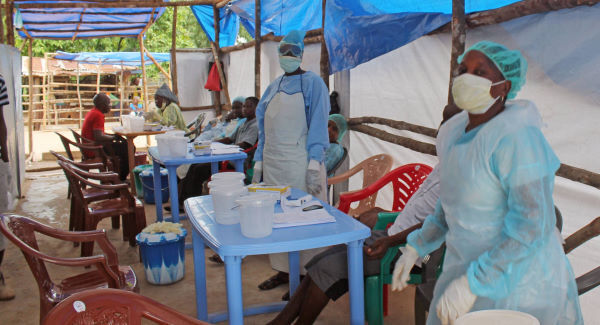
The director-general of the WHO and presidents of West African nations affected by the outbreak will meet today in Guinea to launch a new joint $100m response plan to try to bring it under control.
Director-general Dr Margaret Chan said: “The scale of the Ebola outbreak, and the persistent threat it poses, requires WHO and Guinea, Liberia and Sierra Leone to take the response to a new level, and this will require increased resources, in-country medical expertise, regional preparedness and coordination. The countries have identified what they need, and WHO is reaching out to the international community to drive the response plan forward.”
The Ebola Virus Disease Outbreak Response Plan in West Africa identifies the need for several hundred more personnel to be deployed in affected countries to supplement overstretched treatment facilities.
Hundreds of international aid workers, as well as 120-plus WHO staff, are already supporting national and regional response efforts — but more are urgently required.
A WHO spokesman said: “Of greatest need are clinical doctors and nurses, epidemiologists, social mobilisation experts, logisticians and data managers. The plan also outlines the need to increase preparedness systems in neighbouring nations and strengthen global capacities.” WHO and affected and neighbouring countries will renew efforts to mobilise communities and strengthen communication so people know how to avoid infection and what to do if they fear they may have come into contact with the virus.
In Sierra Leone, President Ernest Bai Koroma vowed to quarantine sick patients at home and have authorities conduct house-to-house searches for others who may have been exposed as the country struggles with families resisting treatment at isolation centres. Some have kept loved ones at home, given the high death rates at clinics where Ebola patients are quarantined.
His announcement came as neighbouring Liberia also ramped up its efforts to slow the virulent disease’s spread, shutting down schools and ordering most public servants to stay home.
The US Peace Corps also was evacuating hundreds of its volunteers in the affected countries. Two Peace Corps workers are in isolation outside the US after having contact with a person who later died of the Ebola virus, the State Department said.
Ebola has been blamed for 729 deaths in four West African countries this year, and has shown no signs of slowing down, particularly in Liberia and Sierra Leone.
Yesterday, the WHO announced 57 new deaths — 27 in Liberia, 20 in Guinea, nine in Sierra Leone and one in Nigeria.
Among the dead was the chief doctor treating Ebola in Sierra Leone, Dr Sheik Humarr Khan.
Ebola cases first emerged in the nation of Guinea back in March, and later spread across the borders to Liberia and Sierra Leone. The outbreak is now the largest recorded in world history.
Ebola has no vaccine and no specific treatment, with a fatality rate of about 60% in this particular outbreak.
But experts say the risk of travellers contracting it is considered low because it requires direct contact with bodily fluids. Ebola can’t be spread like flu through casual contact or breathing in the same air.
Patients are contagious only once the disease has progressed to the point they show symptoms.
“The most important thing is good surveillance of everyone who has been in contact or could have been exposed,” said David Heymann, a professor of infectious disease epidemiology and head of global health security at Britain’s Royal Institute ofInternational Affairs.
The original case is believed by epidemiologists and virus experts to have been a woman who went to a market in Guinea before returning, unwell, to her home village in neighbouring northern Liberia.
The woman’s sister cared for her, and in doing so, contracted the Ebola virus herself before her sibling died of the haemorrhagic fever it causes.
Feeling unwell and fearing a similar fate, the sister wanted to see her husband — an internal migrant worker then employed on the other side of Liberia. She took a communal taxi via Liberia’s capital Monrovia, exposing five other people to the virus who later died. In Monrovia, she switched to a motorcycle, riding pillion with a young man who agreed to take her to where her husband worked and whom health authorities were subsequently desperate to trace.
“It’s an analogous situation to the man in the airplane (who flew into Lagos and died there),” said Derek Gatherer of Britain’s Lancaster University, an expert in viruses who has been tracking the West Africa outbreak closely.