‘Gospel of Jesus’s wife is not a modern forgery’
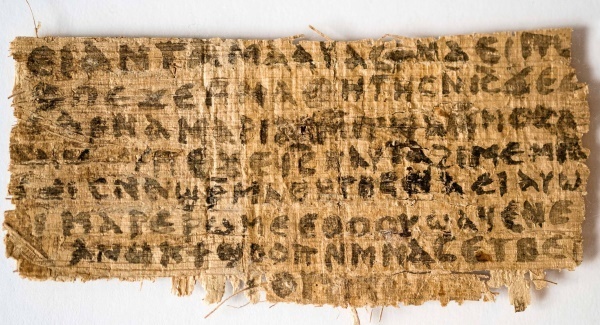
The text, written in Coptic and about the size of a business card, specifically contains the phrase “Jesus said to them, my wife”, according to an article published by the Harvard Theological Review.
Professor of Divinity Karen King says the papyrus probably dates to eighth-century Egypt, based on radiocarbon dating and tests on the ink’s chemical composition. “If it was written in the eighth or even the ninth century, it’s still an ancient document,” she said. “It’s not a modern forgery.”
But, she stressed, the fragment did not prove that the historical Jesus was actually married. Most reliable evidence from early Christianity is silent on Jesus’s marital status. If anything, she said, the papyrus provided insight into early Christianity’s debates over family life.
“Early Christians were extremely interested in whether or not they should marry or be celibate or whether it was OK to have a family or whether one should remain virginal,” Prof King said.
She said the papyrus, which contains about eight partial lines of text, appears to make the case that mothers and wives can be disciples. Jesus references his mother, wife and another female, as his disciples apparently discuss whether a woman (identified as “Mary”) can join their ranks. According to Prof King’s translation, the text then reads “Jesus said to them, “My wife.” That is followed in the next line by “. . . she is able to be my disciple . . .”
Prof King revealed the existence of the papyrus in 2012, calling it the “Gospel of Jesus’ Wife”.
CONNECT WITH US TODAY



Be the first to know the latest news and updates