Hundreds detained as Russia jails protesters
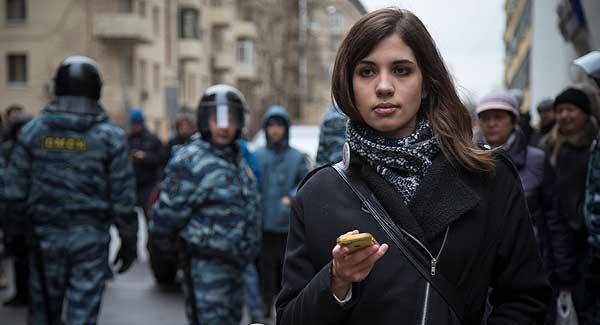
The protesters, who blame police for the violence in central Moscow in 2012, demanded the release of the defendants and shouted “shame” and “Maidan” — a reference to the Kiev square that has been the focus of protests that brought the overthrow of Ukrainian president Viktor Yanukovich.
Among those detained were two members of the punk protest band Pussy Riot, released in December near the end of two-year sentences for their own anti-Putin protest in Moscow’s main cathedral in 2012. Alexei Navalny, who emerged from a wave of protests that year as the top opposition leader, was also held.
Relatives and lawyers of the seven said they believed the upheaval in neighbouring Ukraine, where police were among the dead in a conflict the Kremlin blames on opposition leaders and the West, had prompted the court to impose prison sentences as a signal that such actions would not be tolerated in Russia.
A Russian state TV news show host linked the trial with the events in Ukraine in a broadcast, saying the bloodshed that killed at least 82 people in Kiev last week had started with actions similar to the 2012 anti-Putin protest.
Defence lawyer Dmitry Agranovsky said he would appeal his client Yaroslav Belousov’s two-and-a-half-year prison sentence.
“These sentences are cruel and wrong. They were handed down because of the political situation . . . We hope our appeal will show that they made a mistake and the defendants won’t have to answer for the Maidan.”
An eighth defendant was given a suspended sentence that allows her to avoid jail, but the rulings caused outrage among Kremlin critics who see the prisoners as victims of a clampdown on dissent during Putin’s third term as president.
Activists said more than 230 people were detained by riot police grabbing protesters and dragging them to waiting buses. Police put the figure at more than 100.
The judge last Friday had found the defendants guilty of rioting and attacking police at a protest on May 6, 2012, the day before Putin, in power since 2000, returned to the presidency after a stint as prime minister.
The sentences are likely to draw criticism from the United States and European countries that have expressed concern about the “Bolotnaya” trial — after the square in which they took place — and have accused Russia of restricting the freedom of assembly and expression.

CONNECT WITH US TODAY



Be the first to know the latest news and updates