Final Greenpeace activist freed after Kremlin amnesty
Polish national Tomasz Dziemianczuk, 37, flew out from Saint Petersburg to Warsaw, Greenpeace said in a statement, following 25 other foreign activists who had all left by Saturday following a Kremlin amnesty.
Thirty activists, including four Russians, were detained in September over the protest against oil drilling by Russian energy giant Gazprom, where two campaigners had attempted to scale an oil rig in Arctic waters.
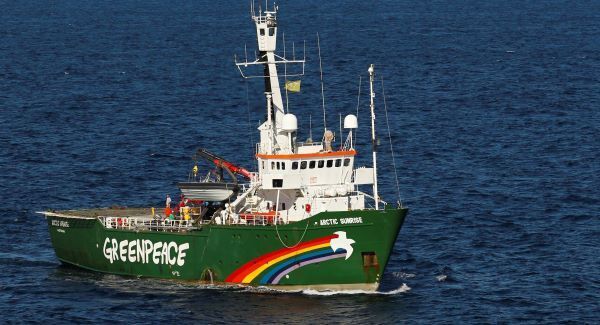
They were initially arrested when their Dutch-flagged Arctic Sunrise ship was seized by the Russian security forces who winched down from a helicopter in a commando-style operation.
The 30 were held in the Arctic Circle city of Murmansk before being transferred to Russia’s second city of Saint Petersburg. They were charged with piracy, although this was later changed to hooliganism.
Courts in Saint Petersburg in November ordered the release of all 30 on bail after more than two months in detention. Their departure from Saint Petersburg was made possible by the Kremlin-backed amnesty, which resulted in the closure of all the criminal cases.
The amnesty came after concerns raised by EU states, including Britain and Germany, over the charges against the so-called Arctic 30.
The Arctic Sunrise ship remains under Russian control in Murmansk and Greenpeace had made clear that it wants its vessel back. The four Russian activists also benefited from the amnesty and are free to travel inside and outside the country.
“I am very happy to be going home, but I don’t feel the same for the ship and its future. I am emotionally connected to both the crew and the ship and for me the case will be over when the ship is back in Amsterdam,” Greenpeace quoted Dziemianczuk as saying before leaving Russia.
“We sailed north to take action against the oil companies lining up to profit from the melting Arctic sea ice and this is far from over.
“This was only a great beginning to our Arctic campaign.”
“No amnesty for the Arctic.”
Greenpeace argues that the Gazprom rig is an environmental catastrophe waiting to happen that risks ruining the pristine Arctic ecology of the southern Barents Sea where the deposit is located.