Asia blamed as third of global food is wasted
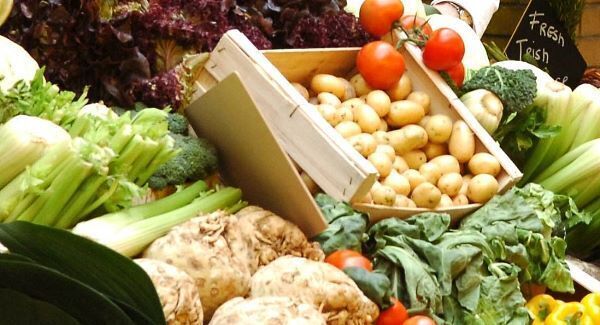
The Rome-based Food and Agriculture Organisation (FAO) said some 1.3bn tonnes of food are wasted every year, with the Asia region including China seen as the worst culprit.
The food agency’s director general, Jose Graziano da Silva, told a press conference, “one third of the food produced today is lost or wasted . . . equivalent to the Gross Domestic Production (GDP) of Switzerland”.
“We simply cannot allow one third of all the food we produce to go to waste or be lost because of inappropriate practices, when 870m people go hungry every day,” he added.
Achim Steiner, head of the United Nation’s Environment Programme (UNEP), described it as “a staggering phenomenon”.
“This is a big wake-up call. We may not even have captured many of the more indirect impacts of food waste . . . and the costs which will be borne by our children and grandchildren,” he told the joint press conference. “It will take less than 37 years to add another two billion people to the global population. How on earth will we feed ourselves in the future?”
Steiner said that eliminating food wastage had “enormous potential” to reduce hunger and called on citizens to take individual action to tackle the issue.
“Each one of us has a role to play. Starting with the ridiculous phenomenon in wealthy countries of not buying crooked vegetables any more,” he said, adding that over-zealous observation of sell-by dates was also leading to huge quantities of food being thrown away.
High-income countries waste during the food consumption phase, while developing countries are losing food during production, the FAO said. Each year, food that is produced but not eaten “guzzles up a volume of water equivalent to the annual flow of Russia’s Volga River and is responsible for adding 3.3bn tonnes of greenhouse gases to the planet’s atmosphere,” it said.
The report fingered Asia, in particular, saying that over 100 kilos (221lb) in vegetables per capita are wasted every year on average in “Industrialised Asia”, a region including China, Japan and South Korea.
It estimated that the region also wastes 80 kilos of cereals — mainly rice — per person, warning that rice cultivation was also high-intensity in carbon and had emerged as “a significant environmental hotspot”.
Wastage of vegetables in Asia occurred “during agricultural production, post-harvest handling and storage, and consumption phases,” the FAO said.
Other key areas identified in the report in terms of waste and environmental impact were the meat industry in North America and Latin America, as well as fruit wastage in Asia, Europe and Latin America.