Australia’s new PM to scrap carbon tax
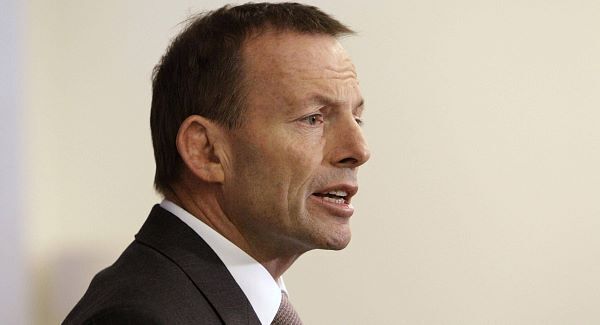
Abbott met with bureaucrats to go over his border security plans and said his first priority would be to repeal the deeply unpopular carbon tax on Australia’s biggest industrial polluters.
His conservative Liberal party-led coalition won a crushing victory in elections on Saturday against the centre-left Labour Party, which had ruled for six years, including during the turbulent global financial crisis.
Labour was ultimately doomed by years of party instability and bickering, and by its decision to renege on an election promise by implementing the carbon tax, which many Australians blame for steep increases in their power bills.
The Australian Electoral Commission’s latest count yesterday had the coalition likely to win a clear majority of 86 seats in the 150-seat House of Representatives. Labor appeared likely to secure 57.
Abbott, 55, began his first day as prime minister-elect with an early-morning bicycle ride from his Sydney home with friends.
“It was a very big night, but this is just the start of another normal day and there’s going to be a fair bit of solid work this morning,” he told reporters. “There’s a lot of work that will be done later today.”
In an open letter yesterday, Abbott said he would immediately implement his border protection plan, under which the Australian navy would turn back Indonesian fishing boats carrying asylum seekers into Australian waters.
The coalition has also proposed that the government buy old fishing boats from Indonesian fishermen to prevent them from falling into the hands of people smugglers.
Abbott took a dig at the outgoing Labour government’s notorious infighting.
He wrote: “We will be a careful, collegial, consultative, straightforward government that says what it means and does what it says and that does not waste your money.”
Abbott also held briefings with defence and intelligence officials to get an update on the Syrian civil war.
The new prime minister, whose party is often criticised for placing too little value on foreign relations, was criticised last week for describing the Syrian crisis in an interview as “baddies versus baddies”.
Outgoing prime minister Kevin Rudd dubbed the comments “the most simplistic analysis I’ve ever heard”.
The coalition has made clear that it intends to make steep cuts to spending in a bid to return the Australian budget to a surplus after five consecutive deficits delivered by Labour since the global economic crisis.
Last week, the party announced that if elected it would plan to save Aus $4.5bn (£2.6bn) over the next four years by reducing increases in its aid spending to the Australian inflation rate, which is currently less than 3%. The money saved will be reallocated to fund road projects.
The outgoing Labor government said in May that Australia’s long-standing pledge to increase its foreign aid spending to 0.5% of gross national income by 2015-16 would be postponed by two years.
The coalition said last week it shared Labor’s commitment to reach the 0.5% target “over time, but cannot commit to a date given the current state of the federal budget”.
WikiLeaks founder Julian Assange’s bid for a Senate seat in Victoria state appeared doomed yesterday.
His Senate running mate for the newly founded WikiLeaks Party, Binoy Kampmark, said the secrets spiller was unlikely to win a seat after attracting just 1% of the votes in Victoria.
[media=youtube]http://youtu.be/lKs-udTErXw[/media