Fort Hood court rejects lawyer’s appeal in Hasan case
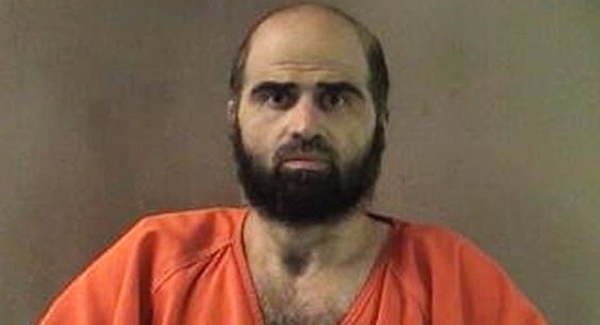
The soldier on trial for the 2009 shooting rampage at Fort Hood was allowed to continue representing himself after the judge barred his standby attorneys from taking over, despite their claims the Army psychiatrist was trying to secure his own death sentence.

Fort Hood court rejects lawyer’s appeal in Hasan case

The military lawyers ordered to help Maj Nidal Hasan represent himself had asked to either be removed from the case or be allowed to take over. They said they believed Hasan was trying to convince jurors to convict him and sentence him to death for the attack that killed 13 people on the Texas military base.

The judge, Col Tara Osborn, denied that request, saying it was clear the lawyers simply disagreed with Hasan’s defence strategy. But the attorneys were adamant and said they would appeal her ruling to a higher court.

“We believe your order is causing us to violate our rules of professional conduct,” Lt Col Kris Poppe, Hasan’s lead standby defence attorney, told the judge.

The exchange prompted Osborn to briefly recess the trial. But the hearing later resumed and jurors were allowed in after the standby attorneys were told to continue in their current duties. It wasn’t immediately clear whether the attorneys had filed an appeal.

Poppe had told the judge that if Hasan were allowed to continue on his own, he and Hasan’s other standby attorneys wanted their roles minimised so Hasan couldn’t ask them for help with a strategy they opposed. They said they couldn’t watch Hasan fulfil a death wish.

“It becomes clear his goal is to remove impediments or obstacles to the death penalty and is working toward a death penalty,” Poppe told the judge. That strategy, he argued, “is repugnant to defence counsel and contrary to our professional obligations.”

Hasan gave a brief opening statement during the trial’s first day on Tuesday that included claiming responsibility for the attack that killed 13 people at the Texas military post. He posed no questions to most witnesses and rarely spoke.

On one of the few times he did talk, it was to get on the record that the alleged murder weapon was his — even though no one had asked.

Sometimes he took notes, but he mostly looked forward impassively.

The prosecutor, Col Michael Mulligan, defended Hasan’s strategy, saying it would have been “absurd” for Hasan to contest the facts of what happened the day of the attack in November 2009.

Mulligan said Hasan appeared to be taking on a “tried and true” defence strategy of not contesting the facts, but rather offering an alternative reason about why they occurred.

“I’m really perplexed as to how it’s caused such a moral dilemma,” Mulligan told the judge.

x

More in this section

Cookie Policy Privacy Policy Brand Safety FAQ Help Contact Us Terms and Conditions

© Examiner Echo Group Limited










