First talking humanoid robot heads for space
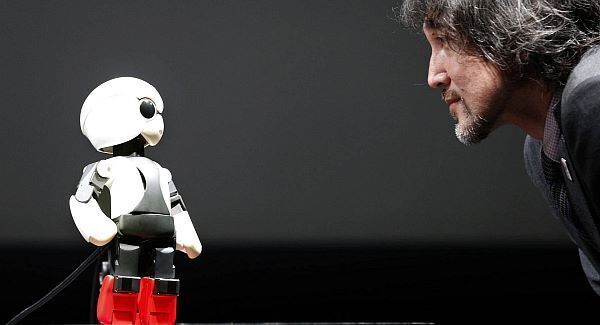
Kirobo — derived from the Japanese words for “hope” and “robot” — was among five tonnes of supplies and machinery on a rocket launched for the International Space Station from Tanegashima, southwestern Japan, the Japan Aerospace Exploration Agency, or JAXA, said.
The child-like robot was designed to be a companion for astronaut Koichi Wakata, and will communicate with another robot on Earth, according to developers.
Robot designer Tomotaka Takahashi, of the University of Tokyo, advertiser Dentsu and automaker Toyota Motors worked on the robot.
The challenge was making sure it could move and talk where there was no gravity.
Ahead of the launch, the 34-centimeter (13-inch) tall Kirobo told reporters, “one small step for me, a giant leap for robots.”
Japan boasts the most sophisticated robotics in the world, but because of its “manga” culture, it tends to favour cute robots with human-like characteristics with emotional appeal, a use of technology that has at times drawn criticism for being not productive.
But Takahashi, the designer, said sending a robot into space could help write a new chapter in the history of communication.
“I wish for this robot to function as a mediator between person and machine, or person and Internet and sometimes even between people,” he said.
Jaxa, Japan’s equivalent of Nasa, said the rocket launch was successful, and the separation of a cargo vehicle, carrying the robot to the space station, was confirmed about 15 minutes after liftoff. Kirobo, a knee-high robot with red boots and a black and white body, is equipped with voice- and facial-recognition technology.
At a recent demonstration, Kirobo said it “hoped to create a future where humans and robots live together and get along”.
Koichi Wakata is expected to take off for the space station with six other crew members in November.
Wakata is due to take command of the complex, a $100bn project by 15 nations, next March. Kirobo will stay in space until late 2014.