Suspicions linger after butler’s guilty verdict
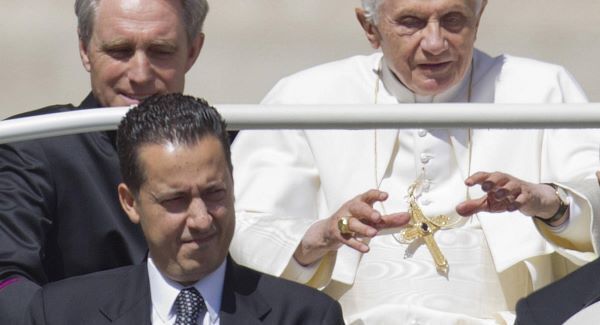
Despite the Vatican’s desire to quickly turn the page on one of the worst scandals in its recent history, the trial of Paolo Gabriele for leaking sensitive documents has left many questions unanswered, leading some to call it a whitewash.
Gabriele’s trial was concluded at lightening speed, ending on Saturday after only four hearings and it was an open secret that proceedings would end before a three-week gathering of bishops from around the world began yesterday.
“The Vatican whitewashes it all,” headlined Il Fatto Quotidiano, one of the newspapers that published material leaked by Gabriele, who had privileged access to the papal apartments.
While other commentators were less categorical about the possibility of orchestrated cover-up, most agreed the trial left many unsolved mysteries and lingering contradictions.
Gabriele was sentenced to 18 months in detention, to be served under house arrest in anticipation of a papal pardon.
The documents he leaked constituted one of the biggest crises of Pope Benedict’s papacy, embarrassing the Vatican as it struggled to overcome a string of child sex abuse scandals involving clerics and mismanagement at its bank.
Gabriele told investigators he had acted because he saw “evil and corruption everywhere in the Church” and that information was being hidden from the pope.
But Italy’s leading newspaper, Corriere della Sera, listed 10 questions left unanswered by the trial. Chief among them was whether a simple man like Gabriele, who said he acted out of his “visceral” love for the pope and the Church, had acted alone.
In pre-trial testimony, Gabriele acknowledged he had come under the influence of several Vatican officials, including a confessor to whom he gave copies of sensitive documents. The confessor later destroyed them.
Gabriele told the court that from his position he was able to see how easy it was for a man with the pope’s power to be manipulated by others but said those who influenced him could not be called “accomplices”.
Some commentators faulted the judge for not pursuing other lines of questioning regarding who “influenced” the butler. One Italian television report asked why the priest confessor who received copies of documents from Gabriele and later destroyed them was not accused of aiding and abetting.
The priest’s identity had been encrypted until the last day of the trial, when it was only revealed in the prosecution’s summing up.
The priest was not called to testify.
The court heard how Gabriele photocopied sensitive documents under the nose of his immediate superiors.
He then hid more than 1,000 copies and original documents, including some the pope had marked “to be destroyed”, among many thousands of other papers and old newspaper clippings in a huge wardrobe in the family apartment inside the Vatican walls.
Gabriele’s privileged access was such that he was one of fewer than 10 people who had a key to an elevator leading directly to the pope’s apartments.
Newspaper commentators asked if Gabriele had cut a deal with the Vatican, agreeing not to divulge much of what he knew in exchange for a papal pardon and a low-profile job in the city-state.
One commentator wrote that the Vatican wanted to keep Gabriele on a short leash because it was horrified at the prospect of him leaving the Vatican and writing his memoirs.