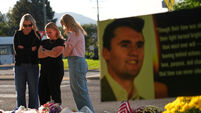
Jackson’s mother: ‘I feel better now’

But the circumstances of Michael Jackson’s death at the age of 50 were as bizarre as any chapter in the superstar’s sensational life story.
Jackson was found not breathing in his own bed in his rented mansion after being dosed intravenously with propofol, a drug normally administered in hospitals during surgery.
The coroner ruled the case a homicide and the blame would fall to the last person who had seen Jackson alive — Dr Conrad Murray, who had been hired to care for the singer as comeback concerts neared.
Craving sleep, Jackson had searched for a doctor who would give him the intravenous anaesthetic Jackson called his “milk” and believed to be his salvation. Other medical professionals turned him down, according to trial testimony.
Murray gave up his practices in Houston and Las Vegas and agreed to travel with Jackson and work as his personal physician.
For six weeks, as Jackson undertook strenuous rehearsals, Murray infused him with propofol every night, the doctor told police. He later tried to wean Jackson from the drug because he feared the singer was becoming addicted.
Jackson planned to pay Murray $150,000 a month for an extended tour in Europe. In the end, the doctor was never paid a penny, because Jackson died before signing the contract.
During the last 24 hours of his life, Jackson sang and danced at rehearsal, revelling in the adulation of fans..
Testimony showed Murray gave Jackson intravenous doses that night of the sedatives lorazepam and midazolam. Jackson also took a Valium pill. But nothing seemed to bring sleep.
Finally, Murray told police, he gave the singer a small dose of propofol — 25mg — that seemed to put him to sleep. The doctor said he felt it was safe to leave his patient’s bedside for a few minutes, but Jackson was not breathing when he returned. Witnesses said he was most likely dead at that point.
What happened next was disputed at the trial. Security and household staff say Murray was panicked, never calling 911 but trying to give Jackson CPR on his bed instead of the floor.
A guard said Murray was concerned with packing up and hiding medicine bottles and IV equipment before telling him to call 911. Prosecutors said Murray was distracted while Jackson was sedated, citing Murray’s mobile phone records to show he made numerous calls.
Authorities never accused Murray of intending to kill the star, and it took eight months for them to file the involuntary manslaughter charge. It was the lowest possible felony charge involving a homicide.
Experts said using propofol at home without lifesaving equipment on hand was an egregious deviation from that standard. They called it gross negligence, the legal basis for an involuntary manslaughter charge.
Defence countered with its own expert who suggested Jackson gave himself the fatal dose.
In closing, the prosecutor said the mystery of what happened behind the doors of Jackson’s bedroom that fatal day would probably never be solved.
* FOLLOWING Dr Conrad Murray’s conviction for the involuntary manslaughter of Michael Jackson, he could face a sentence ranging from probation to four years in prison.
* Superior Court Judge Michael Pastor will have complete discretion to decide the sentence. He will receive a probation department report on Murray recommending a sentence. Both prosecution and defence lawyers will also file recommendations. But the decision is his and his alone.
* The judge can consider that Murray is a defendant with no prior criminal record, which might mitigate in favour of probation.
* Because of AB109, a recent California prison realignment bill, Murray probably will not go to state prison. If given a prison sentence, he will most likely serve it in the county jail because of prison overcrowding. There has been speculation that he will be allowed to serve a term of house arrest.
* The penal code calls for a convicted defendant to be sentenced in 20 days. Judge Michael Pastor adjourned the case for sentencing. Dr Conrad Murray will return to court on November 29 to hear his sentence.

CONNECT WITH US TODAY



Be the first to know the latest news and updates