Negotiators urge ETA to renounce violence
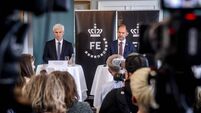
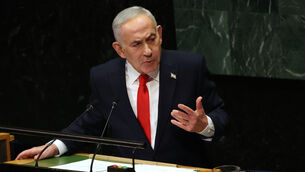
“We call upon ETA to make a public declaration of the definitive cessation of all armed action,” Ahern said after a one-day conference, which did not include the Spanish government or the outlawed ETA.
“If such a declaration is made, we urge the governments of Spain and France to welcome it,” Ahern said after the talks in the northern Basque city of San Sebastian.
Negotiators pressed Spain and France to greet such a move by starting talks to deal exclusively with the consequences of the conflict, which has lasted more than four decades and claimed 829 lives.
Former UN secretary general Kofi Annan, Sinn Féin party president Gerry Adams and WHO chief Gro Harlem Bruntland also took part in the talks.
ETA has reportedly taken a decision to renounce violence and should announce it this week, a Basque party official said.
If confirmed, and accepted by Spain, it would mark a historic end to ETA’s battle for an independent Basque homeland in northern Spain and south western France.
ETA took a significant step by declaring a unilateral ceasefire in January this year, but the Spanish government is demanding that the outlawed group make it definitive by surrendering its arms and disbanding.
“ETA has to announce that the current ceasefire has become definitive and irreversible,” an official of the Basque nationalist party PNV said.
“The final decision has been taken,” said the official at the San Sebastian conference. “It must say so this week,” the official said.
The conference “is the stage that takes a step to that final decision”, an official of the Basque nationalist party PNV said, adding however that even if ETA agrees to lay down its weapons it will not disband.
ETA, born during the dictatorship of general Francisco Franco, has been edging towards a definitive end for some time, hastened by Basque secessionists who urge that the cause be defended with ballots, not bombs and bullets.
The armed group has launched no attack on Spanish soil since August 2009.
The conference is being held ahead of November 20 elections widely expected to turf the ruling Socialists from power and install the conservative Popular Party.
The Socialist candidate for prime minister, Alfredo Perez Rubalcaba, took a tough stance against ETA when he was interior minister 2006-2011 and it is unclear if its demise would deliver any political benefits.
More than five years ago, ETA and the Spanish government seemed to be making progress towards an agreement.
ETA had declared a “permanent ceasefire” in March 2006 for talks with the government.
But, nine months later, ETA militants set off a bomb in the Madrid-Barajas airport car park, killing two men and setting in stone a Spanish policy of refusing further negotiations.