Europe’s century-old battle to secure its world standing continues

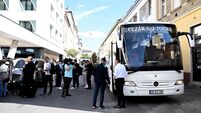
HOTEL POLONIA is a depressing, Soviet-era hotel of cell-like rooms, high ceilings, camp-like beds and a security guard inside the front door. A short distance away is the Monopole, an elegant building despite its ground floor being leased to overpriced international clothes chains.

Europe’s century-old battle to secure its world standing continues

Journalists unable to find a bed in the city of Wroclaw in the south west of Poland paid four times the normal rate for a room with shared bathroom in the Polonia. EU finance ministers, the central bankers, the head of the ECB and the US Treasury were put up amid tight security in the Monopole.

Few, if any, knew of the connection between the two establishments. In the heady years before World War 1, when Wroclaw’s — then Breslau — elite were wealthy from the coal mines under their land, both hotels were owned by the same family.

A German colleague, sitting between tiny bronze statues of leprechaun-like people dotted all over the city, explained that his grand uncle died fighting in the Great War and the family, unable to run the hotels, sold them and put the vast sum of money into the bank. The depression, that eventually led to the Second World War, reduced the money and his family’s fortunes to nothing.

Wroclaw, which will be European Capital of Culture in 2016, is a Polish gem. Its beautiful squares are full of wonderful old buildings reflecting the different peoples and their empires who inhabited it over the last thousand years. Unlike many of Poland’s cities, it has not been reconstructed from photographs and paintings as most of it survived the ravishes of war.

The German population, however, did not. Just over a 100 years ago fewer than 1% of its 422,000 people could speak Polish and the majority were Protestant. After the First World War, that dropped to fewer than a half a percent.

As Breslau, it was a Nazi stronghold with 44% support for the party in the 1932 election that helped Hitler to power. Persecutions, including for speaking Polish, began. This corner of Silesia was relatively sheltered from the war and attracted refugees from other German cities while up to 60,000 Warsaw Poles were exiled here. It was besieged by the Soviet Red Army in February 1945 and the Germans surrendered just as the war ended three months later.

Russia insisted it become part of Poland at the Potsdam conference. The German population fled or were expelled into Allied-held Germany and were replaced by a massive forced movement of peoples from other parts of Poland and Ukraine, leaving just a tiny German minority.

EU finance ministers met this weekend in the Centennial Hall, a masterpiece of architecture and now a UNESCO world heritage site built around 1910 to commemorate the German victory over Napoleon.

Wroclaw was a fitting place to hold this informal finance ministers’ meeting at a crossroads for Europe’s place in the world. Its method of maintaining a list of deaths and birth — devised 300 years ago — is the foundation of modern actuarial science. It is Poland’s financial services centre and headquarters of the country’s third largest bank, Bank Zachodni WBK — up to recently owned by Allied Irish Banks who were forced to sell it off for €3.1 billion last year in an effort to rescue their Irish core.

The battles during the meeting were a continuation of the usual ones between the EU’s member states — those who find themselves on the right side of the recession blaming the others for their own fate. They still haven’t figured out that this is no time for in-fighting. This is a battle for Europe’s place in a globalised and very unsympathetic world.

More in this section

Cookie Policy Privacy Policy Brand Safety FAQ Help Contact Us Terms and Conditions

© Examiner Echo Group Limited