Ivory Coast bodies find overshadows Ouattara campaign
Ouattara’s rival, Laurent Gbagbo, meanwhile was left isolated behind a military cordon in the bunker where he has sought refuge after a concerted assault by Ouattara’s troops earlier this week.
Ouattara appears for now to have decided to isolate Gbagbo in his Abidjan residence, rather than press ahead with attempts to drive him out by military force, and concentrate instead on efforts to restore normal life after weeks of fighting.
But Ouattara’s ability to unify the West African state may be undermined by reports of atrocities since his forces — a collection of former rebels from the north — swept south into Abidjan, the commercial capital, more than a week ago.
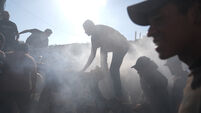
The United Nations human rights office said it found 115 corpses in the west in the previous 24 hours, adding to the 800 dead reported by aid groups last week.
Ouattara said his soldiers had blockaded Gbagbo in the presidential residence — an ironic twist after Ouattara suffered months in a hotel under siege by Gbagbo’s troops following last November’s disputed election.
Ouattara said he would seek to restore security and basic services and would also pursue investigations into reported serious abuses by both his and Gbagbo’s troops since fighting began.
Ouattara won the November presidential poll by 8%, according to UN certified results, but Gbagbo rejected the outcome citing fraud and accused the UN of meddling in Ivorian affairs. The poll was meant to draw a line under Ivory Coast’s 2002-3 civil war, but the dispute over results rekindled it, turning Abidjan — once known as the Paris of West Africa — once again into a war zone.
“I was born here, but I am leaving and I am never coming back,” said Imad Zarour, 40, who was waiting to be evacuated at a French military base. “Even if there’s peace, even if they give me a billion dollars, I will never come back to this country. I hate it.”