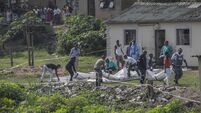
1,000 staff involved in clean-up operation
The well is leaking crude at a rate of 12,000 to 19,000 barrels a day despite a number of attempts by BP to cap it, polluting wildlife refuges in Louisiana, barrier islands in Mississippi and Alabama and some of Florida’s famous beaches.
While officials in a command centre in BP’s US headquarters in Houston work on halting the subsea flow of oil, an even bigger team near Houma, Louisiana, deals with the spill on the water’s surface and the shoreline cleanup operations for Louisiana, the state hardest hit by the spill.
Other BP command centres in Mississippi, Alabama and Florida manage the shoreline response in those states.
Up to 1,000 people, including military personnel, BP officials and scientists, work at the centre in Houma in what is normally a BP training centre for offshore engineers. Operations are conducted in daylight.
Every hotel room in Houma and the surrounding area has been booked for an indefinite period to accommodate the workers.
A free dry-cleaning service has been added, while the building’s kitchen – which was designed to cook breakfast and lunch for 50 to 75 people – has been beefed up to turn out free meals 24 hours a day.
Some personnel work 14 days on, 14 days off, but others have much shorter breaks. Utsler has not had a day off since he flew down from Alaska 38 days ago.
Last week, BP placed a containment cap on the well in an attempt to capture the flowing oil at source and bring it to ships on the surface. But the company still faces public anger and mounting political pressure over its efforts.
The Houma command centre’s first priority is to keep the oil slick, which it refers to as “the blob”, off the shore by skimming, burning or capturing it with absorbent pads.
When it hits land, or affects wildlife, the relevant units kick into gear. The relative frequency of spills around US coastlines means the response effort has been able to draw from a rich seam of experience.
“I’ve worked on 50 to 60 oil spills since 1996, mostly in California,” said Michael Ziccardi, associate professor of clinical wildlife health at the University of California Davis.
Houston-based Rhonda Murgatroyd, a specialist in treating oiled birds, said: “I spend a lot of my time in Louisiana and Texas ... but on a much smaller scale.”
When it comes to cleaning up the shore itself, decades of oil spills have taught some counter-intuitive lessons, namely that doing nothing is sometimes the best thing – especially in marshlands – as cleanup efforts can do more damage than the oil itself.
In sensitive marshes on the Louisiana coast, oil suffocates grasses and traps pelicans. Blobs of tar the size of dinner plates dot the white sands of Alabama and the Florida Panhandle. Little seems amiss in Mississippi except for a lack of tourists.

CONNECT WITH US TODAY



Be the first to know the latest news and updates