Labour holds out olive branch on voting reform
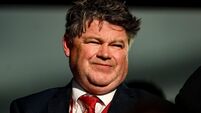
Johnson went further than any senior Labour figure in suggesting they would be ready to go beyond existing party policy and open up a debate on proportional representation for Westminster elections – a key Lib Dem demand.
His comments came as Lib Dem leader Nick Clegg warned that he would not be prepared to prop up Gordon Brown in office if Labour falls to third place in the popular vote in polling day on May 6.
Emboldened by the surge in his support since the first televised leaders’ debate, Clegg said that the other parties would have to come to terms with the Lib Dems if the election failed to produce an outright victor.
“It’s not about me playing ‘eeny meeny miney mo’ with the other parties. They can’t avoid our demands,” he said in a live webchat with Saga magazine. “Other parties will not be able to avoid working with us.”
Johnson, a long-standing supporter of electoral reform, suggested Labour would have to go beyond its commitment to a referendum on the more limited alternative vote system (AV) and consider some form of proportional representation.
The home secretary – who has been touted as a possible successor to Brown if Labour loses – said his own preference was the hybrid “AV-plus” system first proposed by the late Roy Jenkins in 1998.
He denied that he was “waving a flag” to the Lib Dems to signal that – unlike Brown – he would be prepared to do a deal on PR, but he made clear that the issue would have to be addressed.
“The one thing that is going to be absolutely clear as we come out of this election is there’ll be a very strong focus on our electoral system,” he told the BBC1 Politics Show.
“This quite definitely is not Alan Johnson waving a flag for anyone. This is me saying after the election there will be a debate on proportional representation on the electoral system.
“It is empowering the voters that matters. It is a system that is democratic rather than politicians being able to say it gives us strong governance.”
Earlier, Clegg said that whatever the outcome of the election, the issue of voting reform was now “unavoidable”.
He made clear he would not support Brown in government if Labour fell to third in the popular vote, even if – as was possible under Britain’s “potty” electoral system – it was still the largest party in the new House of Commons.
After acknowledging that he needed to “up the tempo” of his campaigning, Brown used a speech to activists in west London to urge them to “fight and fight and fight” again for a Labour victory on May 6.
Meanwhile, Tory leader David Cameron, campaigning in Stockton-on-Tees, dismissed Clegg’s assertion that he would not work with Labour if they came third, saying that a vote for the Lib Dems could still let Brown back in.
“What’s he going to do if they come second? There would be a real danger you would be stuck with Gordon Brown for another five years,” he said.
Meanwhile, the latest opinion poll shows Britain is still heading for a hung parliament, with Labour trailing in third place in the popular vote
The YouGov daily tracker poll for The Sun newspaper showed the Tories unchanged on 34% – four points ahead of the Lib Dems who were up one on 30%, while Labour were down one on 28%.
CONNECT WITH US TODAY



Be the first to know the latest news and updates