Allies blast Baghdad
With US forces firing cruise missiles against Republican Guard strongholds, red and white tracers streaked across the sky and the flash of explosions lighted up the night sky. Soon afterward, a building in President Saddam Hussein’s main presidential compound went up in flames, with a huge plume of black smoke streaking skyward.
At 10.15pm (0710 GMT) Baghdad’s air raid sirens sounded again, indicating that fresh raids were under way. Surprisingly, there was no black-out in the Iraqi capital with street and building lighting remaining switched on.
The vast presidential compound on the west bank of the Tigris is the official seat of power in Iraq but is rarely used by Saddam. The grounds are, however, home to government departments, and reports circulating in Baghdad last night suggested that the 10 storey building on fire belonged to Deputy Prime Minister Tariq Aziz.
CNN reported that a building belonging to the Ministry of Planning was hit, and that three distinct locations in the centre of Baghdad were smoking after apparently being bombed.
Meanwhile, F-14 and F-18 jets took off from the USS Theodore Roosevelt in the eastern Mediterranean, armed with missiles and bombs.
The anti-aircraft fire was reminiscent of, but less intense than, what was seen in the skies over Baghdad during the 1991 Gulf War. Baghdad had last been bombed in December 1998 when US missiles hit military targets to punish Iraq for blocking UN weapons inspectors.
One person was killed, Iraqi officials said, and nine others were in serious but stable condition with shrapnel injuries at Baghdad’s Al-Yarmouk Hospital, Dr. Jamal Abed Hassan said. They included six members of one family that was having breakfast when their town 20 miles west of Baghdad was hit, the doctor said.
“Bush, Bush, listen carefully. We all love Saddam Hussein,” one family member, Hamad Abdullah, said as she recovered from injuries in both legs and recited a chant from government-organised protests.
Al-Kindi Hospital in the working class Al-Nahda district treated five people for wounds, including Iraqi TV journalist Anmar Waheed and his 36-year-old sister, who were hurt as they tried to reach a shelter, said Dr Osama Saleh al-Dilimi.
State radio Baghdad continued to broadcast normally despite the raids and the city’s lights continued to function. Telephone lines also appeared to be intact.
The radio broadcast patriotic songs, interrupted only for appeals to Iraqis to fight the invaders. “Strike with a hand of iron, for God is on your side,” exhorted the announcer. “Turn Iraqi territory into a grave for the greedy invaders.”
After the early air strikes, state-run television ran a tape of a subdued Saddam accusing the United States of a “shameful crime” and urging his people to “draw your sword” against the invaders.
“We will resist the invaders, and God willing, we will force them to reach the limits where they will lose their patience and thus lose the illusions they have entertained,” the Iraqi president, in full military uniform, said in an address peppered with citations from the Koran.
Al-Shabab television, owned by Saddam’s son Odai, reported that the Iraqi leader met Thursday with his top aides to ”review military and other measures to resist the aggression.” It said those attending the meeting included Vice President Taha Yassin Ramadan, Deputy Prime Minister Tariq Aziz and Foreign Minister Naji Sabri.
Yesterday began with US messages broadcast on Iraqi airwaves: “This is the day you have been waiting for.”
Air sirens first blared about 5.30am (0230 GMT) in the Iraqi capital, and soon strong explosions could be heard. Most seemed to be outside the city, but one was followed by a ball of fire toward the southern part of Baghdad.
Allied warplanes also hit targets in western Iraq, bombing at least one mobile Scud missile site. Frequent sonic booms and the aircraft sounds were heard in northern Iraq, above the city of Sulaymaniyah in the Kurdish autonomous enclave.
Information Minister Mohammed Saeed al-Sahhaf said coalition forces hit a customs compound and an Iraqi TV facility in western Iraq and had jammed an Iraqi satellite TV station. He said two civilian locations were hit south of Baghdad.
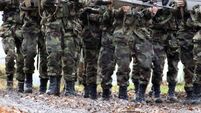
Hundreds of armed members of Saddam’s Ba’ath party and security forces took up positions in Baghdad after the first sirens went off. The streets were mostly empty of civilians and of regular army troops or armour. Some coffee shops and cheap restaurants were open, and even the city’s double-decker public buses were moving in very light traffic. Some children were out on the streets riding bicycles or playing soccer.
However, as night fell, fewer people were on Baghdad’s normally bustling streets, and residents said many Baghdadis had rushed to homes, shelters or the countryside in anticipation of night-time attacks.
A Ba’ath Party member, Hussein Ilwan, aged 47, spent the previous night on his guard post, behind sandbags in the upscale al Mansour area of the capital. He wants “one of two things: Either a dignified life, or an honourable death.”


CONNECT WITH US TODAY



Be the first to know the latest news and updates