Car bomb attacks leave 44 dead and 150 injured
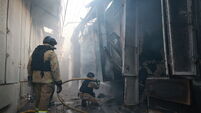
The blasts killed at least 44 people and wounded 150 others as buildings shook in India's financial capital.
The bombs, hidden in the trunks of two taxis, blew up within five minutes of each other, police said. Several people were being interrogated, including one taxi driver.
Police were focusing their investigation on Muslim militant groups.
"There are many jehadi groups out, let loose by the enemy country," said Ranjit Sharma, a police commissioner. Jehadi groups are operated by Islamic militants. The "enemy country" was a clear reference to Pakistan, India's longtime rival. Such an accusation could threaten to increase tension between the nuclear-armed neighbours, though Pakistani officials quickly denounced the attack as "wanton targeting of civilians".
Mr Sharma specifically mentioned the Students Islamic Movement of India, or SIMI, a militant students group outlawed in September 2001, and Lashkar-e-Tayyaba, one of more than a dozen Islamic rebel groups fighting Indian security forces in Kashmir since 1989, seeking independence for the divided Himalayan province or its merger with Muslim-dominated Pakistan.
No one immediately claimed responsibility for the lunchtime bombings, which came hours after the release of a long-anticipated archaeological report on a religious site in northern India claimed by both Hindus and Muslims. The dispute has been linked to previous bombings. However, the attacks appeared aimed more at the city itself the nation's financial heart than at members of a particular religion. Stock prices plunged after the blast reports.
One of the bombs exploded at the Gateway of India, a well-known historic landmark and popular lunchtime spot frequented by both Hindus and Muslims. The other was at a crowded neighbourhood of jewellery stores, where many shops are owned by Hindus but many of the artisans are Muslims.
"The explosions were aimed at targeting the economic activity of the city, as well as Bombay as a tourist destination," said Sushil Kumar Shinde, chief minister of Maharashtra, the state where Mumbai, formerly Bombay, is located.
"The blasts have thrown up a challenge to the resilience of this city," he said, urging people not to panic.
Telephone lines were jammed and mobile phone services briefly crashed as panicked residents called family and friends. Police issued security alerts for Mumbai and the Indian capital, New Delhi, calling policemen back from leave. The death toll totalled 44 by early evening, Mr Sharma said. Javed Ahmed, a police commissioner for Mumbai, said at least 150 people were injured. Asked if the explosions could have been to avenge killings last year in the western state of Gujarat violence sparked by reaction to the disputed religious site Mr Ahmed said: "It could be that."
CONNECT WITH US TODAY



Be the first to know the latest news and updates