Sunnis reject 'fraudulent' Iraq poll
They also said if the irregularities are not corrected, new balloting must be held in Iraq's largest electoral district.
An electoral commission official said that while more than 1,000 complaints from the December 15 vote had been received and were being investigated, only 20 were "very serious," and he didn't expect them to change the overall result, which will be announced in early January.
The United Iraqi Alliance - a Shi'ite party - won about 59% of the vote, according to returns from 89% of ballot boxes counted in Baghdad province.
The Sunni Arab Iraqi Accordance Front received about 19%, and the Iraqi National List headed by Ayad Allawi, a secular-minded Shi'ite, got about 14%.
The Iraqi Accordance Front, a coalition of three major Sunni groups, rejected those results, warning of "grave repercussions on security and political stability" if the mistakes were not corrected.
The Sunni officials concentrated their protests on results from Baghdad province, the biggest electoral district.
"It was obvious to us that the forgery and the falsification have been taking place even before the opening of the ballot boxes," it said.
But a senior member of the United Iraqi Alliance, Jawad al-Maliki, responded that the Sunnis needed to respect the outcome. "Democracy means accepting the opinion of the majority," he said.
US Ambassador Zalmay Khalilzad said there had been 20 "red" - or serious - complaints as of Monday that could affect the outcome.
"Final results will not be announced until those red complaints are looked at," he said.
Preliminary returns showed Iraqi voters divided along ethnic and religious lines with a commanding lead held by the religious Shi'ite coalition that dominates the current government.
The results for the 275-member parliament from 11 provinces showed the United Iraqi Alliance winning strong majorities in Baghdad and largely Shi'ite southern provinces.
Kurdish parties were overwhelmingly ahead in their three northern provinces, while results from one of the four predominantly Sunni provinces, Salahuddin, showed the Sunnis winning an overwhelming majority.
Still, the United Iraqi Alliance was unlikely to win the two-thirds majority, or at least 184 seats, needed to avoid a coalition with other parties.
The alliance is headed by cleric Abdul-Aziz al-Hakim, one of Iraq's most powerful figures.
US officials hope a coalition government involving Sunni Arabs will weaken a Sunni-led insurgency.
Sunnis, a minority group favoured under Saddam, turned out in large numbers after boycotting earlier elections.
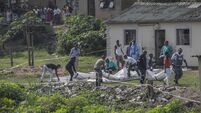
In new reports of violence, a joint Iraqi-American patrol on the outskirts of Fallujah found the bodies of 14 people, some of whom were handcuffed and appeared to have been tortured, said Dr Mohammed Hameed of the Fallujah hospital.
A driver for the Jordanian Embassy, was kidnapped while driving to work, Jordanian Prime Minister Marouf al-Bakhit said.