Allied noose tightens on southern oil region
Only the northern oil hub, Kirkuk, remains out of their grasp, slowing Washington from its declared goal to safeguard the country's billions of barrels of reserves on behalf of ordinary Iraqis.
Their mission is viewed with widespread suspicion by many who see the war as a US bid to ensure cheap and steady supplies from the world's seventh biggest exporter.
Despite the unfolding military action in Iraq, supplies flowed uninterrupted from direct neighbours Kuwait, Saudi Arabia and Iran.
Iraqi missiles forced only a brief slowdown in Kuwaiti refinery operations without affecting oil exports. In Iran, a stray missile hit an oil depot in Abadan, home to Iran's biggest refinery, but had no impact on the refinery operations.
Just how quickly Iraqi oil starts to flow from what appear to be largely undamaged wellheads depends on the delivery infrastructure yet to be assessed by a US-contracted team from Texas-based Boots and Coots International Well Control.
The US military has said facilities handling 85% of the southern oilfields' operations are in allied hands.
Key among the secured facilities at Rumaila, the biggest of the oilfields in the south, are six plants separating natural gas from crude.
Oil is processed at the plants before being piped south for export in the Gulf.
Before the war erupted, Gulf OPEC producer Iraq exported some 1.8 million barrels per day (bpd) under UN supervision.
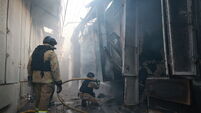
Nearly 60% of that volume was flowing out of southern oilfields. For that reason, dealers will be reassured by early reports that Iraq's Gulf export terminal at Mina al-Bakr, seized by British troops on Friday, is largely intact. Damage at the fields appears to be similarly light. Teams of firefighters are moving in to douse a small number of oil wells still burning in Rumaila. "Thirty to 45 days, we'll have it all done," said the leader of the US team of contractors brought in by Washington to tackle the fire damage.
Latest US estimates peg the number of wellheads sabotaged by Baghdad at fewer than 10, a fraction of Rumaila's 500 wells.
Iraqi forces set fire to about 700 oil wells in Kuwait during the 1991 Gulf war, setting off conflagrations which took months to control.
Washington has also moved swiftly to win over Iraqi oil experts, vital to restoring Iraq's southern oilfields that contain billions of barrels of untapped crude.
A US military source said the process is already underway to arrange this, but declined to offer further details.
Success in the south has yet to be matched in the north, home to the Kirkuk oilfield, where military operations have yet to get underway.
Military officials said there is no evidence of sabotage at the 76-year-old oilfield, which can pump up to 900,000 bpd and contribute some 40% of Iraqi exports.

CONNECT WITH US TODAY



Be the first to know the latest news and updates