Shipman - Britain's worst serial killer

FOR more than two decades, family doctor Harold Frederick Shipman waged a “shocking beyond belief” killing spree that left at least 215 patients dead.

Shipman - Britain's worst serial killer

Said to have been Britain's, if not the world's, most prolific serial killer, Shipman, who died yesterday aged 57, may also have murdered a further 45 innocent victims.

Once described as "addicted to killing", he targeted middle-aged and elderly women patients, to whom he administered deadly diamorphine injections.

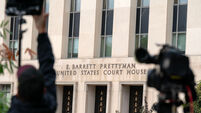
Shipman, who ran a one-man practice in Hyde, Greater Manchester, was given 15 life sentences at Preston Crown Court on January 31, 2000, after being found guilty at the end of a trial lasting nearly four months.

He was brought to justice after a bungled attempt to forge the £386,000 will of one of his victims, an 81-year-old former mayoress of Hyde, wealthy widow Kathleen Grundy.

Dame Janet Smith, who ran the ensuing inquiry, reported in 2002 that she believed Shipman had killed 215 patients and there was a "real suspicion" over another 45.

Shipman's trial judge, Mr Justice Forbes, recommended Shipman should spend the rest of his life behind bars for what he called his "wicked, wicked crimes".

He told him: "You murdered each and every one of your victims by a calculated and cold-blooded perversion of your medical skills.

"I have little doubt that each of your victims smiled and thanked you as she submitted to your deadly administrations."

The bearded, bespectacled father of four, from Roe Cross Green, Mottram, near Hyde known to everyone by his middle name of Fred was able to keep secret from this health authority employers the fact that he had a previous conviction dating back 24 years for forging prescriptions to fuel his own drug habit.

He was also able to stockpile vast amounts of diamorphine the clinical name for heroin which he had either falsely prescribed or taken from cancer patients after their deaths.

Neither were there any procedures for detecting that the death rate among Shipman's elderly patients was three times higher than the norm for the area.

Six months before his arrest police were called in to carry out an investigation into him but failed to uncover any evidence of wrongdoing.

Shipman had falsified his records to create bogus medical histories to explain away the sudden deaths of his victims.

The West Pennine Health Authority, Shipman's employers, also raised concerns about the practice of so-called "ash cash", whereby a doctor needs only one signature from another GP to authorise a cremation.

Shipman "bullied and bamboozled" relatives of many of his victims into avoiding post-mortem examinations which would have revealed traces of morphine and felt safe in the knowledge that cremations would destroy vital evidence.

Shipman had practised in Hyde since 1979, first with partners in the Donneybrook practice before setting up on his own in his Market Street surgery in 1992.

He was born in Nottingham's Bestwood council estate and worked his way through the 11-plus into the city's High Pavement Grammar School.

In 1963, while Shipman was 17 and studying for A-levels, his mother Vera died at the age of 43 from cancer.

He started studying at Leeds University Medical School in 1965. While in lodgings in nearby Wetherby, he began going out with farmer's daughter Primrose Oxtoby. She became pregnant and the couple were married during Shipman's first year at university.

He graduated in 1970, becoming a houseman at Pontefract General Infirmary in West Yorkshire, before joining his first practice in the Pennines.

It was there he began forging prescriptions to supply himself with the painkiller pethedine, which he injected for six months to the point where his veins collapsed. When his drug habit was discovered, he resigned immediately. He was later fined £600 at Halifax Magistrates' Court on drugs and forgery charges.

Despite his case coming before the General Medical Council, he was not struck off but did receive a warning letter.

He underwent a course of psychiatric treatment and returned to work as a medical officer in Durham before moving to the Donneybrook practice in Hyde, setting up home in nearby Mottram with Primrose and their four children.

Mrs Shipman, now 56, and their children Sarah, 36, Christopher, 32, David, 24, and Sam, 22, stood by Shipman throughout his arrest and trial.

When Shipman embarked on his trail of almost constant killing will probably never be known. Cases investigated by police as possible murders date as far back as 1985.

Scores of relatives in the former mill town of Hyde are still left wondering whether their loved ones were the GP's victims.

They and police remain baffled by Shipman's real motives for the horrifying catalogue of crimes.

The prosecution said during Shipman's trial that the only reason could be that he came to enjoy exercising the ultimate power that of life and death.

Psychiatrist Dr Richard Badcock, who examined the GP and declared him unfit for further interview by police shortly after his arrest, has said since that Shipman had shown the symptoms of a "classic necrophiliac", one who enjoyed some sort of sexual gratification in the act of inducing death.

The trauma caused by the death of his mother, his inability to form meaningful relationships and his arrogance could have combined with his need for control to give him a perverted pleasure from causing death, said Dr Badcock.

Shipman was finally caught when his last victim, Kathleen Grundy, died at her home only hours after Shipman visited her on the pretext of taking a blood sample. That same day a firm of solicitors in the town received a copy of a will purporting to be that of Mrs Grundy, which left everything to Shipman.

It read: "All my estate, money and home to my doctor. My family are not in need and I want to reward him for all the care he has given to me and the people of Hyde."

Mrs Grundy's daughter, Angela Woodruff, 58, a solicitor, was staggered when she received a copy of the will. Her suspicions were to lead to Shipman's downfall.

She could not believe that her mother, who was devoted to her daughter and her two grandsons, would have ignored them in her will. Nor that her mother, a meticulous woman, would have put her name to a such a crude document.

Police later found it had been produced on an ageing typewriter in Shipman's surgery and his fingerprints were on the document and another letter received by the solicitors.

Mrs Woodruff was so concerned that she spoke to two alleged witnesses to the will, both patients of Shipman, who had asked them to witness a document while Mrs Grundy was in his consulting room. He then forged their signatures on the bogus will.

Exactly one month after Mrs Grundy's death, Mrs Woodruff contacted Warwickshire Police.

Mrs Grundy's body was exhumed and tell-tale traces of morphine found. Police also found that a computer entry in Shipman's system recording that Mrs Grundy had complained of feeling unwell had not been created until the day after her death. It was a pattern that was followed with seven other of his victims.

Arrogant to the last, Shipman showed no emotion as he was handed the 15 separate life sentences by the judge.

He told Shipman: "None of your victims realised yours was no healing touch and none of them knew in truth that you had brought about their death.

"It was a death which was disguised as the caring intention of a good doctor. The sheer wickedness of what you have done defies description. Your crimes are so heinous that in your case life must mean life."

More in this section

Cookie Policy Privacy Policy Brand Safety FAQ Help Contact Us Terms and Conditions

© Examiner Echo Group Limited