Soldiers begin to evict Gaza settlers
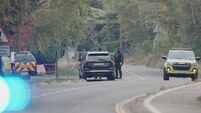
In the West Bank, a settler killed three Palestinian labourers in a shooting rampage, which Israeli Prime Minister Ariel Sharon denounced as a twisted act of "Jewish terror" designed to stop the historic pullout.
Palestinian militants said they would refrain from retaliating for the shooting. But a mortar shell fell near Israeli soldiers in Gaza, without causing casualties, and Palestinian youngsters threw stones at an Israeli tank outside Neve Dekalim, Gaza's largest Jewish settlement. The tank crew responded with tear gas and fired shells into the sand.
Israeli troops found and detonated an explosive belt in the Palestinian town of Mawasi in the Gaza Strip near Jewish settlements that were being evacuated.
A raid by army troops and intelligence agents on the town uncovered the 10 kilogramme belt concealed in a solar water tank.
Four Palestinians, allegedly members of the Islamic Jihad militant group, were arrested.
The belt had been intended for use in an attack on Gush Katif, the cluster of settlements that Israel is evacuating and intends to turn over to Palestinians control. Mawasi is encircled by settlements, and its residents have repeatedly clashed with Jewish settlers over the past five years.
Despite the escalation of Israeli-Palestinian tensions, the eviction of die-hard settlers and their nationalist supporters who flooded into Gaza in recent weeks moved forward with anguish, anger and tears, but more swiftly and smoothly than anyone anticipated.
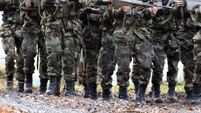
Some 14,000 unarmed Israeli soldiers and police entered six settlements yesterday, forcibly evacuating residents who refused to leave voluntarily. According to the army, 1,842 people were evacuated.
Of 1,600 families in Gaza's 21 settlements, only 600 remained by the end of the day.
Soldiers and settlers clashed, argued and hugged, reflecting intense and mixed emotions at the uprooting of settlers whose government years ago encouraged them to move to Gaza for the sake of Israel's security.
The day was filled with ironic twists and heart-rending scenes as troops carried settlers out of homes, synagogues, even nursery schools.
Soldiers joined anti-withdrawal protesters in prayer before evicting them. An elderly rabbi hugged a Torah scroll as he was escorted away.
Under a willow tree at a children's nursery, mothers clutched babies as troops loaded nappies and toys onto buses for evacuation.
Irate residents in Gaza's Kerem Atzmona employed Nazi-era imagery to accuse the army of atrocities. Wearing stars of David on their T-shirts, they marched under police escort holding up their hands evoking a famous photograph from the Holocaust.
By evening, five of the six settlements that troops entered in the morning were cleared, with resisters remaining only in Neve Dekalim for months the epicentre of resistance.
Mr Sharon proposed his "disengagement plan" two years ago to ease Israel's security burden and help preserve the country's Jewish character by placing Gaza's 1.3 million Palestinians outside Israeli boundaries.
Palestinian militants are portraying the pullout as a victory for their suicide bombings and rocket attacks. Some fear militants will resume bloodshed once Israel's Gaza withdrawal is complete.
Israelis and Palestinians have been co-operating to prevent militant violence during the pullout, though lately Jewish extremists have caused the most concern. Yesterday's attack was the second on Palestinians by Israelis in two weeks. On August 4, a 19-year-old Israeli deserter opened fire on a bus, killing four Israeli Arabs.
While settlers routinely carry weapons, they displayed none when the columns of soldiers and police marched into their communities.
Yesterday's worst act of protest was the self-immolation of a 54-year-old woman from the West Bank at a roadblock in southern Israel. She suffered life-threatening burns on 70% of her body, police said.
CONNECT WITH US TODAY



Be the first to know the latest news and updates