Trump extends deadline for Iran to open strait of Hormuz by 10 days
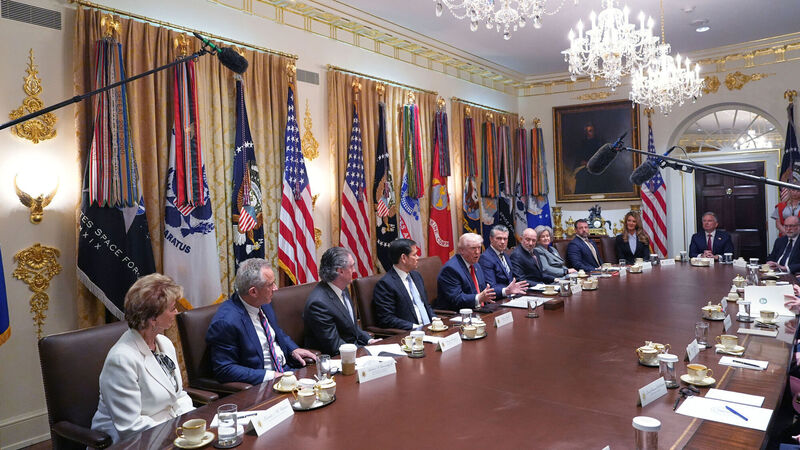
President Donald Trump speaks during a Cabinet meeting at the White House, Thursday, March 26, 2026, in Washington. (AP Photo/Alex Brandon)
Donald Trump has extended his deadline for Iran to open the strait of Hormuz by 10 days to April 6 after saying talks are “going very well”.
The president made the statement on Thursday in a social media post, saying: “As per Iranian Government request, please let this statement serve to represent that I am pausing the period of Energy Plant destruction by 10 Days to Monday, April 6, 2026, at 8pm, Eastern Time,” Trump said on his Truth Social platform.
“Talks are ongoing and, despite erroneous statements to the contrary by the Fake News Media, and others, they are going very well.”
Earlier, the US president had urged Iranian leaders to negotiate an end to the near-month-long war or face further assassinations of senior officials amid intensified action by the US and Israel.
Read More
That threat came as Israel said it had “blown up and eliminated” the Revolutionary Guards’ naval commander, Alireza Tangsiri, and several senior officers in a strike on the Iranian port of Bandar Abbas.
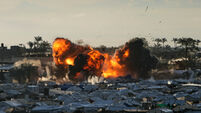
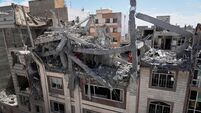
Heavy strikes by Israeli or US warplanes were also reported around Isfahan, home to a major Iranian airbase and other military sites, as well as one of the nuclear sites bombed by the US during the 12-day war in June.
Iran has strenuously denied it is “begging to make a deal”, as Trump claimed, and continued its retaliatory strikes across a swathe of the Middle East on Thursday.
Loud booms were reported in Tel Aviv, the central Israeli city of Modi’in and Jerusalem throughout the day as Israel’s air defences worked to bring down incoming missiles. In the Gulf, Iranian attacks were also intercepted.
Trump’s new threat was among a series of statements made by the US president in Washington and on social media on Thursday in which he again criticised Nato allies, described Iran as producing “great negotiators” but “lousy fighters”, and repeated his claim that the war he launched last month had already been won.
“They now have the chance, that is, to permanently abandon their nuclear ambitions and to join a new path forward,” Trump said during a cabinet meeting at the White House. “We’ll see if they want to do it. If they don’t, we’re their worst nightmare. In the meantime, we’ll just keep blowing them away.” Later Trump added: “They want to make a deal. The reason they want to make a deal is they have just been beat to shit.”
He claimed Tehran had let 10 oil tankers transit the strait of Hormuz as a goodwill gesture in negotiations, including some Pakistan-flagged vessels.
Since the war began with an Israeli airstrike that killed Ayatollah Ali Khamenei, dozens of senior Iranian security and military officials have been killed by the US and Israel, as well as political leaders such as Ali Larijani, the veteran head of the national security council. The new supreme leader, Mojtaba Khamenei, is thought to have been injured, possibly severely, in the attack that killed his father.
Adm Brad Cooper, head of US Central Command, said Thursday’s killing of Tangsiri put Iran’s navy on a path toward “irreversible decline” and said the US would keep striking naval targets. Israel’s defence minister, Israel Katz, said Tangsiri had been “directly responsible for the terror operation of mining and blocking the strait of Hormuz to maritime traffic”.
Iran in effect closed the strait, a critical waterway through which a fifth of the world’s oil and gas passes, to almost all shipping in the first days of the conflict. The blockade sent oil prices soaring, hit global stock markets and threatens a global economic crisis.
Though the US claims to have destroyed most of Iran’s naval capabilities, Tehran has both smaller boats capable of laying mines and anti-ship cruise missiles that can be launched from ashore. Either weapon could render the strait impassable to shipping.
The Guardian
CONNECT WITH US TODAY



Be the first to know the latest news and updates