The Big Read: Who are the front runners in the race to the White House?
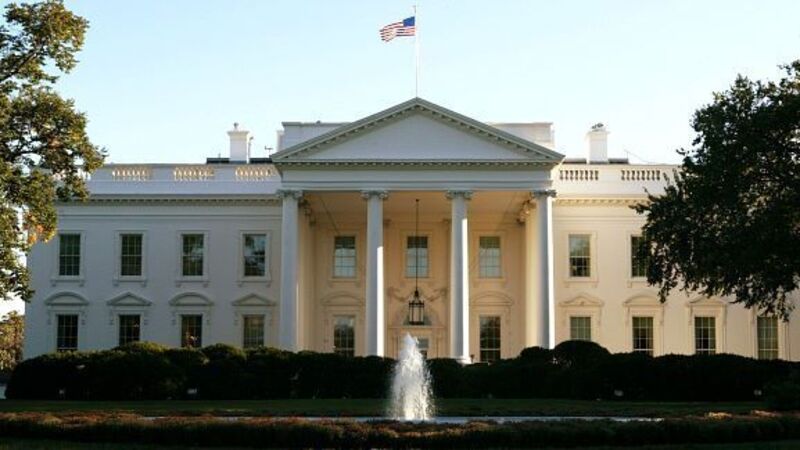
The first votes will be cast within weeks in the US presidential election as Democrats and Republicans begin choosing the candidates who will battle it out for the White House.
Both parties will set the ball rolling on February 1 in their respective deciders in the state of Iowa that will make or break the presidential ambitions of many of the 15 candidates — three Democrats and 12 Republicans.
A good start to the primaries is vital if a candidate hopes to become a presidential nominee, though George W Bush bucked this trend in the 2000 primary season by making a poor start but ultimately winning the Republican nomination.
However, in most cases, a poor showing by a frontrunner in Iowa can be a body blow, while a better-than-expected showing by a weaker contender can give their candidacy a major boost going into the New Hampshire primary eight days later, on February 9.
If New Hampshire voters fail to follow the Iowa trend and pick a different set of candidates, however, the result can throw the race wide open in subsequent states.
However, sometimes a win in socially conservative and economically liberal New Hampshire can be a false dawn. Such was the case when the current Democratic frontrunner Hillary Clinton won there in her last presidential bid in 2008 only to eventually lose the nomination to Barack Obama.
After New Hampshire come the conservative states of Nevada and South Carolina to close out the February contests. Candidates who hope to stay in the race must do reasonably well in some if not all of these four contests so that they can head into subsequent states in March with credibility.
March is crucial. That’s when the daddy of them all occurs on Tuesday, March 1, dubbed Super Tuesday, which sees a dizzying slew of deciders in 11 states.
Other primaries will continue at a frenetic pace during the rest of March so that by the end of the month 30 of the 50 states will have picked their candidates.
By then, or even as early as Super Tuesday, enough key contests will have been held to indicate who is likely to emerge as the winning candidates when the primaries end in June.
The candidates who win in each state are then formally nominated at both parties’ national conventions in July to fight the November 8 election.
They are two types of primaries —open or closed. Only party members can vote in closed primaries, while all voters, regardless of their party affiliation, can take part in open primaries.
The advantage of the open system is that if a party has put forward a candidate who can appeal across party lines it will maximise the chances of victory for that candidate.
However, this system can be open to abuse. It’s been known to happen that both Democrats and Republicans have legally voted for the opposite party’s poorest candidate to increase the chances of victory by a weak nominee. Partly because of this, most states primaries are usually closed.
In a few states, most notably Iowa, candidates are chosen at caucuses, which are always closed. These tend to be more long-winded than primaries and involve a series of party meetings at every level of party organisation within a state — wards, precincts, districts and counties.
One criticism of the primary and caucus schedule, which usually runs from February to June, is that it gives too much weight to the states with early primaries or caucuses. Such states often build momentum for leading candidates and rule out others long before the rest of the country has had an input.
The Democratic winner, for example, will almost certainly have emerged from among the three contenders by Super Tuesday on March 1.
In the case of the Republican winner, a much larger number of states are likely to have their say because that party’s race is expected to be a long drawn-out one. Republican National Committee chairman Reince Priebus says he expects the party to have settled on a nominee by about mid-April but others suggest the likely winner may not be known until well into the final primaries in the summer.
The Republican race will also be much more of a nailbiter because of the fact that 12 candidates are vying for the nomination, compared with just three Democrats in their party’s race — Hillary Clinton, Martin O’Malley and Bernie Sanders.
As the Democratic race looks now, the strong likelihood is that party members will settle on Clinton. However, if Sanders or O’Malley were to dramatically capture Iowa or New Hampshire or even come close to threatening Clinton they could then give her a run for her money well beyond March.
THE DEMOCRATIC RACE
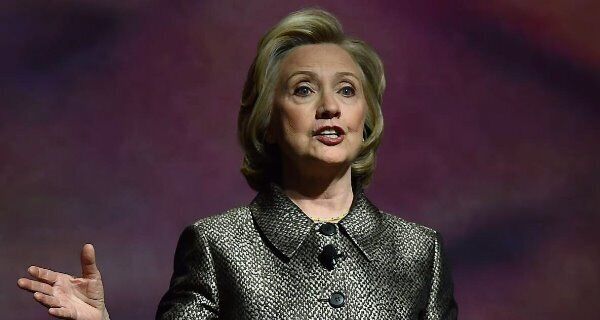
Clinton is the clear frontrunner in the Democratic field. She now seems to have a clear path to the nomination and is expected to win all the main primaries.
A national poll by Monmouth University put the former senator and secretary of state at 59%. Sanders meanwhile, is at 26%, while O’Malley continues to lag a distant third at between 1% and 4%.
In addition, Clinton has seen a surge in her numbers since her strong performance before a Republican-controlled congressional committee investigating the 2012 deadly attack in Benghazi, Libya, during her tenure as secretary of state.
She easily fended off accusations she had failed to ensure proper security at the diplomatic compound, and emerged largely unscathed from the 11-hour televised grilling.
Her foreign policy skills and her hawkishness have also served her well in debates since the Paris and California attacks last year. In one national survey she beat all the leading Republican presidential hopefuls as the candidate who a majority of voters believe is ready to be commander-in-chief.
The Clinton camp appears quietly confident it will have the nomination sewn up in March, which means campaign money can be squirreled away for the general election battle when it will be vital.
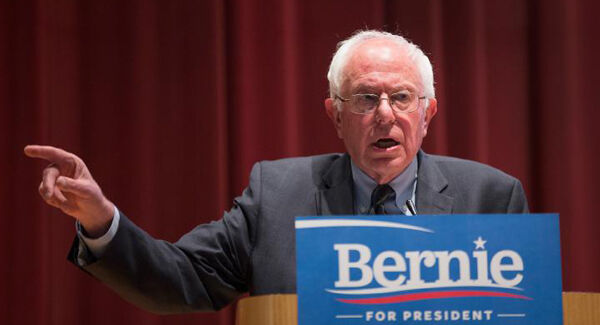
Sanders came like a tornado into the presidential race, firing up the liberal Democratic base and drawing huge crowds to his rallies. However, as a self-declared democratic socialist, his appeal was always going to be limited.
He may win an early state but he’s unlikely to close in on Clinton. However, if he manages a strong second place showing early on it could help him on Super Tuesday.
He has run a positive campaign and refuses to attack his two rivals. At the first Democratic debate, he famously passed on the opportunity to criticise Clinton for using a private email account and server as secretary of state, declaring that Americans are sick of hearing about her “damn emails”. This was a boost for her but a disappointment for his supporters, who saw it as a lost opportunity to go on the offensive.
Sanders has also drawn criticism for focusing primarily on economic inequality and campaign finance reform at the expense of national security after the attacks in Paris and California.
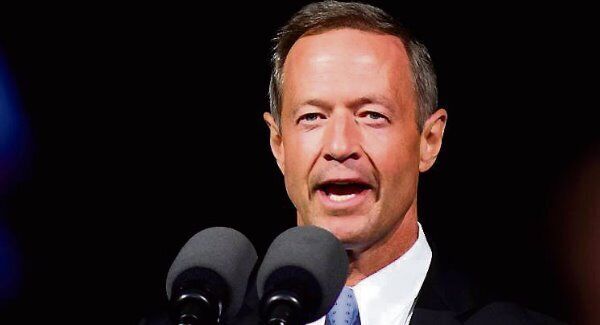
The former Maryland governor seems to have everything Americans like in a candidate. He’s young, vigorous, and handsome.
Yet the Irish-American candidate will have a real fight on his hands to do well, never mind win, in any of the primaries, mainly because Sanders has more effectively wooed the party’s progressive base.
O’Malley has never fared well in state or national polls and he has failed to make a significant impact in debates, though with each debate his performance has improved.
Nevertheless, he continues to lag in a distant third place in polls. He did see a boost in the Monmouth poll that put him at 4% — which doesn’t look very impressive until you compare it with the 1% or 2% has he has been mostly seeing in polls.
So he may well be on the way up but not soon enough and not fast enough. The best he can probably hope for is to make a decent showing behind Sanders.
Few surprises, therefore, are expected in the Democratic primaries. The real drama will unfold among the 12 Republican candidates. Nine can be expected to see some level of success while the remaining four will find themselves fighting against almost insurmountable odds.
THE REPUBLICAN RACE
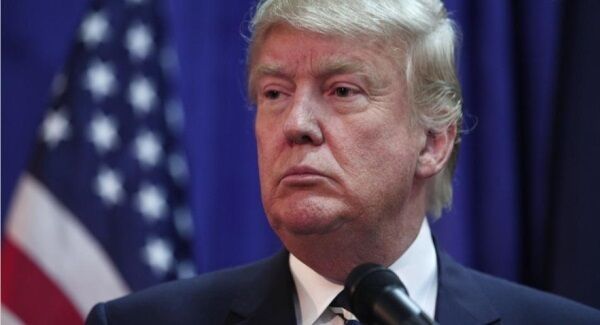
On the day he announced his presidential bid in New York on June 16 last year Trump’s candidacy was met with scepticism and even amusement.
However, his candidacy is now no laughing matter and under- estimating him may well turn out to be one of the greatest miscalculations in modern political history.
The thinking went that he had no political experience and was known mainly for his ostentatious wealth and outsized ego. Thus, it didn’t really matter what he said because it was only going to be a matter of time before he self-destructed and then experienced rivals like Jeb Bush, Chris Christie or Rand Paul would step in and right the ship.
However, as the election year opens, not alone is Trump still steering the ship, he is charging ahead and looks set for victory in a number of primaries.
Never mind that he spends much of his time insulting Hispanics, Asian-Americans, women, and blacks, the very demographic the Republican party needs to woo to win the White House. His is the politics of anger and insult and his supporters can’t get enough of it.
His poll numbers have kept soaring, especially in the aftermath of the Paris and California attacks when his rhetoric reached apocalyptic levels.
His call to ban Muslims entering America sickened some but his supporters were on board. And that’s where they’ve stayed.
While rival Ted Cruz is closing the gap and moving ahead in some polls in Iowa heading into that state’s decider, Trump remains a vote topper.
Republican party operatives are increasing nervous that if he wins the vote in Iowa or in New Hampshire, it will become difficult to stop him and one recent poll found that 68% of his backers would vote for him if he mounted an Independent bid.
If he did manage to secure the nomination, polls show he would fare very poorly against Clinton, with a number of polls predicting she could win by a landslide.
If Trump is not the winner, the other principal contenders in the mix are Cruz, Marco Rubio, Jeb Bush and Chris Christie, while Ben Carson, Rand Paul, John Kasich and Carly Fiorina will be struggling to make an impact.
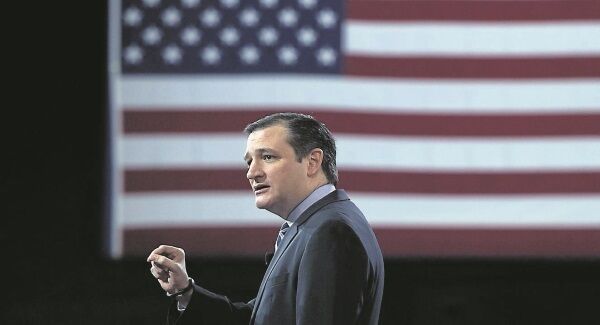
Texas senator Ted Cruz, the darling of the rightist Tea Party, is gaining in Iowa, especially among evangelicals, and could pose a serious threat to Trump.
Cruz has been on the inside track of Republican politics for the past 15 years. He worked on George W Bush’s 2000 presidential campaign as a domestic policy adviser and served in the Bush administration as associate deputy attorney general. He spent five years as solicitor general of Texas before winning his Senate seat in 2012.
Alone among his 12 Republican rivals, Cruz has knocked Trump off his frontrunner perch in Iowa. Both rivals had co-existed on fairly friendly terms but as Cruz has climbed in Iowa polls Trump has taken the gloves off, branding the Texas senator “a little bit of a maniac.” Cruz also appears to be benefiting from the sharp decline in support for Carson among evangelical supporters.
He’s also a big draw for the party’s financial backers. His €60m puts him ahead of every other Republican candidate apart from Jeb Bush at €117m.
If he maintains his strength and ultimately manages to win the nomination, Cruz would fare far better than Trump but probably not strongly enough to defeat Clinton. His far-right stances on a range of social issues and his desire to change the tax code in a way that would essentially benefit the very wealthy would narrow his appeal to the wider electorate.
His rhetoric after the Paris and California massacres was full of references to war. He advocated “carpet bombing” Isis “into oblivion”, adding: “I don’t know if sand can glow in the dark, but we’re going to find out.” So he has every chance if Trump falters of wooing the businessman’s supporters, along with those of Carson, and notching up some key victories.
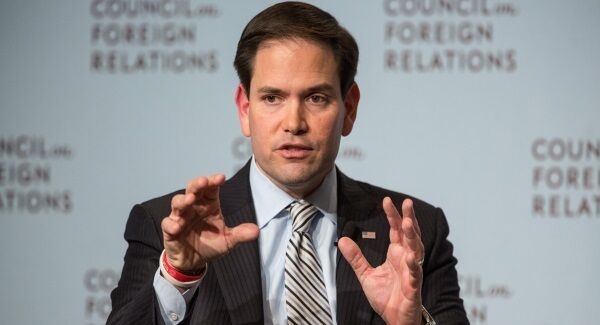
The Florida senator was a protégé of former state governor Jeb Bush, who tended to dismiss the senator in the initial stages of the presidential campaign. However, that didn’t work out well for Bush because soon he was the one languishing in low single digits in polls while Rubio, who was better prepared and more fluent in debates, surged.
In the money stakes, too, Rubio has managed to lure some of Bush’s natural backers to his camp. While the senator, at over €46m is far behind Bush’s tally, he is managing to build up a considerable war chest.
His conservative policies on taxes and social issues are winners, particularly with his Tea Party supporters.
However, for much of the Republican base, his weakness lies in his previous work with Democratic senators in 2013 on immigration reform that would have paved the way to citizenship for illegals if it had not been blocked by the House of Representatives. He has since sought to harden his stance on immigration.
Rubio is now lapping at Cruz’s heels but the main problem for him is that he is fighting for the same base as Cruz and, of the two, Cruz will probably emerge as the stronger fighter.
Some polls put Rubio in third place in Iowa, behind Trump and Cruz. Though he is not in the lead in any of the states that vote first, he generally finds himself in the top three or four.
In the general election, Rubio would probably do extremely well against Clinton. His age will be one of his strong suits in a country that loves the promise and possibilities of youth.
There will be plenty of contrasts between himself and Clinton who was already 24 when Rubio was born in 1971. He will play up the fact that as the youngest of the candidates he represents the generational shift that always appeals to Americans.
However, at the same time, he needs to tread carefully. Since he was only 13 at the time, he probably won’t remember 73 year-old Ronald Reagan’s response when his 56-year-old rival Walter Mondale raised the matter of the 17-year age difference between them in their 1984 race.
Reagan famously turned to Mondale and declared: “I am not going to exploit, for political purposes, my opponent’s youth and inexperience.”
Mondale, of course, lost that race.
In the next group of hopefuls are Jeb Bush, Chris Christie, John Kasich, Ben Carson, Rand Paul and Carly Fiorina.
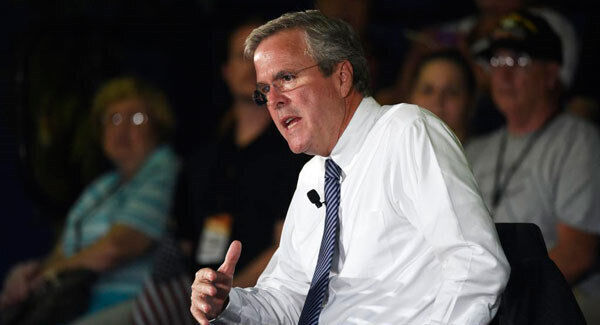
Bush went into the race having raised the largest political war chest in American politics — over €91m. The idea was that this would deter others from joining the race and, as the establishment favourite, he would have an early path to primary victories.
However, then along came Trump, Cruz and Rubio, who took ownership of the race. Meanwhile, Bush was mangling his response to questions about his brother’s war in Iraq and was coming across as weak and unprepared in debates.
He has enlivened his performance in more recent debates and has finally decided to go after Trump, famously calling him “unhinged”. Coupled with that he’s spending millions in fresh ads in the early voting states.
His big challenge will be simply to last the course with decent primary performances that keep him among the leading candidates, so he must come third or somewhere in the second tier with Christie and Kasich.
If he can do that and then pull off a victory on Super Tuesday or later he might have a chance of getting as far as the nominating convention. And if a number of other candidates are close together coming out of the primaries and it comes down to a floor fight among them, Bush, with establishment backing, could pull it off.
He has said he may have to “lose the primary to win the general election” and most have interpreted this to mean he wants to avoid going to the right and instead woo Republican and independents in the middle ground.
Of course it’s also possible it could literally mean what it says. He may lose the primaries but ultimately snag the nomination as a compromise candidate at a fractured convention.
If Bush somehow does emerge, directly or indirectly, as the Republican candidate he, alone among the Republican field, could defeat Clinton. Certainly, Clinton would have the most to fear from a Bush nomination. Both have raised the most money and have best oiled political machines in the business.
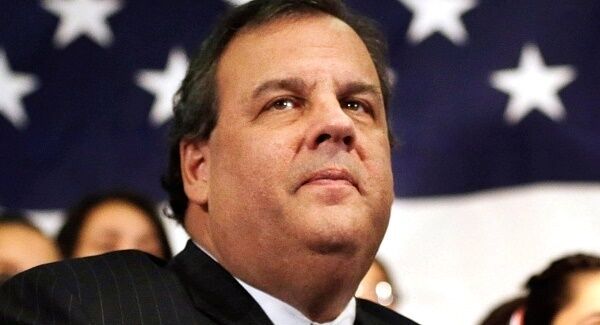
New Jersey governor Chris Christie was once seen as the party’s strongest candidate but he has yet to make a major impact in polls. His best hope is do well in New Hampshire and that could well happen.
According to the latest Franklin Pierce University/ Boston Herald poll of New Hampshire voters, the New Jersey governor, who once sat at 3%, has surged 8 percentage points in New Hampshire to 11%, though he still trails Cruz and Rubio (tied at 12%) and Trump (in the lead with 26%).
Bush falls just below Christie at 10%, followed by John Kasich at 8%, Carly Fiorina at 6% and Ben Carson at 5%. But other polls have told a different story and, despite his recent rise, only 2% think Christie he can win the Republican nomination.
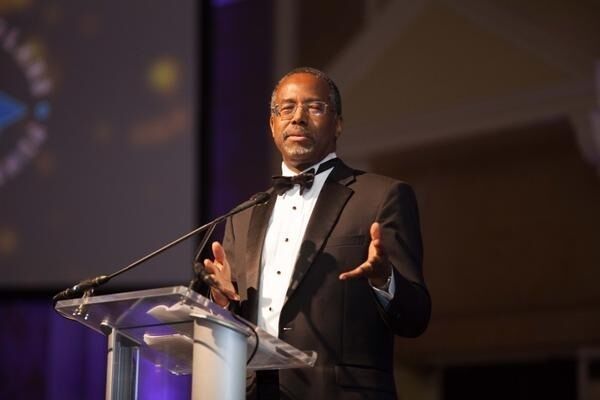
Carson’s popularity was rivalling that of Trump in the early stages of his candidacy but after a number of stumbles — calling the pyramids grain silos, for example, and exaggerating his life story — he began to fare badly under the scrutiny of the media glare and it’s difficult to see him recovering at this stage.
At one time Carson was challenging Trump for the number one spot in polls but now his candidacy seems to be on a downward spiral. In October 2015 he had a high of 23%, but by November he was down to 18% and then last month (December) he was at 9%.
His best showing may come in Iowa, with its strong evangelical base, although Cruz has been making inroads there. If he doesn’t come somewhere among the first three in the state, he will be fighting against the odds going into the other contests.
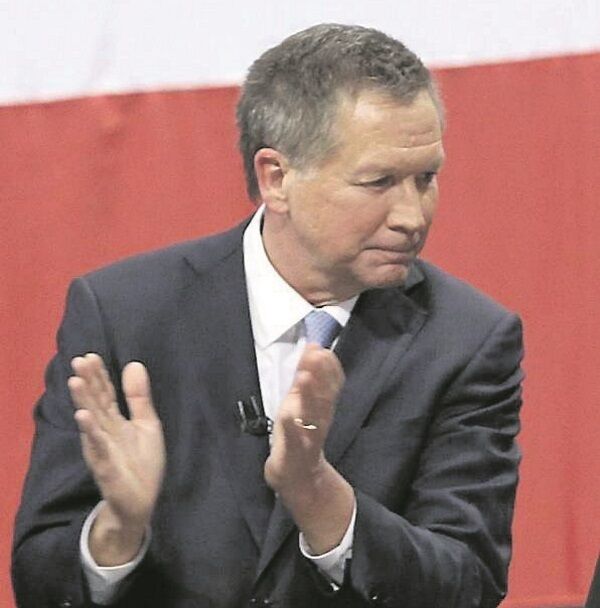
Kasich is a very experienced politician and in most of the debates he has portrayed himself as the grown-up in the room.
Kasich is also the candidate who has been quickest to call out Trump on his more inflammatory statements about immigrants and Muslims. Yet he has failed to make an impact in polls and continues to languish in low single digits.
If he can’t pull off a victory in the March 15 primary in Ohio, his home state, it could spell a humiliating end to his candidacy.
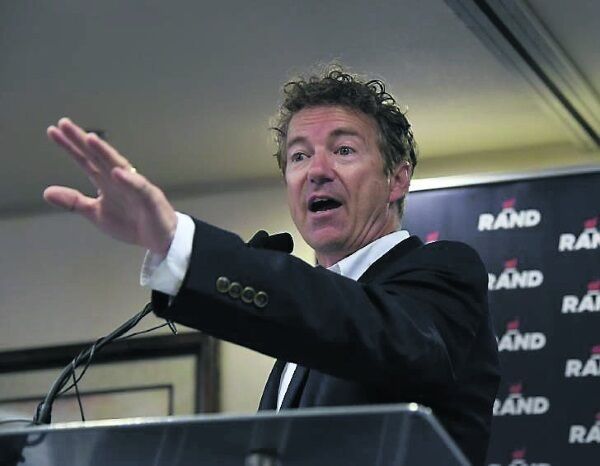
Rand Paul, the son of previous presidential candidate Ron Paul, entered the race with a strong following and hopes of a realistic shot at the nomination.
However, like a number of party rivals, he quickly became a victim of the Trump factor and failed to come alive in debates dominated by the businessman.
There has also been talk of in-fighting among the campaign staff and a reluctance to woo big donors. He has also apparently failed to energise his father’s supporters.
His libertarian policies of reducing the size and power of the federal government should have been expected to appeal to Republican voters and probably would have except that after the Paris and California attacks the climate changed and Trump and others began calling for beefed up security and increased surveillance powers for government agencies.
In this atmosphere there was little room for libertarian views and Paul failed to make his mark. His polling numbers have been so low he almost failed to qualify for the last Republican debate in December.
If he had been excluded it was reported that he might have dropped out of the race. Certainly, he may be left facing that decision soon if he doesn’t do well in the first four state contests.
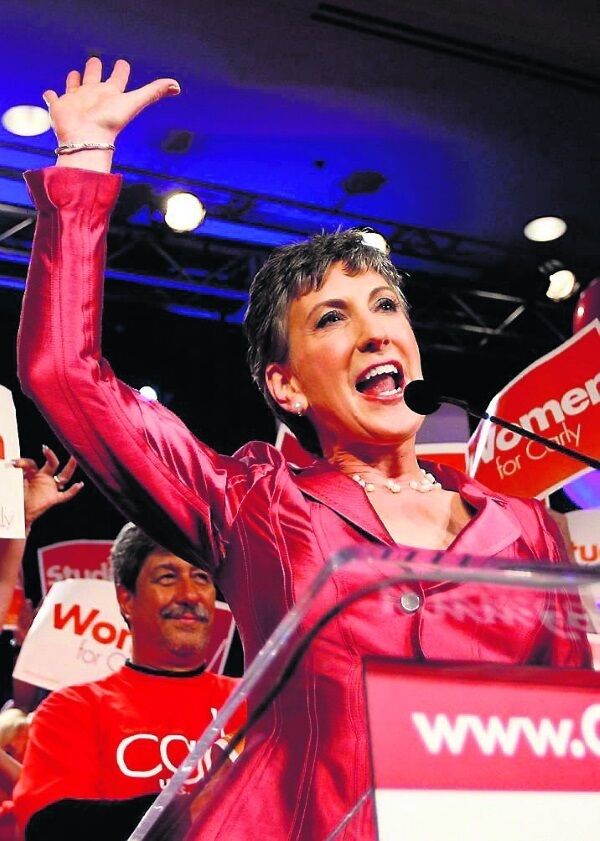
Businesswoman Carly Fiorina, the former CEO of Hewlett-Packard from 1999 to 2005, is the only woman seeking the Republican nomination and has tried in debates to portray herself as well positioned to take on Clinton.
She has little political experience though she did manage to make her mark in one early debate and saw her numbers rise briefly.
However, now she is very much on the way down if not out.
CONNECT WITH US TODAY



Be the first to know the latest news and updates