Spectre of ghost football hangs over City win of unknown significance
The Cimbri are heading menacingly south, but in Rome life goes on. The asteroid is definitely coming this way, but people go to work, eat, drink, plan as usual. The White Walkers are approaching the Wall, but the squabbles between the great houses go on. Everyone in the Premier League knows the crisis is approaching, thinks – hopes, fears? – it may be apocalyptic, but until it arrives, what can you do but carry on?
After any break, there’s always an awkward moment while everybody resets. What was the cliffhanger we left the soap opera on? What new plotline had just been seeded? This is one of the reasons international weeks are so disruptive. It’s not just that the Premier League story slows for a while, it’s that we are reminded that these entities are not eternal but alliances of convenience between paid employees who have a life outside the soap opera.
Read More
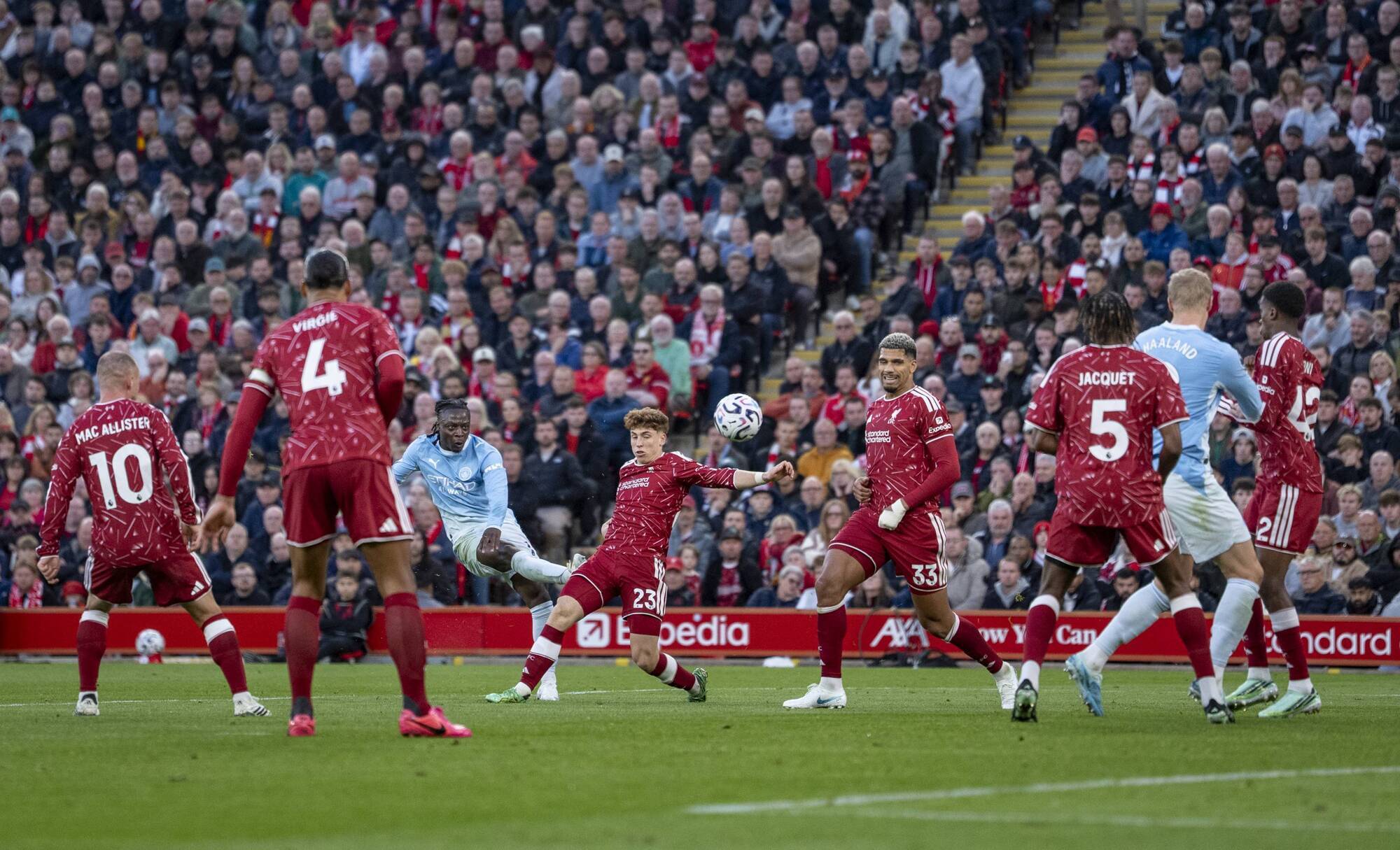
But there has never before been an international break so disruptive as this, never such a sense of unreality about a weekend of Premier League football. It’s not that, the 2022 World Cup aside, this has been the longest international break in history. Nor can anyone, surely, be unaware of the dominant narrative of this window: between 2009 and 2018, Manchester City cheated. Perhaps an away game at Anfield for City is not quite the event it was when Pep Guardiola and Jürgen Klopp were at their peak, but it should still be a great footballing occasion. Yet this was an afternoon when the football felt secondary.
City continue to protest their innocence, clinging to the now-familiar formula that they have a comprehensive body of irrefutable evidence that will somehow clear their name, if only people wouldn’t keep refuting it. They have launched an appeal, but if that fails the sanction is likely to be unprecedentedly severe. Do their games matter? Will they be annulled before the season’s end? Was this victory just the difference between finishing the season on -100 points and -97? Could they be expelled from the league? Until sentence is announced, there will an air of provisionality about everything they do. It’s the seconds after an incident that everybody knows VAR will check, the ghost football that might be cancelled, but extended for weeks.
This, though, is not only an issue of the present; it’s an issue of the past. The sanction may or may not strip City of their titles. Many City fans will ignore such a punishment, continue to claim those honours, will point out that memories cannot be so easily extinguished. But even if City’s appeal is successful, or even if the sanction does not relitigate the past, there will be asterisks there in the minds of those who are not City fans, and perhaps also in the minds of some of those who are. Add in Chelsea’s offences, and the Premier League is coming to the end of an 18-year period in which very little was quite as it seemed.
The inflatable bananas brandished by City’s support at Anfield on Sunday may have harked back to an earlier, more innocent era, but there is no going back. City are not the club of Imre Varadi any more; as it stands they are the club guilty of the greatest act of cheating in English football history. Their fans can do the Poznan in a spirit of resistance, but they cannot turn their back on the shame their leaders have brought upon them.
What that means for the longer-term credibility of the league can only be guessed at. The basis of sport is faith. Incredible finishes mean little if nothing can be believed. Why go through the emotional agonies if a result might be struck off a decade later for offences committed in the air-conditioned offices of a distant state? Will the City decision undermine faith, or reaffirm it, come as proof that cheats do not prosper, that they will – eventually – be exposed, that the Premier League, almost alone in this grubby world of compromise with and abasement before the mega-rich, is prepared to do what is right?
City were booed, there were some chants of “going down” and there were a handful of banners, but Anfield was not the seething pit of disgust many had anticipated. Nor was there much City-related fury at other grounds, although Manchester United fans, erasing all the silverware of the past 15 years, reinstituted their counter on the Stretford End recording the length of time since City last won a trophy. The general sense is of bafflement and bewilderment; what does this mean? What might happen?
It is as though the scale of City’s offences have not yet been fully grasped, that no one quite knows what might happen next. City fans, similarly, seem set on a policy of defiance, as though the scandal is something that has been done to them, rather than the result of the actions of their own directors. To an extent, that is understandable. Until the sanctions are announced, until the result of the appeal is known, the sense of unreality, the phoney war, will go on. The crisis is coming, but its impact has not yet been felt.
Guardian


CONNECT WITH US TODAY



Be the first to know the latest news and updates