Uefa unlikely to accede to Heimir Hallgrímsson’s request for Ireland to avoid Israel
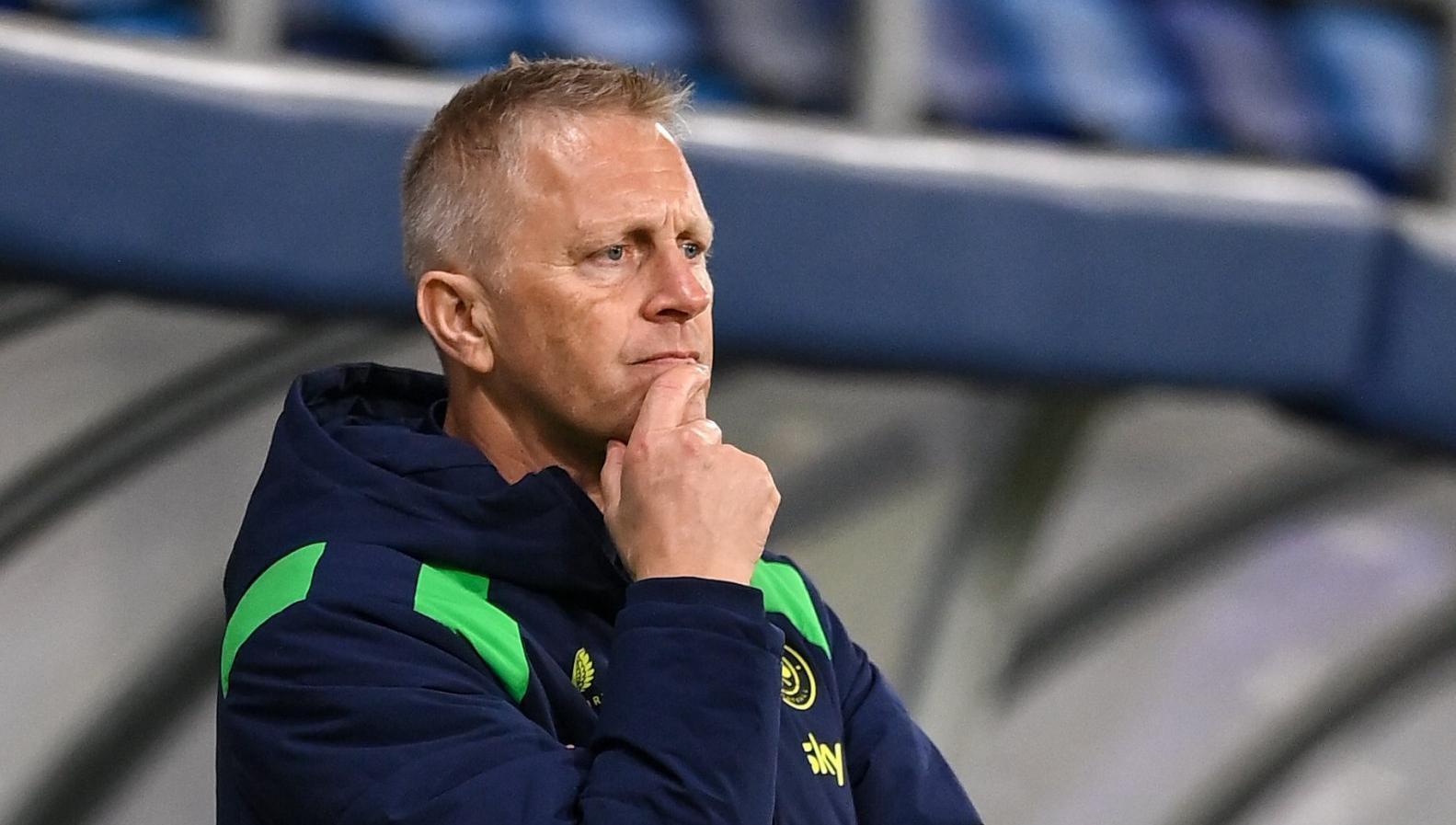
Heimir Hallgrímsson’s plea to keep Ireland and Israel apart from each other in draws is likely to be unheeded by Uefa. Pic: Stephen McCarthy/Sportsfile.
Heimir Hallgrímsson’s plea to keep Ireland and Israel apart from each other in draws is likely to be unheeded by Uefa.
The Icelander admitted he was glad to be over the couple of contentious games against a country found by an independent United Nations report to be committing genocide in Palestine.
Ireland followed last week’s 3-0 win by drawing 1-1 in Sunday’s rematch but the teams could be pitted against each other again when the Euro ’28 qualification draw is made in Belfast on December 6.
As it stands, with Ireland sitting third and Israel fourth in their Nations League group, that scenario will be avoided as they will both be among the third pot of seeds.
Yet, a couple of good results in Ireland’s two final games next month, away to Austria on November 14 followed by Kosovo at home three days later, will elevate them to second place and a second seeding. In that case, Ireland will have a one of 12 chance of being grouped with Israel.
Read More
There remains also the prospect of Ireland’s U21s facing Israel in the Euro playoff, depending on how Jim Crawford’s side fare against Lee Carsley’s England at Turner’s Cross on Tuesday night (6pm).
"No, they shouldn't,” Hallgrímsson said about the notion of the teams being pitted against each other again.
“That's not ours to decide - that's Uefa who decides that.
“Obviously, there's a big support for Palestine in Ireland but there's not many countries that support Palestine as much as Ireland does.
"I wouldn't wish any national team to go through what we've gone through in these two weeks, so maybe Uefa just needs to step in and do something."
He has highlighted the mental toll on his players of dealing with the controversy.
“Given that now we have the possibility reviewing all the things that happened, I think Uefa must take that into consideration that they can’t have this happening again, just for players’ welfare.
“Our psychologist said that now the process starts, when you go out of your bubble and your feelings come out.
“It’s going to be led by the players themselves. Most of them will have someone to talk to at their clubs, but we have a person available if they want to process it through a specialist.
“When I came in I thought this team needed a psychologist all the time, just like a doctor. Hopefully nobody needs to see a doctor, but every team has a doctor.
“It’s one of the things we will probably learn from and talk about going forward – being stronger, being more supportive to our players and our coaches. They need assistance in this area, for sure.
“And yeah, it raises awareness of the things that are going on. If it changes anything, I think it’s worth it. But it’s not for me to answer this one. It’s a good question to Uefa.”
The European governing body only introduces such a restriction when nations are in direct conflict politically.
For instance, Spain cannot be drawn with Gibraltar, Armenia with Azerbaijan while Kosovo are always kept apart from Serbia along with Bosnia-Herzegovina.
Uefa has already rejected a request from the FAI to avoid Israel.
“The answer I got was very clear: that would not be possible because Ireland and Israel have never been in direct conflict,” said FAI chief executive Courell recently. “So that was an answer that I took at face value.”
Uefa made their stance clear only a fortnight ago, by stating: “Decisions to avoid certain teams being drawn against each other are made taking into consideration several factors, especially conditions between the two countries leading to structural risks for security.
“Uefa handles every situation very carefully on its own merits and monitors all facts and developments.”


CONNECT WITH US TODAY



Be the first to know the latest news and updates