Battered and bruised, FAI chiefs unable to counter punch under Oireachtas scope
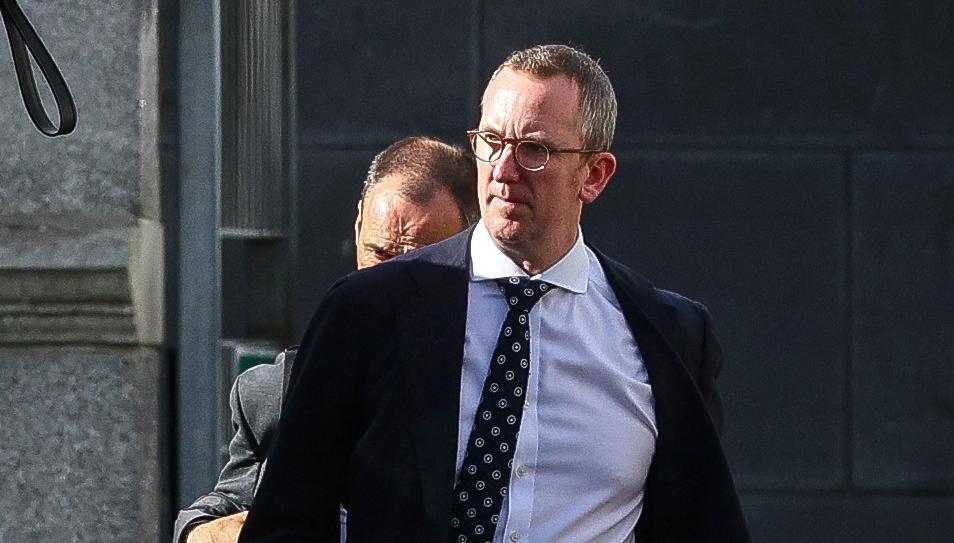
FAI CEO David Courell leaving house of the Oireachtas. Pic: Ben Brady/Inpho
It was within the FAI’s gift to land in the Oireachtas committee on the eve of a senior match but they weren’t to foresee it coinciding with the biggest football storm for seven years.
What was designed to be a session in front of the sports committee about safeguarding and governance descended into a marathon inquisition of their role in the debacle around last Sunday’s game against Israel.
On top of the nine committee members, or their substitutes, were three additional deputies in-situ at Conference room one of Leinster House. All three were aligned to the Stop The Game campaign.
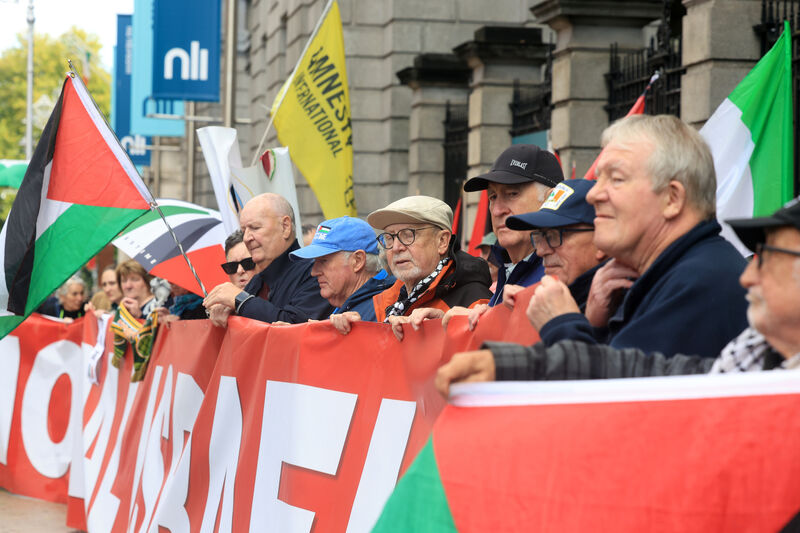
Aware of this group’s latest protest outside the gates of Government buildings, the FAI dispensed with the now traditional crossover from Buswell’s Hotel amid a blaze of flashbulbs and cameras. Their delegation arrived from the opposite side of the complex, briskly driven through the gates in a blacked-out people carrier.
Once proceedings got underway, their blazers were on the backfoot. Their excuse for not having with them a safeguarding specialist, either Kirsten Pakes or her new senior Mariama Ifode-Blease, didn’t wash with Cork TD Paudie O’Sullivan.
The new recruit is a part-time priest and how the FAI could have done with some divine inspiration as the grilling intensified.
The lunchtime session ran for two-and-a-half hours, an excessive period that meant chairman Alan Kelly couldn’t accept an addendum query from guest questioner Ruth Coppinger.
Some hysterical statements by the public representatives, rather than direct questions, contributed to unnecessary delays.
Safeguarding did consume the early stages, leading to the first of many requests for additional time from the FAI side to follow up on specific queries.
Whether it was around referees or volunteers in the grassroots game, there were enough pauses and obfuscation to realise the association has work to do to be fully trusted as the overseer.
Occasionally, the breadth of questions would drift into leftfield subjects such as the potential of the All-Island league but predominantly the day centred on Israel.
This included the entrenched position from the FAI, even before the February draw grouped them in the Nations League, to fulfil fixtures against them, the treatment of maverick Gavin Bazunu and the subsequent ballot of players.
Once again, the FAI resorted to catastrophising mode when justifying their risk averse status.
In cold, clinical language, without ever acknowledging that the team they faced were committing genocide in Gaza, the leap from losing six points to expulsion from the competition was flagged.
This specific possibility, never threatened by Uefa, was cited to quantify the cost burden as being a multiplier of their projected €10.3m losses from boycotting.
There's no precedent for such a punishment, quite the opposite in fact and the fact president Paul Cooke noted Southampton's spying case as a comparison was absurd.
FAI director of football John Martin confirmed that Bazunu wasn’t spoken to by the FAI about his feelings towards the Israel game ahead of his withdrawal.
Read More
Conflicting information has emerged since the squad was selected for this four-game window, with manager Heimir Hallgrímsson initially confirming he’d individually contacted each of the 26 players.
Following Bazunu’s decision not to participate, under questioning the manager on Saturday clarified he’d only spoken to the outfield players, leaving the goalkeepers to his coach Gudmundur Hreidarsson.
There was a further twist at the Oireachtas when chief executive Courell revealed how the Ireland manager visited Bazunu in August while he was a Southampton player.
Although he cited this “hour-long conversation” as an adequate window to raise any concerns, Courell afterwards admitted the chat may have been shorter.
When this information was probed by the committee’s chairman, Martin stepped in. “Truthfully, it doesn’t appear like anybody spoke to the goalkeepers,” he said, a response which, as new information, was praised by the committee.
Hallgrímsson’s earlier declaration, during his own pre-match press conference, that ‘lies’ have been told about the treatment of Bazunu may have been accurate but in what context is open to interpretation.
What was confirmed is that Bazunu’s vote was part of the final tally, believed to be 15-8, that concluded the match should go ahead.
Yet, that wasn’t definitive either. Courell outlined how that input would inform the FAI’s decision, emphasising they were the ultimate decision-maker around these contentious matches.
This wasn’t the bruising affair of John Delaney’s 2019 infamous visit to the Public Accounts Committee but another chapter in a chronology of FAI trips that they came out worse from.


CONNECT WITH US TODAY



Be the first to know the latest news and updates