One-to-11 of what’s new in the Premier League this season
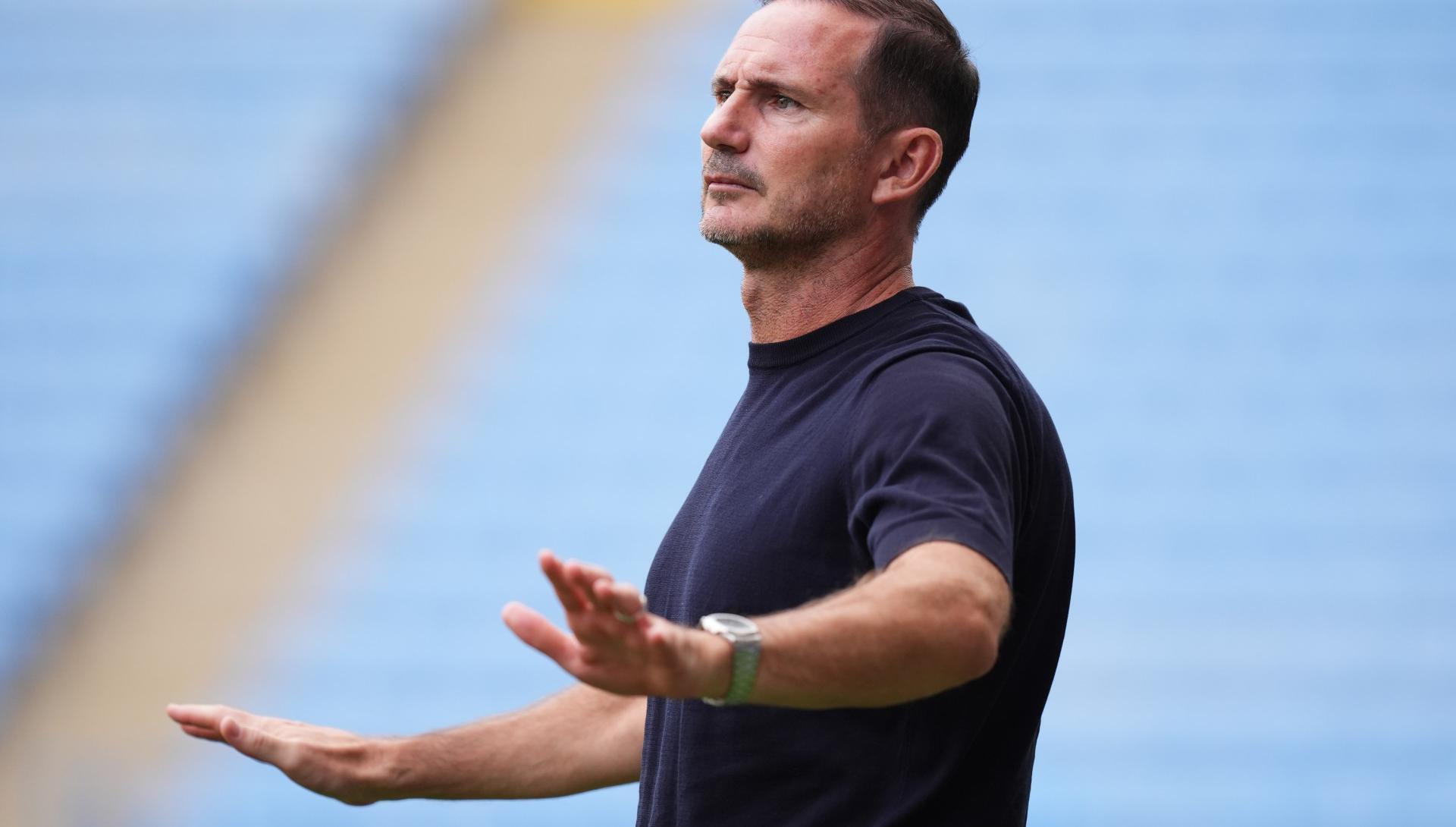
BLUE SKY THINKING: Coventry boss Frank Lampard. The objective for promoted trio Coventry Pic: Mike Egerton/PA Wire.
Coventry City: Back in the Premier League for the first time since 2001 and with Frank Lampard as their high-profile manager.
Hull City: Promoted back to the top flight (it was 2017 when they were last here) after winning the play-off final.
Ipswich Town: A return to the promised land after only one season away (but without promotion-winning manager Kieran McKenna after he decided to step down)
Nine of the 20 clubs in this year’s Premier League have changed their manager since last season. That’s a record (one more than season 2016-17). The new men in charge are Marco Rose (Bournemouth), Xabi Alonso (Chelsea), Pierre Sage (Crystal Palace), Alvaro Arbeloa (Fulham), Gary O’Neil (Ipswich), Andoni Iraola (Liverpool), Enzo Maresca (Man City), Matthias Jaissle (Newcastle) and Oliver Glasner (Nottingham Forest).
Arsenal’s Mikel Arteta is now the only manager in the entire league who has been in place since before the pandemic. A crazy statistic.
This year, officials will be selected from the new 39-strong Professional Referee Group, which will provide referees for both the Premier League and the Championship. Many of them have never refereed in the top flight before. There will be no Anthony Taylor, who has left the Premier League, and no assistant referee Sian Massey-Ellis, who has retired.
Officials will have a greater focus on penalising holding by defenders at corners - and watching out for challenges on goalkeepers. This includes penalising defenders where they are clearly only focused on opponents not the ball – impacting an attacker’s ability to play or challenge for the ball
In the war on time wasting, players receiving treatment or assessment on the pitch must now stay off for at least one minute (previously it was 30 seconds).
A five-second countdown for throw-ins and goal-kicks is being introduced. When the rule is broken, possession can be awarded to the opposing side.
Substituted players have 10 seconds to leave the field. If they take longer, the player coming on will need to wait until the next stoppage before entering the field.
If the game is stopped for a goalkeeper injury, his manager will have to nominate an outfield player to leave the pitch immediately. The nominated player must stay off the pitch for at least one minute after the restart of play.
The hair pull has been downgraded. Three players were sent off for hair pulls last season but in 2026-27 the default will be yellow if the offence is deliberate but without excessive force. Reds will still be shown when force is used.
VAR can now review second yellow cards that result in a red card. But it will not be able to intervene to recommend a second yellow card if one was not shown by the referee At set pieces, VAR can review if there has been a foul committed before the delivery comes in, and this will be the case if the routine leads to a goal, penalty or card.
The full judgements made by the Key Match Incidents Panel on VAR decisions will be shared with fans for the first time. The use of RefCam will for the first time allow the broadcast of audio between the referee and players (although this will not be live or include conversations with VAR).
Some communication between referees and VARs will be made available to supporters, including direct quotes posted online
All 20 Premier League clubs have launched new home kits for 2026-27 and many have added fresh second and third kits too. Crystal Palace, who have gone for a stylised version of their old diagonal blue and red sash, and Brighton, who have switched to blue with white pinstripes, are the most radically different from last season.
The front-of-shirt gambling ban means betting brands are no longer permitted as primary shirt sponsors. They can only appear on shirt sleeves, training apparel and hoardings.
The old Profitability & Sustainability Rules (PSR) are out this season and replaced with Squad Cost Ratio (SCR) instead.
This means that an 85% cap replaces the £105m three-year loss limit. The cap covers spending on wages, transfer and agent fees (with income including football revenue and player sales profits).
Clubs playing in European competitions face a stricter 70% limit imposed by UEFA.
The transfer window is open until 11pm on Tuesday September 1st but we are already guaranteed a bumper list of new additions. There were over 130 in-coming transfers completed by Premier League clubs, including youth signings and loans, by August 19th – with many more being negotiated. Every club has made a signing and some, including Chelsea, Hull and Ipswich, are well into double figures.
Well, we had to end on a positive. Everyone starts the season on zero points with 38 games to play. Why shouldn’t it be your team that dreams of winning it?

CONNECT WITH US TODAY



Be the first to know the latest news and updates