Unwelcome and undue: Trump’s red-card intervention hurts the US’s World Cup more than it helps
In pushing Fifa to reverse Folarin Balogun’s suspension, the president did the most American thing possible: assert unasked-for power to get his way
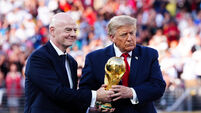
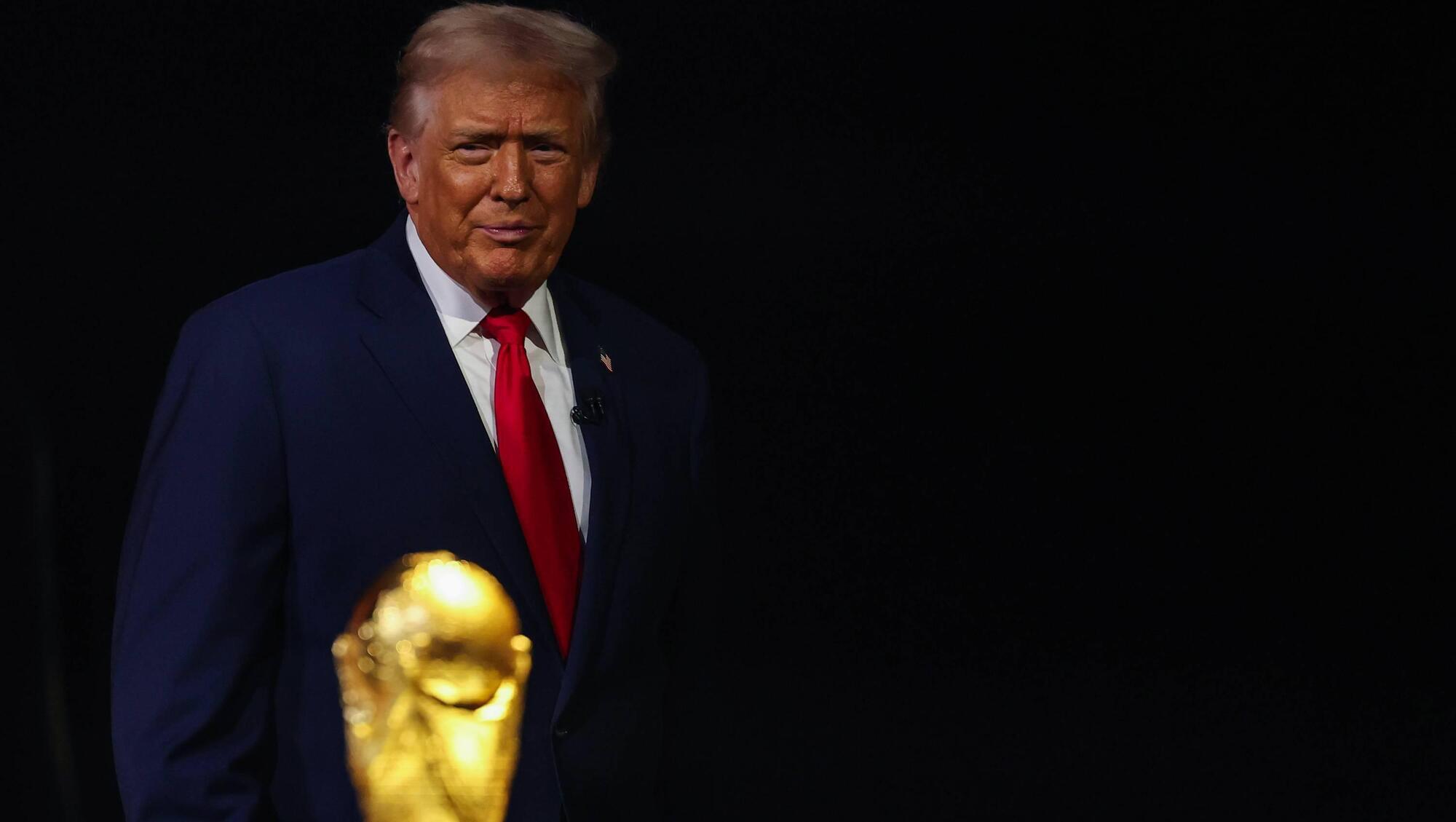
INTERFERENCE: US President Donald Trump. Pic: Patrick Smith/Getty Images

INTERFERENCE: US President Donald Trump. Pic: Patrick Smith/Getty Images

THE story of Garrincha’s red card in the 1962 World Cup is the stuff of legend. The Brazilian great was sent off in the semi-finals for lashing out at an opponent, but back then, Fifa had no automatic one-match suspension in place. So a disciplinary committee convened the next day to decide his fate for the final.

As the story goes, the assistant referee who had the best view of the offenCe was paid off and disappeared, and the president of Chile, the tournament’s host, put in a call to Fifa, urging them to decide against any additional suspension. He did so for the sake of keeping one of the tournament’s most entertaining players on the field. Garrincha emerged scot-free, and Brazil won their second World Cup days later.


It’s the type of far-fetched tale that seems ancient, but Sunday brought the type of news that makes one realise that we’re not so far removed from those days. Ahead of the US men’s national team’s last-16 match against Belgium, Donald Trump had put in a series of phone calls to Gianni Infantino, as the US Soccer Federation sought ways to suspend the one-match ban issued to US striker Folarin Balogun.

Balogun was sent off during the USMNT’s 2-0 victory over Bosnia and Herzegovina on Wednesday, having inadvertently stomped on the ankle of an opponent while vying for possession. The red card was dubious and it has been relitigated to death, with the general consensus that the US were hard done by the call, which was made after video review. Balogun, US head coach Mauricio Pochettino and a chorus of others expressed anger and disappointment at the sending off, but seemed to accept the suspension. US fans were outraged but many eventually resigned themselves to facing Belgium on Monday without their first-choice striker.

REPRIEVE: United States striker Folarin Balogun is now eligible for Monday's Round of 16 tie against Belgium. Pic: Jamie Squire/Getty Images

Which is right around the time Trump inserted himself in the situation. US Soccer had been doing its own lobbying and in short order, Balogun’s one-match ban was suspended until after the tournament. Fifa had done the same with a handful of players (including Cristiano Ronaldo) who had earned suspensions prior to the tournament but doing so during the World Cup itself is without precedent.

What’s followed has been a mix of elation and outrage. Many US fans are understandably pleased by the development, as is Pochettino, who said as much on Sunday. Belgium head coach Rudi Garcia was incensed, telling reporters that he was unaware that April Fools’ Day falls in July. The Belgian federation has stated it is reviewing its legal options.

Fifa, of course, has its own explanation, though it doesn’t offer much insight. It simply points to the article in its bylaws that allows for this decision. Fifa officials took a similar approach when asked by multiple media outlets about Trump’s alleged phone calls, insisting that the very nature of its disciplinary process makes it impossible for that type of intervention to sway a decision.

Asking any of us to believe that Fifa is not influenced by Trump is an absurdity. It is tantamount to asking us to believe that Trump was awarded its “peace prize” on merit alone. Infantino’s relationship with Trump has long been a cozy one, a mutually beneficial symbiosis where Trump gets the type of sycophantic praise and attention he thrives on and Infantino gets the keys to the biggest commercial market in the world for Fifa’s cash cow.

What Trump does not realise – or perhaps he simply doesn’t care – is that he has done the whole of American soccer no favours by putting his thumb on the scales.

The USMNT have arrived at their current station in the tournament on their own merits, riding three exceptional performances and one bang average one to the last 16. Balogun has been arguably the US’s best player throughout that run.

Yet even without the Monaco striker, there was no shortage of pundits and oddsmakers pegging the US as likely to win against Belgium. The perception that the US have been handed an unfair advantage here – they have, to be clear – taints their potential advancement. This is true in the States but much more so globally, where Trump has become the latest in a long line of ugly Americans who are perceived, fairly or unfairly, to have expected preferential treatment.

It is unfortunate, too, for the American public, many of whom have raged against the assertion that their home country is a footballing backwater or that they lag well behind other nations in terms of talent and prestige. The US have done tremendously at this World Cup to prove that notion a farce, but a win on Monday may well be perceived as one engineered by Fifa.

Norway head coach Ståle Solbakken seems to agree with the notion that a victory would carry an asterisk.

“I think that’s a big mistake by Fifa,” he told reporters after his side’s shock 2-0 victory over Brazil on Sunday. “Bad, bad, bad, bad, bad decision. I feel sorry for the United States, because even if they win, the game will always have this bad thing about it. Not good for the sport. Bad decision by Fifa.” 

Trump’s involvement also mars what has to this point been by most accounts a successful World Cup. There was much made in the run-up about a host of issues: ticket prices, visa issues, logistical and infrastructure concerns and even the potential presence of immigration enforcement agents at matches. Some were calling for the tournament to be hosted elsewhere. And while some of those issues unquestionably came to bear – one simply needs to look at the miserable treatment of the Iranian national team to see that – the perception of the tournament has by and large been positive.

Now, Trump has done the most American thing possible: assert undue, unwelcome, unasked-for influence and power to get his way. On Sunday, he welcomed the news of Balogun’s reprieve on social media, taking to his Truth Social account to thank Fifa for reversing this “grave injustice”.

What he may not realise is that he’s inflicted an injustice of his own, one that may prove much more difficult to reverse.

Guardian

x

More in this section

Sport

Newsletter

Sign up to our daily sports bulletin, delivered straight to your inbox at 5pm. Subscribers also receive an exclusive email from our sports desk editors every Friday evening looking forward to the weekend's sporting action.

Cookie Policy Privacy Policy Brand Safety FAQ Help Contact Us Terms and Conditions

© Examiner Echo Group Limited