FAI target European top 20 spot for men's team in new strategy
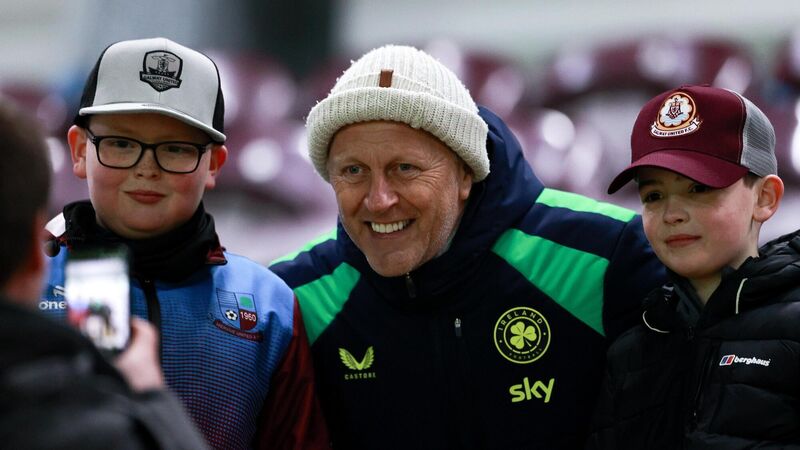
NEW STRATEGY: Republic of Ireland head coach Heimir Hallgrimsson has a photo taken with supporters. Pic: Thomas Flinkow/Sportsfile.
The FAI has placed a leap for the senior men's team into Europe’s top 20 as a cornerstone of its latest strategy wish-list.
Heimir Hallgrimsson’s rescue act to snare a World Cup playoff spot this month improved Ireland’s Uefa ranking to 28 but a top-20 spot by 2029 is the new objective.
That – and the women’s team jumping from 18 inside the top 15 – are just two of the targets set out on a blueprint running from 2026 to 2029.
Its new marketing catchline is 'Time To Change The Game'. Qualification by each team for at least one major tournament over that timeframe is also listed.
Noting that 74% of the targets contained in the last strategy were achieved, the document touches on elements already laid out in their facilities and investment strategy and pathways plan.
On the latter, it is highlighted that their failed quest to have already begun the nationwide calendar season, otherwise known as summer soccer, was ‘divisive’.
Amidst the FAI cutting at least a quarter of its workforce, primarily football staff, there’s a clear emphasis on programmes being club led.
For instance, after ditching their own Transition Year course, they want eight League of Ireland clubs to have their up and running within the next four years.
The ill-fated philanthropic arm of the association – recently rebranded as the Global Ireland Football Foundation – is to generate €15m by 2029.
This had been circled in their facilities plan as a key driver for the FAI delivering their share of the €865m estimated to meet their infrastructural needs. The €122m raised so far has come through state-led grants.
Although Ireland has the 14th rate of participation across all 55 Uefa member countries, the FAI insists it’s the third most underperforming of them.
“We qualify for major tournaments less often than comparable European nations,” it states.
“‘Access to clear and consistent player pathways varies across the country’ and that ‘League of Ireland clubs operate with far lower staffing, facilities and commercial capacity than European peers’.
“Many clubs lack the basic infrastructure required for modern participation and development”.
When it comes to the blame game, the FAI pointedly surmised: “This is not an effort problem. It is a system problem.”


CONNECT WITH US TODAY



Be the first to know the latest news and updates