Celtic’s Wilfried Nancy catastrophe is another indicator of a club embroiled in turmoil
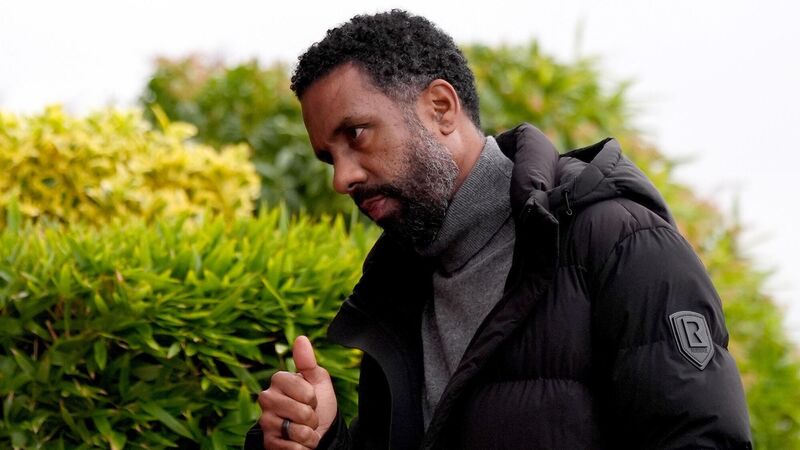
WIL-FIRED NANCY: Celtic have sacked Wilfried Nancy as manager. Pic: Andrew Milligan/PA Wire.
Any club confirming the end of an error after eight games owes an apology to its supporters. In Celtic’s case, even the admission of an all-time blunder in hiring Wilfried Nancy would be unlikely to placate the masses.
Remorse has not been forthcoming anyway. As Martin O’Neill’s return as the Celtic manager was confirmed, office bearers took it in turn to express disappointment at the Nancy affair. Which was very good of them.
Celtic do not have a monopoly on bad decision-making. It just currently feels as if that is the case. A club which has dominated in Scotland for more than a decade, which has vast resources and more scope to plan than others of much lower stature, should never have been seeking a fourth manager in one season.
That they are points firmly towards a lack of strategy and direction. It is a preposterous situation. Celtic are lucky that O’Neill, 73, retains an appetite to work. He also ticks another box, that of being idolised in the stands.
It took more than 40 days to hire Nancy, who duly lasted 33. He had no adequate credentials for this post and a one-dimensional outlook that failed even against moderate opposition in Scotland. Paul Tisdale, the head of football operations, is the sacrificial lamb.
Read More
It was always extraordinary that an individual whose claim to fame is managing Exeter could be handed any degree of power at a club of Celtic’s size. Tisdale’s exit, like Nancy’s, will not trigger any tears. Far more intriguing is how Celtic ended up with such underwhelming personnel in key roles.
A serious, functioning Celtic would have allowed Nancy to sign the new centre-forward and centre-back the team crave before Rangers visited. Available evidence suggests the outcome may have been no different – senior players were highly sceptical of Nancy from the outset – but this would have been a statement of intent.
The decline of Celtic’s squad, once so rich in assets, is astonishing. Nancy needed to be pragmatic when instead he was an ideologue. His employers must have known that hiring a manager of this ilk in December would mean a significant January overhaul that suddenly has to take an entirely different form.
Celtic’s season has been defined by statements rather than victories. The first, rambling in nature, blamed everything short of Magna Carta for woes in the summer transfer market. Brendan Rodgers was berated in writing by Dermot Desmond, Celtic’s main shareholder, when departing in late October.
The deeply personal nature of Desmond’s attack was classless, not least towards a manager who had delivered sustained success. Rodgers remains the highest calibre of coach Celtic could attract.
Desmond’s son, Ross, caused fury at Celtic’s annual general meeting with his defence of directors and criticism of fans. This occasion, brought to an unruly halt, was an embarrassment for all involved. When the chair Peter Lawwell resigned in December due to “abuse and threats” Celtic’s followers were again placed in the spotlight.
For Lawwell to walk away, the level of intimidation must have been severe. His interim replacement, Brian Wilson, joined Desmond Sr and the chief executive, Michael Nicholson, in welcoming O’Neill back. But missing, sorely missing, was proper detail of what led these people down the Nancy path.
Without it, directors stand accused of replacing a manager simply because supporters are screaming in their faces.
Those responsible for targeting Lawwell should be condemned in the strongest possible terms. He was an undoubted asset to the club. Yet there is a lingering danger that Celtic have confused extreme and outrageous behaviour with the attitudes of a silent majority.
Plenty of sane, peaceful Celtic observers have legitimate concerns about the club’s direction. All those supporters want is for Celtic to be the best version of itself; instead, the club is staggering around in the dark. Nancy was a symptom of that.
Someone, somewhere, has to act as the adult in the room and mend bridges between club and fanbase. It will not be Wilson, who has been on the board for two decades. O’Neill has enough on his plate. Celtic will never be in financial peril under Dermot Desmond but the Irishman or his son have to properly demonstrate they are progressive custodians for this football era.
Celtic Park is a tired venue. This is a business which has a last reported £77m in the bank, which apparently finds it as difficult to upgrade facilities as it does to sign footballers. Nicholson makes himself available to nobody besides, very occasionally, an in-house media team. Celtic give the impression of being far too comfortable with being big fishes in a small pond.
There are two bizarre elements to this. First, Celtic proved – in the exception to a recent rule – they could mix it with the best during last season’s Champions League. This offered reason to progress, not regress.
A glitzy world beyond Scotland briefly seemed to appeal to a club otherwise obsessed with staying a few steps ahead of Rangers. It is also a reality that this hitherto miserable campaign is salvageable. Celtic could emerge from the league phase of the Europa League. A domestic double is feasible.
Should these uplifting outcomes come to fruition, they would provide no justification for the pickle Celtic find themselves in. A reboot is desperately needed. An appropriate acknowledgment of failure around Nancy should be just the start.