'Belgian fifth division club has better infrastructure than Shamrock Rovers' - New report shows where LOI needs work
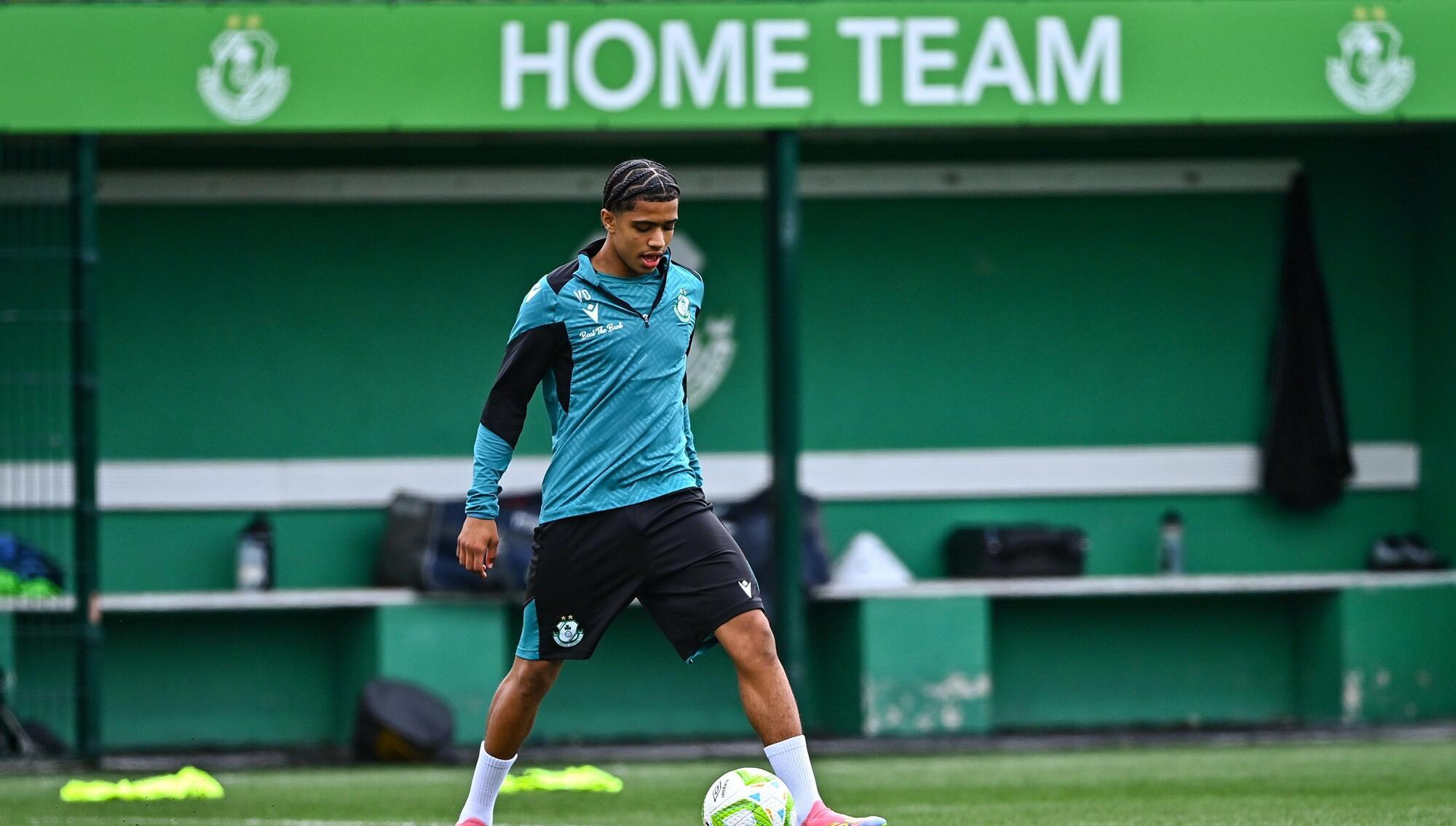
Victor Ozhianvuna during a Shamrock Rovers training session at Roadstone Group Sports Club. Photo by Tyler Miller/Sportsfile
Time for words has ended. Time for action is nigh.
An auditing report undertaken by Belgian specialists Double Pass was the last element requested by the Government to justify an average annual €8m of taxpayers’ funds being pumped into Irish football.
Will Clarke in the League of Ireland department has been working for almost two years on quantifying the costs necessary for the 26 academy clubs to operate at the level mid-ranking European rivals do.
Since Double Pass began work visiting clubs 15 weeks ago, they measured systems, facilities and resources against other nations ranked from 51st in the world and the results have been stark.
It’s the latest – and should be last – insight as to how far behind the Irish industry is when it comes to equipping budding players for the professional game.
A total of 29 areas across the game were benchmarked. Ireland were found to be deficient in all but seven.
None of the clubs meet the standard employment criteria of having an academy director and four full-time coaches dedicated to youth development, male and female.
That only a quarter of clubs had access to indoor facilities was another indictment.
Organising the age-groups into two-year intervals is also an obvious obstacle, necessary again by a paucity of cash.
Contact time – that period where high-potential players receive suitable direct coaching – averages at less than three sessions per week, whereas the European norm is over four.
Budget Day on October 7 remains the critical date on which the LOI will learn of their plea for grant aid being awarded.
Politicians have offered plenty of lip service supporting the need to fund the model but apart from a donation to fund the audit, real money has been elusive.
Sport Ireland have endorsed the proposal. The State agency had a presence at yesterday’s report unveiling through director Nora Stapleton, the former rugby international.
A second meeting with the Department of Sport is scheduled for next week. Then it’s decision time.
“This is a long-term process now,” said Clarke.
“We’re only going to get one chance to make a success of this. So it's more important that we do it correctly rather than do it quickly.
“When you're using public money, there has to be a return on that.
“So it's really important that we basically pick the three or four points that we will see that we can do well.
“We need to put the foundations in place that will ensure that we have a really robust new development system moving forward.
“The ambition hasn't changed. The route might change, but again, the route might change because it's the right thing to do.”
Feedback from the auditors was both fascinating and sobering.
Hans Vander Elst, director of football at Double Pass, was taken aback when he saw League of Ireland leaders Shamrock Rovers changing in prefabs at their Roadstone training base.
“People are talking here about infrastructure but my son’s club, playing in the fifth Belgian division, have better infrastructure than the biggest club in Ireland,” he noted.
“It’s 100% about a mindset shift. There is momentum in the LOI.
“Firstly, all other countries are evolving. Secondly there is Brexit. The Government can give a kickstart with investment into the system and afterwards it should be self-sustainable. Sometimes the difficult part is to get started.”
Aside from the analytical theme throughout their 50 recommendations, the simple art of human harmony was cited as lacking.
“It’s very surprising that in your biggest clubs the first-team manager is not talking to the academy manager - that’s crazy,” added Vander Elst.
“Then we expect to develop players for the first team but they don’t talk to each other. It’s unbelievable. We met clubs with owners, chief executives and technical directors. I said ‘Guys, what are you doing?’ “I’d seen that in some countries but not to the massive level in Ireland.
“I can say it very sincerely and straightforwardly that it’s management driven. First team managers are deciding everything in the club. They have too much power in general and want to control academies.”
He might have a point, circling back to Rovers. Just 18 months into his tenure as director of academy operations, Simon Friel has quit, believed to be referencing a disconnect with the hierarchy.


CONNECT WITH US TODAY



Be the first to know the latest news and updates