Anticipated State funding for club academies could be means tested
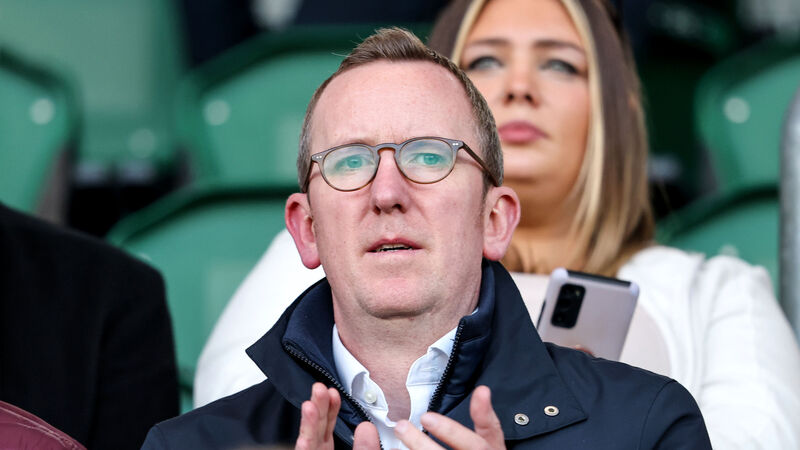
FAI CEO David Courell. Pic: Dan Sheridan/Inpho
Academy grants from the State may differ between football clubs based on means testing.
The FAI are confident their plea for €8m of annual exchequer funding will be granted for 2026 in this October’s Budget.
However, a strong European run like the recent Shamrock Rovers’ surge to the Conference League knockout stages, grossing €7m, or St Patrick’s Athletic banking €2m for Mason Melia could see average payouts rerouted to clubs with less income streams.
A formal proposal itemising the costs associated with developing an industry was submitted last September and an auditing company is due to deliver their compliance report to the Department of Sport by August.
In the interim, the association is assembling a “coalition of voices” – including managers, potentially Stephen Bradley and Damien Duff – to lobby politicians for a favourable outcome.
As Niall Quinn recently indicated, apprehension exists within the political sphere about the concept of funding private industries of football clubs.
“There’ll be the introduction of a tiered approach and potential to look at a means-tested element,” explained FAI chief executive David Courell.
“If one club has a bumper season in Europe, should they get the same as the club the next season as the one who finished bottom of the league?
“What if a club has a significant international transfer? Is there a reinvestment aspect to that revenue that they derive?
“These are questions that the government are challenging us on, understandable because in every investment they must have the taxpayer in mind.
“It’s just some of the nuances to give the ministers and decision-makers comfort that this investment will get where and when it's needed.”
Courell believes the grants will act both as a catalyst to establish a professional youth development sector and remedy the shortfall of teens within a full-time professional environment. Statistics recently furnished by the FAI claim this number has plummeted by 80% to just 20.
“This is not a handout in any way, stretch, or form,” he contends.
“This is an opportunity to invest, to kickstart an industry that sadly we’ve been lagging behind our international counterparts for decades.
“81% of the planned money is distributed to clubs. Their nervousness and questions primarily centre around investing into private enterprises.
“It’s not something Governments normally do and we want to work with them and clubs to give them comfort and confidence.
“But the government has done this previously for industries and we believe this is no different. It is actually more compelling in the impact it will have on the economy, clubs, leagues, local communities, international teams and national pride.
“Genuinely when we lay it all out for the Government, it’s a very compelling investment proposal – in terms of the return on investment for all parties involved.
“Government have supported us with the audit for the next few months.
"We’re engaging with them quite regularly, not just sporadic, as it's an ongoing regular dialogue.
“I want to get us to a place where we’re working together on this because yes, there are still some questions the Government has but they don’t centre around the FAI.”
CONNECT WITH US TODAY



Be the first to know the latest news and updates