'Let's call a spade a spade, he is playing catch up,' Damien Duff stresses cold reality for Mason Melia
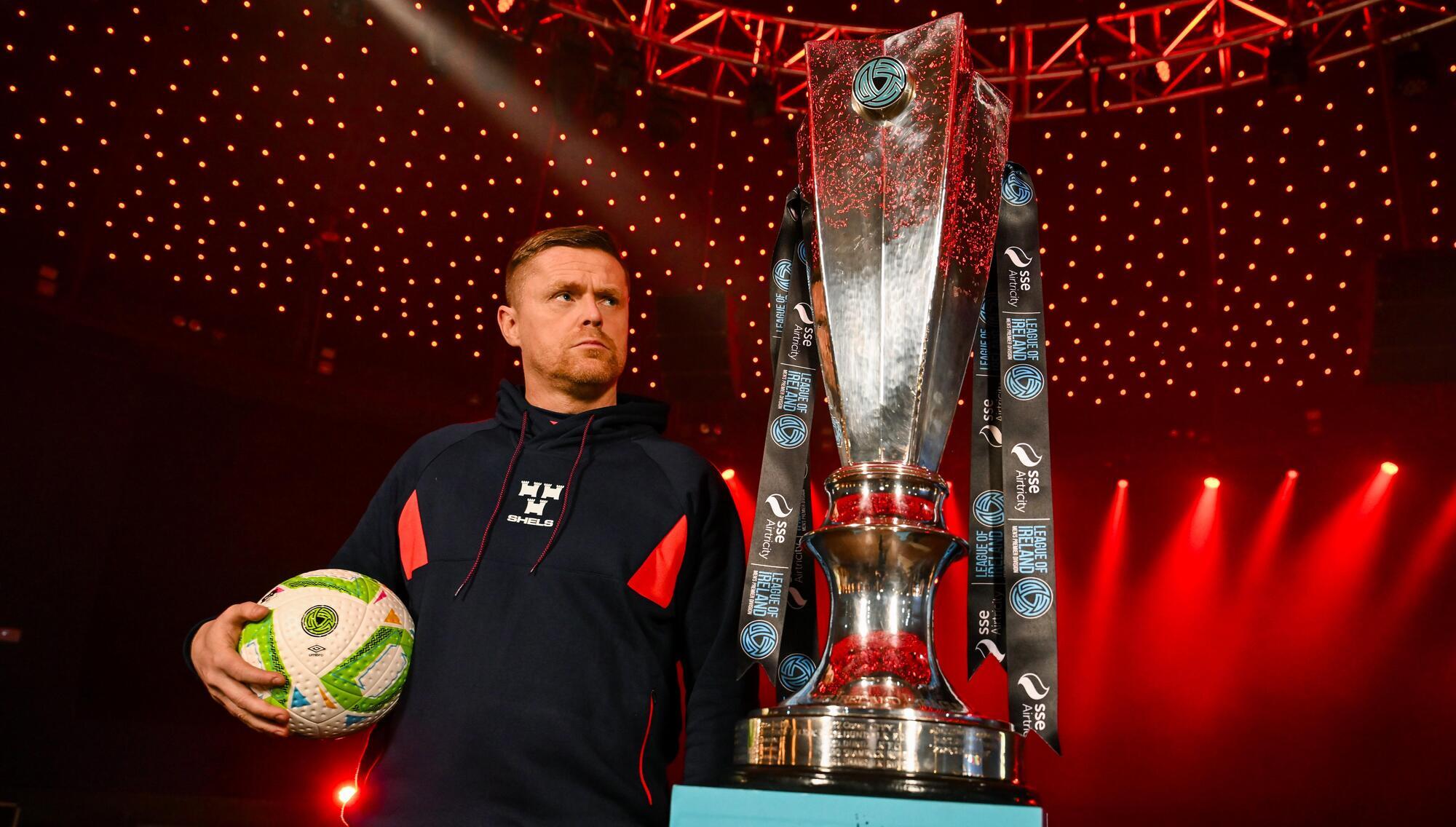
Shelbourne manager Damien Duff during the SSE Airtricity Men’s Premier Division, SSE Airtricity Men’s First Division and SSE Airtricity Women’s Premier Division Launch 2025 at Mansion House in Dublin. Photo by Stephen McCarthy/Sportsfile
Damien Duff has wished million-euro kid Mason Melia the best at Tottenham but stressed his preference is the earlier route he took.
In contrast to Duff and Robbie Keane who joined English clubs at 16, Brexit rules since 2021 have hiked that age permission to 18.
St Patrick’s Athletic first-teamer Melia, who turned 17 last September, won’t begin his five-year contract in London until January 2026.
Nevertheless, him banking his club a guaranteed fee of €1.8m – the first LOI player to reach the seven-figure barrier – is music to the ears of a domestic football advocate like Duff.
The former Ireland centurion led Shelbourne to their first Premier title in 18 years last November, denying Shamrock Rovers an unprecedented fifth title in a row, and he’s relieved transfer fees are finally reflecting the worth of talent.
Read More
“If he went at 15 of 16 he's probably going for five or six figures, not seven,” noted Duff, speaking at Wednesday’s LOI launch, ahead of his team meeting FAI Cup winners Drogheda United in Friday’s President’s Cup curtain-raiser.
“It's brilliant for him, brilliant for St Pat's financially and I guess brilliant exposure for the league. I'll be intrigued to see how he gets on.
"Listen, that's for the whole business side, Neil, Mickey, Luke, that's why he's in.
“If I'm brutally honest. it's a side that interests my assistant Joey a lot, it doesn't interest me.”
For all the hype around Melia moving to Spurs when he completes his final season with St Pat’s, Duff insists the trailblazer has work to do to meet the demands.
“Mason is physically a beast and has been like that for quite a few years,” said the player who began his career at Blackburn Rovers before his move to Chelsea and two Premier League medals.
“It's the Catch 22 of this Brexit rule.
“He has stayed here and got first team exposure and we have kept the best players here but missed two or three years at an elite (club) - one of the biggest clubs in the world.
“There are pros and cons for everything.
“He will be going to Spurs at 18 and I will be supporting him as a League of Ireland fan, as an Irish fan, but if you call a spade a spade, he is playing catch up.
“I'd imagine he's not going into Spurs 18s or 20s, he's going into the first team so let's see what you've got.
“Here, I was training with Blackburn Rovers first team when I was 16 and he will be training when he's 18. I have two years on him, so that's the downside.
“All I can speak of is my experience. I went to England at 16, granted it's an awful long time ago, and I wouldn't change it. I went and lived at the training ground, literally, for two years until I was 18 and probably touched the football more than any kid in the world - training two or three times a day. At nighttime I was down at the astro playing. I lived it.
“There was nothing in my way. Life is different now.” Melia’s manager Stephen Kenny holds a concern of a similar kind – how to nurture peers other than his special No 9 within a testing 10-team division where results are the priority for managers.
"There is a way for players to come through, like Mason playing in first-team but he is a unique player,” said the former Ireland boss, now in the Saints hotseat seven months.
“Not many squads in the Premier have many 16-year-olds in the first team. That's not happening unless you have a developmental side.
"Is the U20 league at a level? The pitches are not great. I've been to some of the matches and the facilities are not great."
Kenny does, however, feel that the eye-catching fee promotes the league’s reputation. Unlike previous teens on their books, Sam Curtis and more recently Michael Noonan, Melia’s three-year contract strengthened their hand in commanding value.
"I am personally not hung up on the fee but I get the big picture and the symbolism of that,” he admitted.
“Certainly, it is interesting because we are in our infancy since Brexit with our young players.
“You see it with Scandinavian clubs, where they command really high fees for players whereas clauses in contracts can be difficult for clubs here. Sometimes clubs are in a dilemma because players have agents from a young age and maybe the player will go unless you accept a clause.
"There is another good way of doing it, like the Scandinavian clubs. Players come through their academies and are developed when they go to England or further afield for fees.”

CONNECT WITH US TODAY



Be the first to know the latest news and updates