GAA launch 'Game Changer' project to tackle domestic, sexual and gender-based violence
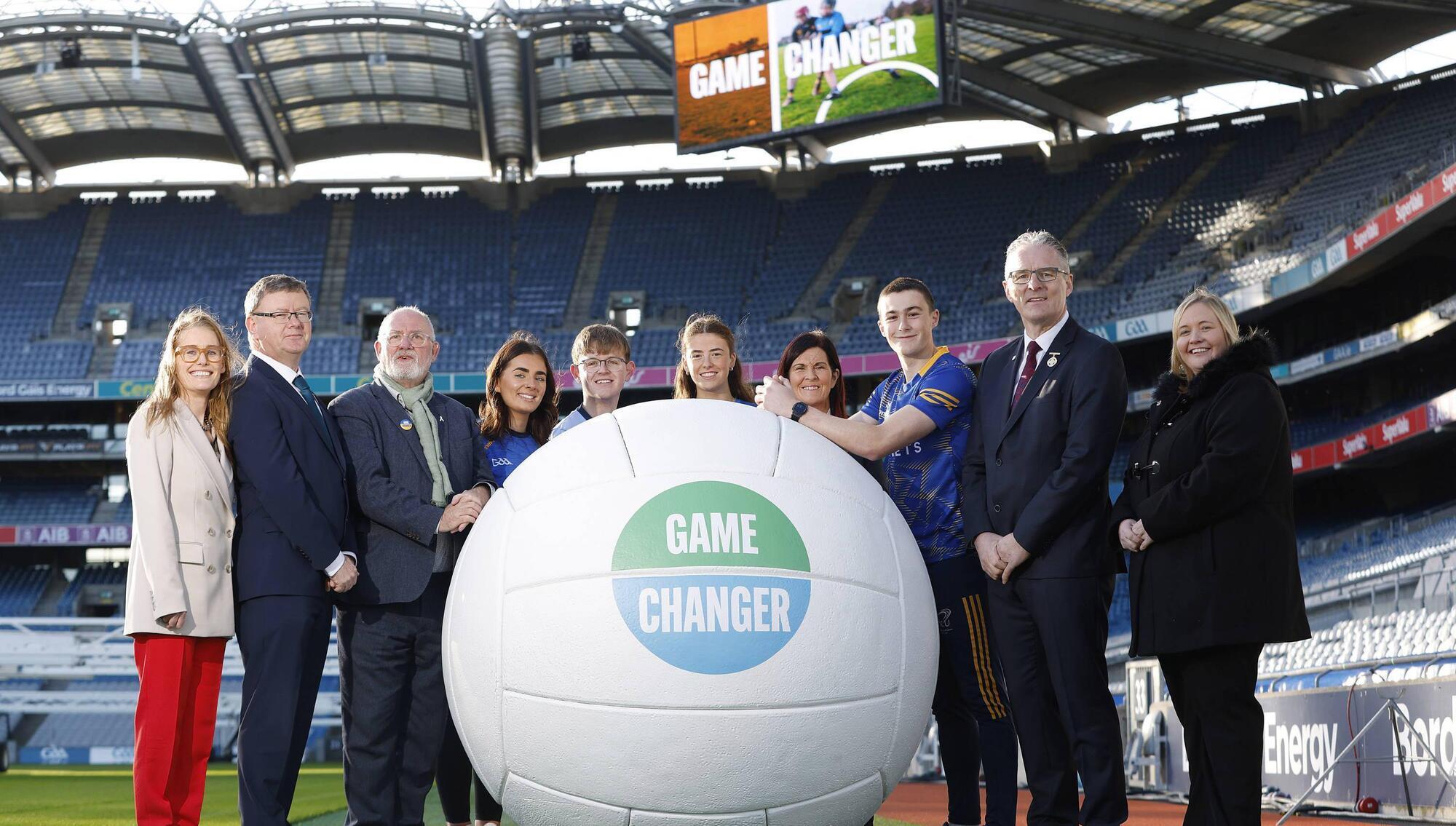
GAME CHANGERS: Game Changer is a three-year project seeking to harness the positive influence of Gaelic Games to challenge the social and cultural norms that contribute to gender-based violence and sexual exploitation and aims to deliver positive behaviour change throughout society.
In the period after Ashling Murphy's murder in early 2022, Colin Regan's department in Croke Park was swamped with correspondence, the most it has ever received.
Male members, a lot of them coaches and players, wanted to do something, anything, to help.
"They were just reaching out and asking what can we do?" said Regan, the GAA's Community and Health manager.
"Because they also felt uncomfortable. They wanted to do something but there is a reluctance sometimes for well intentioned men in this case to do something because they might say something wrong.
"It's an understandable caution around possibly saying the wrong thing in what they might see as a women's space."
Regan shared that sense of caution around the role that he, and the GAA, should have in the area of tackling domestic, sexual and gender based violence.
"I did, absolutely, but I think that's where we had to go," he said. "It's okay to be uncomfortable in this space because that's where growth happens. It's the same in a sporting context, a good coach will try to move a player into that uncomfortable zone."
What the association eventually came up with is 'Game Changer', a project that aims to harness the influence of the GAA in Irish society to tackle the problem.
Exactly how big a problem is it? Justice Minister Helen McEntee said at the launch of Game Changer at Croke Park that violence against women, particularly 'behind closed doors', is an 'epidemic'.
Another of the speakers referenced a discussion with GAA President Jarlath Burns who said that if people realised the full extent of this violence in Ireland, there'd be a national protest.
But where does the GAA fit in? Truth be told, few probably anticipated the amateur sporting organisation would take the lead on it like this.
"We have a responsibility to our huge number of female members within the GAA," maintained Regan, who said that the timing around the GAA attempting to integrate with the LGFA and Camogie Associations was a happy coincidence.
"I think the timing couldn't be better because 'Game Changer' will have helped to lay the ground (for integration). And if you're asking me what I'd like to see down the line it's that it further facilitates the integration process and gives a clear signal to our sister associations, and all our female members, about their place in the Gaelic games family."
The Game Changer project will see the GAA collaborate with Ruhama and White Ribbon Campaign Ireland, with the support of the LGFA, Camogie Association and statutory agency Cuan, initially for three years.
The current strand of the project is the awareness phase, acknowledging that the problem exists and that the GAA can help. An example might be identifying casual sexism within a dressing-room or WhatsApp group context and calling it out.
Minister McEntee, niece of current Antrim manager Andy McEntee, said this is one of the immediate challenges.
But what, for example, if it's a respected club coach who is at fault? Who calls that person out? Phase three of the Game Changer project, which includes on the ground workshops, should help in this regard.
"We'll see genuinely what sort of appetite there is at club level for bringing these conversations into a club because we know that can be a barrier," responded Regan to that hypothetical question.
"Everybody is very open to talking about doing this, in a general sense. But when it translates down to bringing it in within our own club, that is where the rubber will really hit the road.
"We would like to see it (workshops) eventually become integrated as an option that clubs can take off the shelf as part of their journey in the Healthy Club Programme.
"There are over 600 clubs in that programme at the moment. In 2026, we'll be bringing 200 more in. That will take it up to 800, half of all the clubs in the GAA. Our aspiration is that eventually every club will be a Healthy Club and will be able to access Game Changer as part of that."
Cork camogie star Amy O'Connor, Kerry ladies footballer Louise Ni Mhuircheartaigh, Clare hurler David Fitzgerald and Donegal footballer Oisin Gallen are ambassadors for the Game Changer project.
Regan believes the ambassadors have an important role in making sure that the GAA's message goes out as 'authentic and real'.
Again, he acknowledged a vulnerability around getting the weighty project up and running.
"Definitely, very uncomfortable at the start around making sure we didn't do a mis-step," he said.
"The GAA is not a subject matter expert in this field but we're working with subject matter experts. Really, what the GAA role here is about access. The content will be developed by subject matter experts and our job is to work with them to translate it into a language that works in a sporting context, that GAA clubs across the country will resonate with."

CONNECT WITH US TODAY



Be the first to know the latest news and updates