Kevin Doherty's journey: From Liverpool under Houllier to the underdog at the Aviva
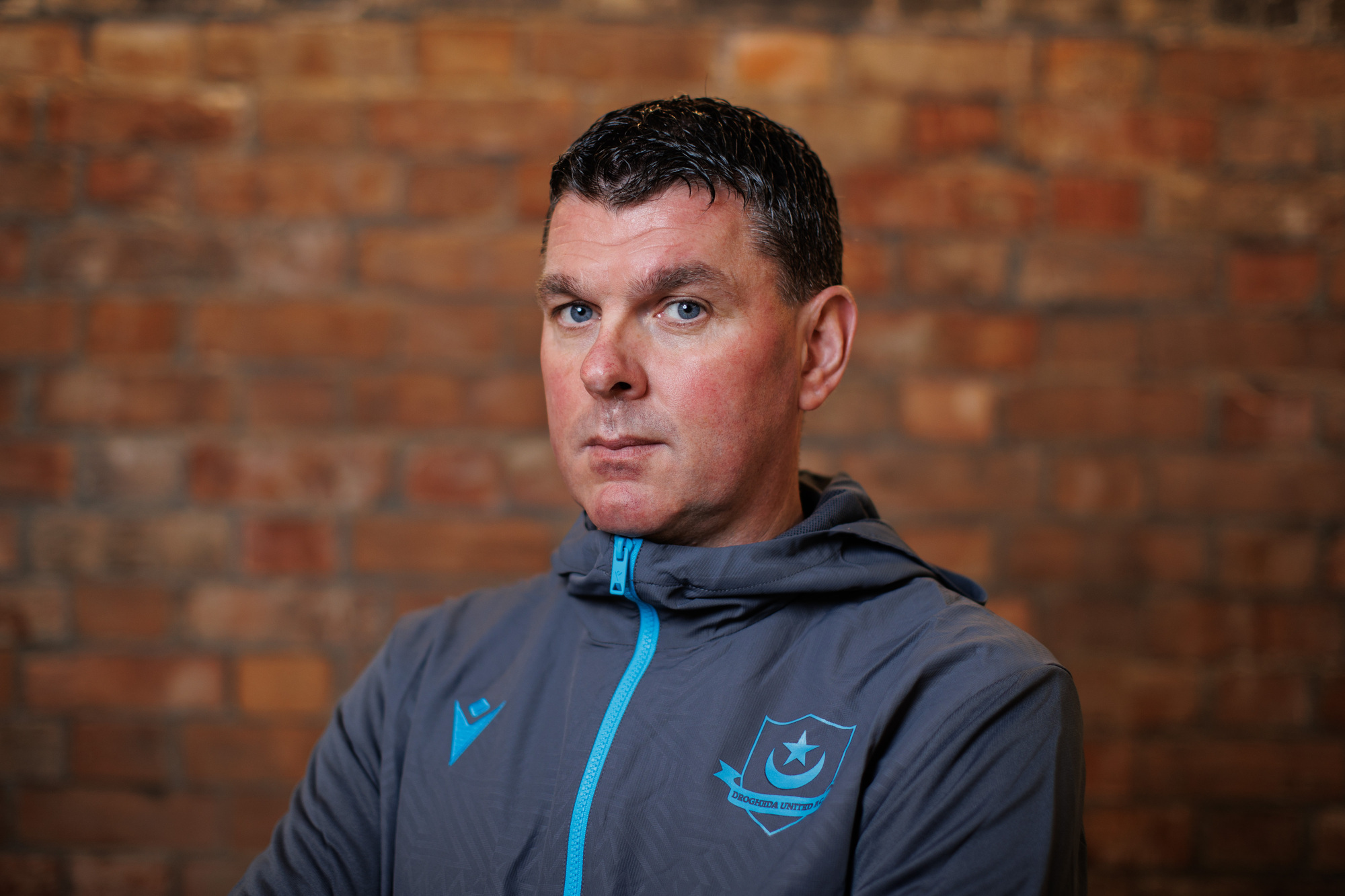
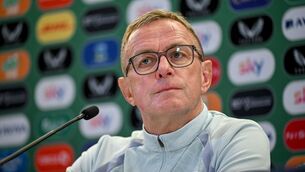
CUP CHANCE: Drogheda United manager Kevin Doherty. Pic: Ben Brady/Inpho
He brands it his sliding doors moment, the 1999 friendly when pain and anger couldn’t be disguised by hallucinations and the first person he saw amid the haze was Arsene Wenger.
Kevin Doherty was the centre-back at Liverpool that Gérard Houllier had earmarked for first-team progression, the one too Brian Kerr had inscribed as a bedrock for his upcoming Euro U18 finals.

Only the teenager never made it to Sweden. Nor got to touch the This is Anfield sign following Steven Gerrard out the famous tunnel.
He’d lived for three years literally in the shadow of the stadium, among the Irish legion and Neil Mellor as a lodger with the family of another teammate, Stephen Wright.
Pool officials felt Doherty was more than halfway there but the problem on that Dutch pitch was his leg breaking in half.
“It was my femur – the bone that’s hard as concrete,” the Drogheda United manager recalls. “It’s only supposed to happen in car crashes.
“Because it’s such an unusual injury, the Liverpool physio Steve McNally – who went on to work for Manchester United and now the Premier League – shows my x-rays to medical students and at conferences.”
A bad break in more ways than one. Had Liverpool got their way, the Dubliner wouldn’t have been on international duty.
They withdrew Doherty from the Ireland squad over concussion concerns but he felt a patriotic duty to report, appointed captain in the final warm-up before the summer tournament.
“It wasn’t even the Netherlands we were playing,” he observed. “It was Feyenoord and when Graham Barrett passed the ball to me, believe it or not, I went to turn to have a shot. Then came the contact.”
Barrett’s presence in Kerr’s team explained the visit of Wenger to the friendly.
He would go on later that year to be granted his Premier League debut by the Arsenal boss but Doherty’s shot at the big time didn’t materialise.
No such sense of consequence engulfed him at the time.
“We were 20 minutes waiting before the ambulance arrived and I could take something for the pain,” he adds.
“On the way to the hospital, I remember asking the Irish doctor, the late Ronan O’Callaghan, “will I be alright for Sweden?”.
“I ended up being out for two years. The operation involved 12 screws in the leg but it acted up and had to have them all taken back out, leaving a dozen holes in my leg.”
There was more than just physical loss. Doherty shunned offers from lower league clubs to join the last Shelbourne side to dominate the domestic scene before Damien Duff’s recent title winners.
In a few weeks, the squad that included Wes Hoolohan will reunite to mark the 20th anniversary of the famous Champions League game against Deportivo.
“I remember arriving at Shelbourne, with their new Tolka Park stand and all my new gear all laid out, thinking how great it was to be back playing.
“But I still went back to chat with Houllier. We’d had a brilliant relationship and he said, ‘Great, we’ll keep an eye on you.
“There was no Wyscout then, nor many games on telly. Don’t even talk about release clauses then! He didn’t get back to me.
“Lads come back to Ireland, saying 'Oh, I failed'. I never felt like that because I never had a chance.
“Liverpool were one the biggest clubs in the world and there are bits of regrets but…I probably wouldn’t be here today.”
That person is the 44-year-old manager who’ll lead his team out before an estimated crowd of 40,000 for Sunday’s FAI Cup final.
There’s been other pivotal decisions on that route too, like quitting his first managerial job as Shels boss shortly after his 36th birthday.
His strides over three years at Drogheda, on the lowest budget in the division, led to an offer from Cork City last year that he declined.
He’d left full-time football by then to become a postman, one of the frontline workers featured during Covid-19, but the takeover 12 months ago by US sports investment group Trivela afforded Drogheda the luxury of ensuring their manager’s time is undivided.
That’s not the case across the board yet and there’s a playoff final against Bray Wanderers looming next Saturday to preserve their status.
“Almost half of our squad have day jobs,” he pointed out, a contrast to their opponents Derry City, bankrolled by local billionaire Philip O’Doherty.
“Sometimes during the season our lads have had to drive to games coming from work, then go out and perform.
“My assistant Daire Doyle is out on the road during the week reading gas meters, then staying up until 2am studying Derry footage for analysis presentations.
“I’m very lucky to have those people and that’s why this is a special group.”
Drogheda, the largest town in Ireland and now seeking city status, knows about that bond. Causing an upset in the Blue Riband would spread that word beyond Co Louth.