Ireland's Uefa Nations League torture deepens but what does it really mean
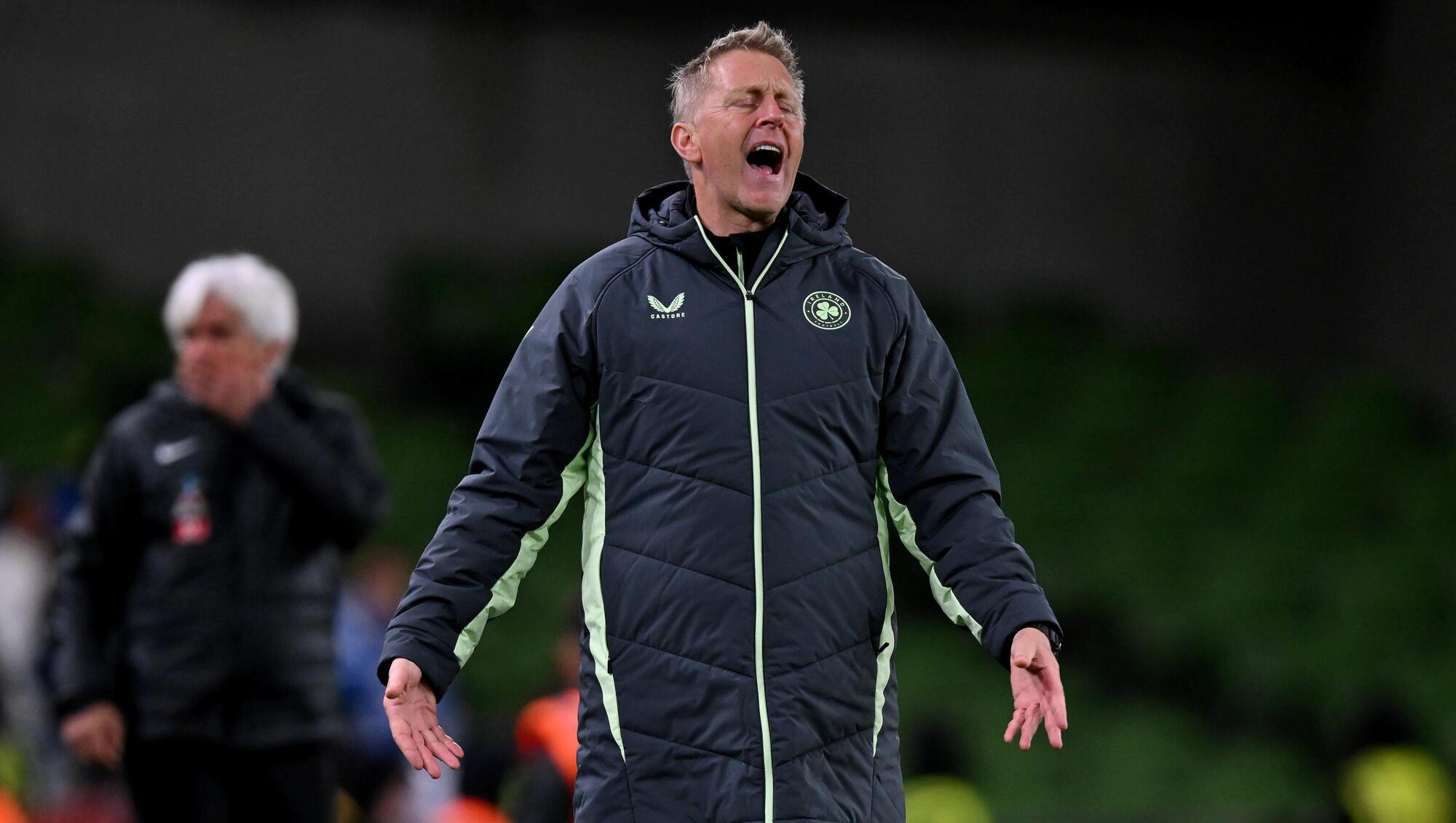
TORTURE: Republic of Ireland head coach Heimir Hallgrimsson reacts during the UEFA Nations League B Group 2 match against Greece. Pic: Stephen McCarthy/Sportsfile
The advent of the Nations League was meant to bring to an end Ireland's need to fill fixture dates with dull friendlies against Oman but the Uefa competition has been a slog.
While there’s no direct tournament tickets on offer, the mini-groups within four different leagues are deemed competitive and determine seeding for qualification.
That was initially for the Euros since the concept was introduced in 2018 but final placings will also influence the pots for the World Cup draw in December.
That date has yet to be fixed by Uefa as they grapple, or, to some, convolute, a system to enhance their own competition.
What’s certain for Ireland after just two matches of their fourth campaign of the UNL is the uncertainty of their League B status. They have won just two matches, against Scotland and Armenia, across the 18 Nations League games.
No points and no goals after 2-0 home defeats to England over four days sunk the Irish to joint bottom alongside Finland.
Were they to be rooted to the foot by the final game, the November 17 rematch against England at Wembley, relegation to League C ensues.
It appears the best they can hope for – as the English and Greeks take early ownership of the pool – is third spot.
That’s where they finished by avoiding defeat to Armenia in the final game of the last campaign but Uefa, in their wisdom, have added a playoff dimension.
Those deciders, staged over two legs next March, would entail Ireland requiring victory over one of the teams that secure a runners-up spot across the four groups in League C. They currently are Slovakia, Kosovo, Bulgaria and Armenia.
It has been argued amid Uefa’s various tinkering that participation in League C can facilitate a team’s revival. Sweden and Slovakia, for instance, have won their first pair of matches.
Like Slovakia, Romania were at the Euros and are blazing a trail in that subset too. North Macedonia, who beat Germany in 2021 and Italy a year later, top the C4 table.
Another consequence of facing a playoff is the probability of Ireland vying for World Cup qualification from a four-nation group.
By expanding the tournament to 48 nations, Europe will get 16 teams in the revamped tournament, three additional slots from 2022.
Accordingly, Uefa reduced the qualifying groups to blitz the group matches between March and November of next year.
There will be 12 groups under the revised format, half containing four teams and the other half with five sides.
Only the group winners qualify, with the runners up joined by four sides from the Nations League campaign in a series of sudden-death play-offs for the final four places in March 2026.
Any notions of Ireland improving their ranking from 58, or 28th in Europe, to the 24th place, a cutoff to be second seedings, seem to be dashed, barring a miraculous revival in the remainder of the campaign.
After two home games, it’s an away double-header for Ireland, involving a long trek from northern to southern Europe.
Finland in Helsinki await on Thursday, October 10 before they’re in Piraeus for the Greek rematch three days later.


CONNECT WITH US TODAY



Be the first to know the latest news and updates