Der Kaiser, German football's statesman, was effortlessly ahead of his time
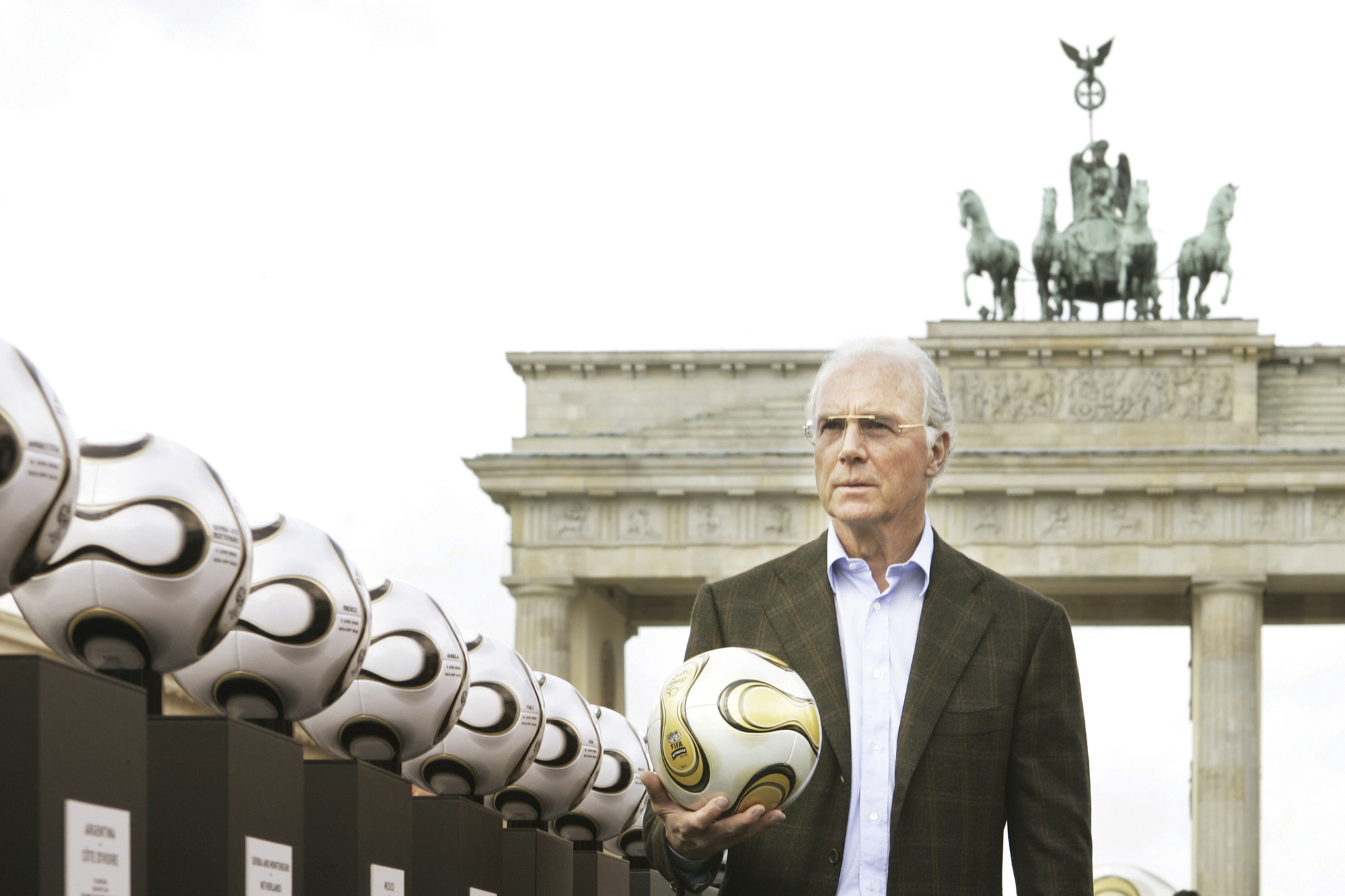
German soccer legend Franz Beckenbauer, head of Germany's organising committee for the soccer World Cup, plays with the Golden Ball for the World Cup in front of the Brandenburg Gate in Berlin, on April 18, 2006. Germany's World Cup-winning coach Franz Beckenbauer has died. He was 78. Beckenbauer was one of German soccer's central figures. He captained West Germany to the World Cup title in 1974. He also coached the national side for its 1990 World Cup win against Argentina. (AP Photo/Jan Bauer, File)
Franz Beckenbauer will always have a place in football history quite apart from popularising the role of libero, establishing Bayern Munich as the force in German football and being one of only three individuals to win the World Cup as a player and as a manager. He had one of the best and most distinctive nicknames ever, and just as with his near contemporary Eddy “The Cannibal” Merckx in cycling, his Der Kaiser moniker both suited him and served to introduce him in advance.
Opinion is divided on where the appellation arose. Some say he was asked to pose beside a bust of an actual emperor, others point to an on-field incident when he effortlessly bettered a German opponent who was known as the King. Either way, there was always something of the statesman about Beckenbauer, whether in action as a player, manager or administrator. He appeared to be cut from different cloth than most footballers, even though he came from a modest, working-class background in war-ravaged Munich.
Certainly Beckenbauer’s nickname did him more favours than the “water-carrier” jibe that Eric Cantona famously aimed at Didier Deschamps before the Frenchman added a World Cup as manager to his 1998 triumph as a player. Brazil’s Mário Zagallo, the founder member of the illustrious trio of World Cup overachievers, was sometimes known as The Professor as well as the Old Wolf (the latter being a play on part of his surname), but even that lacks the authority and respect conferred by Der Kaiser.
Of the three, Zagallo’s World Cup record is probably the most notable, having won two tournaments as a player (1958 and 1962), one as manager (of the unforgettable 1970 Brazil) and one as assistant manager in 1994. Yet Beckenbauer is not far behind, having finished runner-up as a player in 1966 and manager in 1986, in addition to winning as captain in 1974 and coach in 1990, before successfully branching into the sports politics arena to deliver the 2006 World Cup to Germany as head of the bid that was chosen ahead of England’s.
Perhaps unsurprisingly Beckenbauer did not escape from his dealings with Fifa with his reputation entirely intact. False declaration and money laundering were among the accusations when criminal proceedings were opened against him in 2016, largely over a sum of €6.7m that no one involved in the 2006 bid could quite account for. Swiss federal investigators raided his house in Salzburg in search of evidence. Beckenbauer protested his innocence but increasingly began to withdraw from public life, citing at the same time health problems that were real enough. No conclusion has been reached – Beckenbauer’s trial on corruption charges ended without a verdict in April 2020 – and now may never be.
Beckenbauer was always said to hold the English style of football in high regard, and came to prominence in the UK when tasked with nullifying Bobby Charlton in the 1966 World Cup final. If that plan was only a partial success Beckenbauer still managed to make a huge impression in the tournament, even finishing joint third top scorer while playing as a defender. As England would discover in 1970 he had a keen eye for goal, as well as a penchant for the quickly played ball forward from his own half to turn defence into attack.
If there was no trademark Beckenbauer manoeuvre to rival the famous Johan Cruyff turn he was perhaps better than anyone else at picking his moment to time a tackle to perfection, often waiting until the last moment to slide in and dispossess an opponent cleanly and fairly, though in truth there were no aspects of the game at which he did not excel. As the 60s turned into the 70s he was the complete modern footballer, always effortlessly managing to be ahead of his time.
The 1970 World Cup in Mexico saw Beckenbauer and West Germany gain the upper hand on Charlton and England, with the defender scoring the goal that began his side’s comeback from two goals down in León. Charlton was substituted immediately, a managerial decision hotly debated to this day. The England bench had been preparing the change before the German goal and claimed the intention was to save the 32-year-old Charlton’s legs for the semi-final, but with Beckenbauer now handed a freer role in the game the plan backfired and goals from Gerd Müller and Uwe Seeler knocked out the holders.
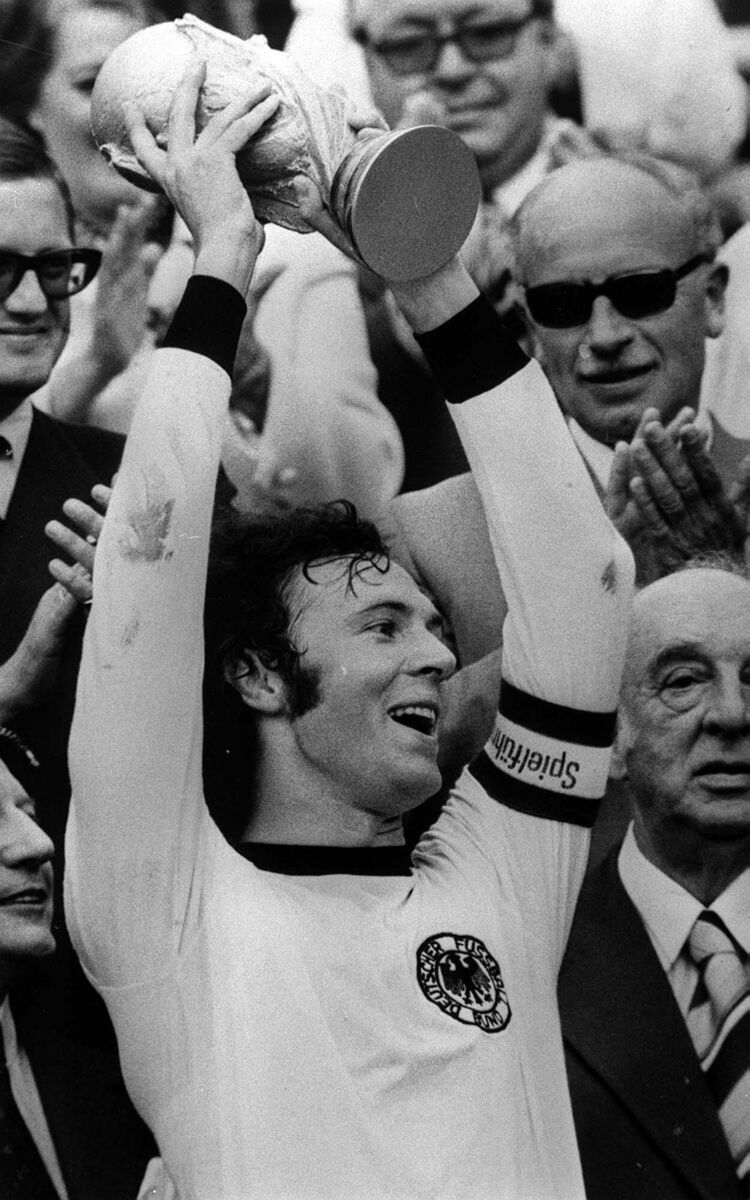
West Germany did not make it past Italy in the semi-final, a game which saw Beckenbauer continue with a dislocated shoulder through being injured after the permitted substitutions had been made, but he was captain when his side won their second World Cup, 20 years after the first, on home ground in 1974. Many neutrals would have preferred to see the Netherlands win the final, though Cruyff and Total Football lost 2-1 to brusque West Germany defending in a match that featured two penalties awarded by English referee Jack Taylor, one of them in the opening minute.
The significance for Beckenbauer and his team was that for the first time the European champions – West Germany had prevailed in Belgium in 1972 in a final against the Soviet Union – were also World Cup winners.
After finishing his playing career with New York Cosmos Beckenbauer was installed as manager of West Germany, and reached the World Cup final at his first attempt in 1986, only to lose to Diego Maradona and Argentina in Mexico. He was still in place to gain revenge four years later, when, playing for the last time as West Germany, his side beat Argentina 1-0 in Rome.
Though World Cups gave Beckenbauer most of his global prominence, within Germany he was usually regarded as Mr Bayern Munich, a figure synonymous with that club’s remarkable success despite growing up a fan of 1860 Munich. They were the more successful club in Bavaria at the time, and the Bayern side Beckenbauer joined in 1964 were in a lower division. With typically impressive timing he was able to help secure promotion in 1965 to the newly formed Bundesliga, and from that point Beckenbauer and Bayern went from strength to strength.
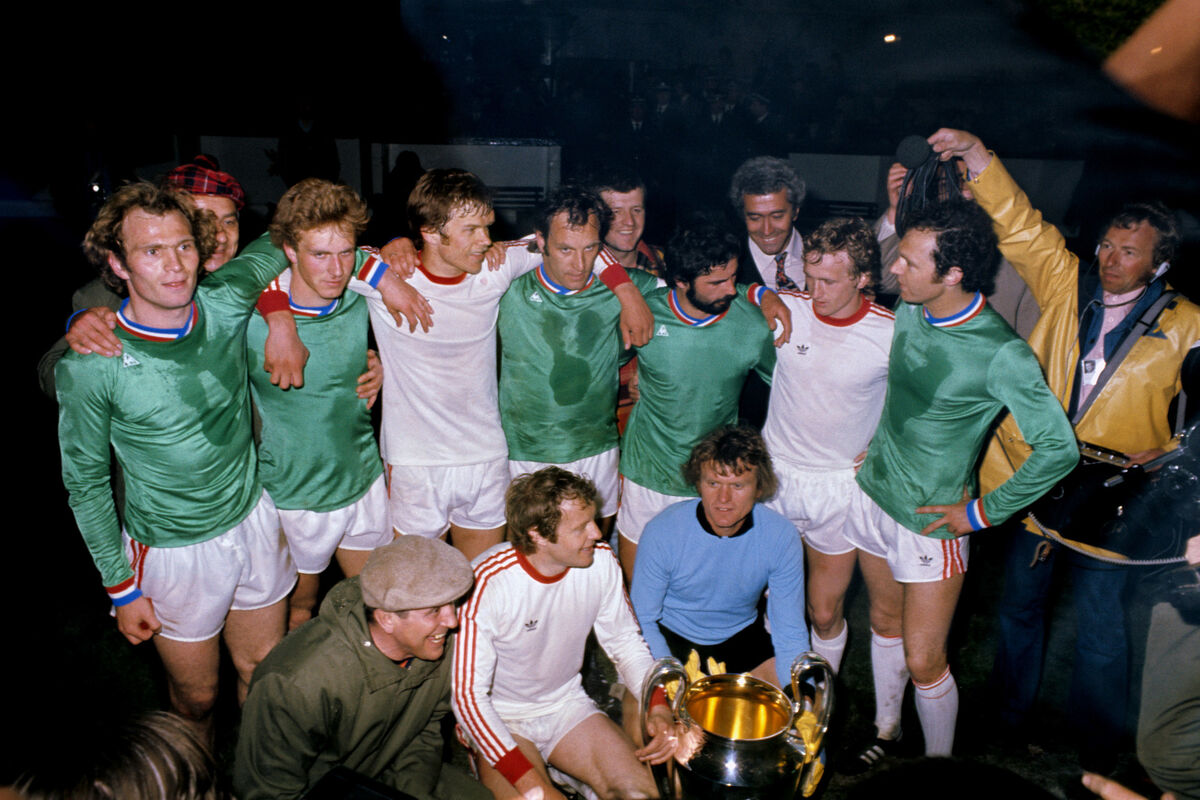
It was at club level that Beckenbauer redefined the role of sweeper to make the most of his offensive as well as defensive ability, and after winning three successive league titles between 1972 and 1974 to announce themselves as the powerhouse of German football, Bayern went on to win three successive European Cups between 1974 and 1976, overcoming Atlético Madrid, Leeds United and St Étienne in the finals.
Beckenbauer was captain on each occasion, just one more notable achievement for a player who was simultaneously holding World Cup and European Championship titles. In terms of achievement, in fact, few football careers can hold a candle to what Beckenbauer packed into his time in the game. While there might have been better players – though not that many – as a reliably consistent attainer of excellence Der Kaiser was out on his own.
Guardian


CONNECT WITH US TODAY



Be the first to know the latest news and updates