Hungary can only aspire to be more like Ireland
The controversy surrounding the axing of Vera Pauw, despite her undoubted public popularity, hasn’t dampened the growing admiration and active interest in this squad’s progress
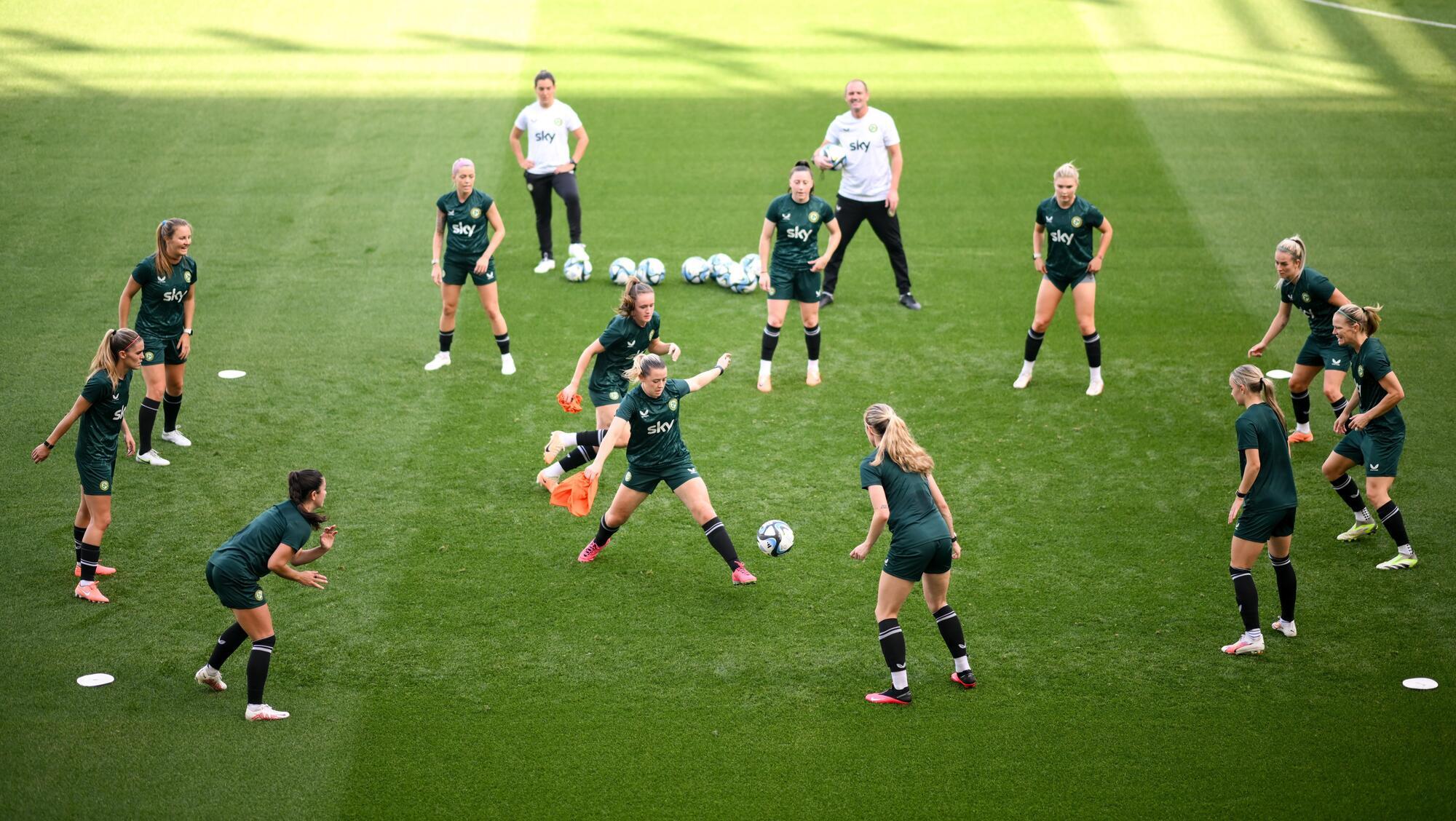
LAST MINUTE PREP: Republic of Ireland women training session at Hidegkuti Nándor Stadium in Budapest, Hungary. Pic: Stephen McCarthy/Sportsfile

LAST MINUTE PREP: Republic of Ireland women training session at Hidegkuti Nándor Stadium in Budapest, Hungary. Pic: Stephen McCarthy/Sportsfile

Dzsenifer Marozsán was the last Hungarian to score against Ireland – in the colours of Germany – and there’s little danger of that anomaly changing on Tuesday.

Although born in Budapest and her Dad being a Hungarian international, there was no guilt in ditching her homeland for the glory of Germany.


She had been relocated at the age of four when János was recruited by FC Saarbrücken and as her own prodigious talent developed the midfielder could notice the women’s game in Hungary regressing.

Marozsán would win Euro and Olympic gold for her adopted country, scoring a peach against Ireland in 2020, before serious knee injuries forced her retirement earlier this year at 30.

The Magyars have not produced a world-class player of her ilk since and the closest to her, Fanny Vágó, is in open revolt with manager Margret Kratz. A Tyler Toland situation, yet erupting at the end of the player’s career, not the start.

Kratz, a German tasked two years ago with arresting the team’s slide in the World rankings from 31 to 43, actually coached Marozsán in her earlier days at Saarbrücken and is aware of how one such gem can influence international football.

“We have one player in the team capable of being the next Jenny Marozsán,” said Kratz. “Of course, it could take a few years for us to develop but I believe our team will reach a major tournament.” 

One person who is influencing the domestic scene is Viktor Orbán, the controversial Prime Minister whose antipathy towards immigration is matched by the opposite extreme of his love for football.

Many of his detractors feel a manifesto of investing in Hungarian football, estimated at €2.5 billion and rising, earned his political powerbase and was crowned by the nation reaching the 2021 Euros they co-hosted.

No such success has been shared by the women. Despite the chief declaring their staging of the 2019 Champions League final at the jewel of his crown, the half billion euro Groupama Arena, to be a game-changer, interest from political parties and the public is scarce.

They could only draw 1-1 against Albania in their opener on Friday and the degree of apathy toward a struggling team is exemplified by an anticipation that the compact 4,500-seater stadium being no more than a quarter occupied by the local kick-off time of 7.30pm. A virus that swept through the camp during their trip to Tirana has also ruled out a couple of players and drained a few others.

Ireland, by contrast, were cheered on by over 30,000 fans during Saturday’s first-ever senior women’s international and have a fully fit squad to call upon.

The controversy surrounding the axing of Vera Pauw after the World Cup, despite her undoubted public popularity, hasn’t dampened the growing admiration and active interest in this squad’s progress.

Winning is the formula that retains and attracts new supporters, underlining the strength of potentially racking up a maximum 18 points.

That should be a formality in this maiden Nations League campaign. Coming up next month is a double-header against minnows Albania, creating a window to build a string of wins to take into next year’s European Championship qualifiers.

Eileen Gleeson may well be etched into history as the first winning manager to lose their job but she reiterated her desire to resume the clerical and strategic job in the FAI she left Glasgow City for last year.

“I love both roles but being the head of women’s football is a dream job so I’ll never shift from that but who wouldn’t love being on the pitch working with the girls and managing their national team.” 

Hence could she job-share if the rising tide heading into next year’s real business would be best served by continuity.

“That’s not what I’m saying,” she interjected. “Let’s get dead serious here.” 

And that encompasses no slippages on Tuesday.

Minor injury scares for Denise O’Sullivan and Louise Quinn towards the end of Saturday’s stroll were allayed and the only dilemma for the stand-in boss is how to rotate her team.

Fresh legs 72 hours on and the challenges that accompany early season rustiness come into her criteria. Abbie Larkin, recently recruited by Glasgow City from Shamrock Rovers, is pushing for a start, as is Lily Agg, after both impressed off the bench against Northern Ireland. Sole striker Kyra Carusa might be spared after putting in the hard yards of running channels on Saturday.

Against inferior opponents, switching a few players could be worth the risk.

“You can look at it saying we should be expected to top the group,” explained Gleeson.

“We’ve talked about this word expectation - and trying to remove it by saying we need to make it happen.

“We’re not under-estimating anyone in the group or getting complacent. Hungary are well-organised, look to get their full-backs high and are aggressive in the press. This is their home pitch.” 

Ordinarily that could count for something if the patterns weren’t so stilted. 

“This is not a 50-50 match,” confessed Kratz. 

Hungary will see in Ireland what they aspire to be and that an enviable position that must be capitalised on.

More in this section

Sport

Newsletter

Sign up to our daily sports bulletin, delivered straight to your inbox at 5pm. Subscribers also receive an exclusive email from our sports desk editors every Friday evening looking forward to the weekend's sporting action.

Cookie Policy Privacy Policy Brand Safety FAQ Help Contact Us Terms and Conditions

© Examiner Echo Group Limited