Time for the football to do the talking as new Ireland era begins
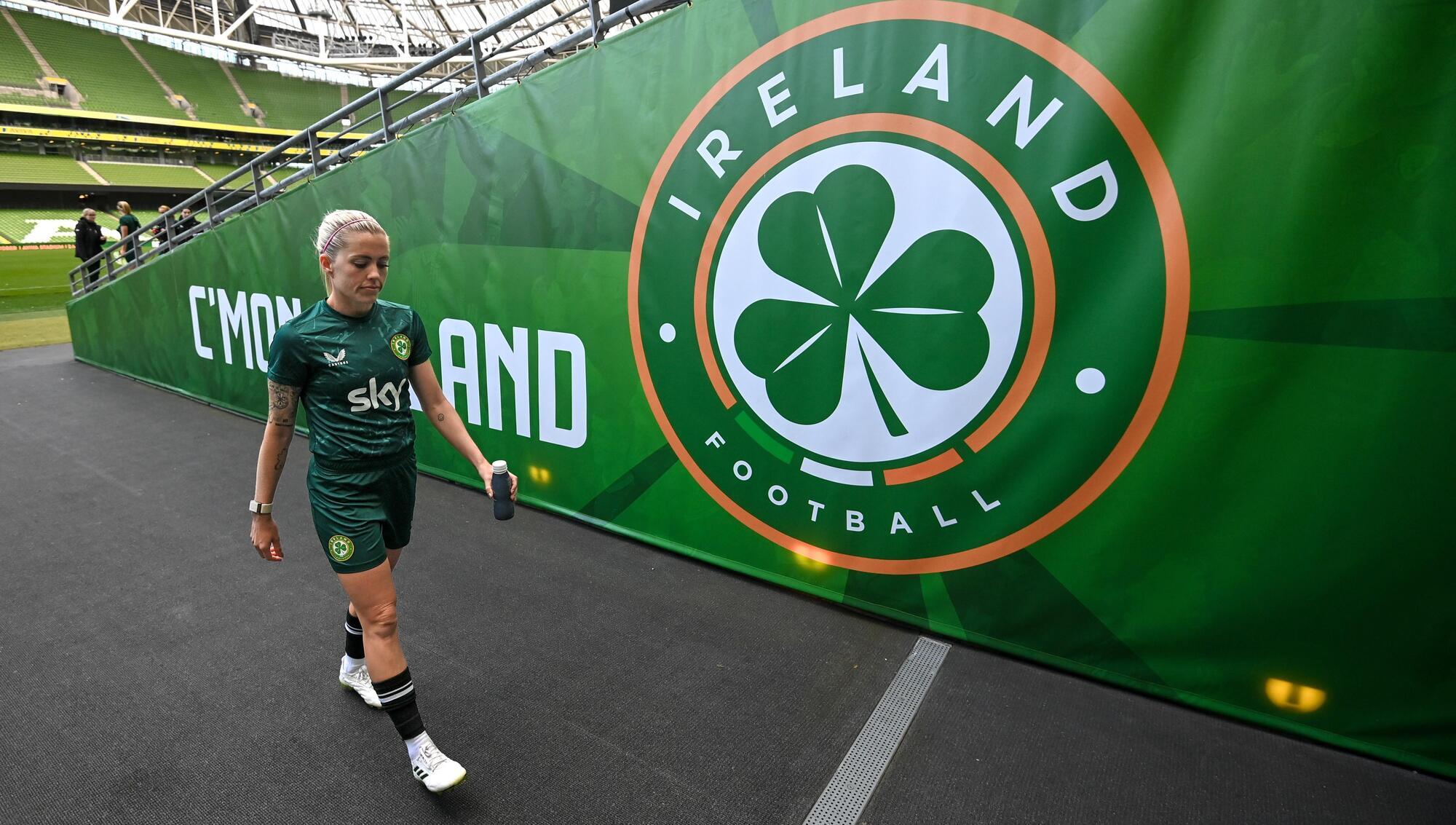
NEW ERA: Denise O'Sullivan during a Republic of Ireland women training session at the Aviva Stadium in Dublin. Pic: Stephen McCarthy/Sportsfile
A different form of noise will accompany the Ireland women’s team when they embark on a new era after four years under Vera Pauw.
Previous unfulfilled lofty aspirations on the turnouts ought to apply a health warning to the 38,000 prediction set by the FAI but whatever proportion show up for the lunchtime kick-off will make their presence felt at the national stadium.
Their long overdue switch to the 51,000-seater arena, when the chance was blown two years ago to follow international trends for the visits of Australia and Sweden, needs to be now embraced and utilised as a different direction is charted.
As much as Irish football folk love a dose of controversy, the cloud that hung over Pauw’s future before and during the World Cup was a draining experience for all concerned.
It was fairly clear to anybody around the camp that the Dutchwoman was deemed damaged goods from the moment of her infamous press conference on July 5. Only an unlikely set of results Down Under would salvage her plight and instead she was hurtled overboard.
The recriminations are not over yet – with a mooted Late Late Show appearance sure to keep the story prominent – but the absence of Pauw’s name from Friday’s press conference was evidence the real business is moving on.
And what a show it is, worthy of the cacophony of noise the team’s entrance from the tunnel will generate.
Ireland might be off-broadway in the sense of League B in the Nations League but this is the stage they belong and deserve to inhabit.
Eileen Gleeson, the FAI’s Head of women’s and girls' football installed as a stopgap until a permanent successor is sourced, concurs.
She’s conscious not to repeat the IRFU’s blunder of merely allowing their female team to share the venue as a one-off act of tokenism in 2014.
“In my vision yes because that’s progress,” she said of leaving behind the Tallaght Tiger label the team attracted from laying the groundwork to qualification in the smaller setting.
“We’re here today and it’s had a really good response. Tallaght will always be part of us but we have to respond to the growth and the needs of the game. I think that is what will happen naturally.
“I’d attended probably 80 percent of home games here in Ireland, sometimes with just a few mammies and daddies or a sister and a brother in attendance.
“Women’s football is now the fastest growing sport in the world and that’s reflected in Ireland. With World Cup qualification comes increased visibility. Could I envisage 38,000 tickets sold when I was standing on the sideline in the lashing rain 25 years ago? Maybe not. But as the years have gone on, you watch the growth.”
That growth should also translate into the selection and tactical mindset. Pauw attracted comparisons to Giovanni Trapattoni for her reliance on defence but, against nations of lower standing in this six-match campaign, an emphasis on ambition is anticipated.
It’s likely to entail Denise O’Sullivan operating in her preferred position of attacking midfielder. Her relief at Pauw belatedly pushing her from a midfield pivot for the final World Cup game against Nigeria was apparent, underlining the growing chasm between the mentality of manager and squad.
“Wherever you put Denise, you’ll see the best of Denise but yeah, we want to have Denise on the ball,” said Gleeson.
“She is one of our most creative players. I think she can do that from multiple positions. She said she wants to play higher, she plays deeper at her club in North Carolina. We’ll have to wait and see where she occupies on the pitch but we expect the same qualities to shine through.”
As should the physical superiority. It was curious to see the Ireland squad pictured this week undergoing the type of weight-training exercises which Pauw despised but the advantage of having virtually all of their starters in full-time professional environments should be decisive. Northern Ireland only has five equivalent players.
“You look at it and say it should make a difference,” noted Gleeson. “Players have different environments, training hours and resources.
“It should make a difference but it doesn’t mean it always translates like that. It’s football, anything can happen, but we have to draw on that as a strength and emphasise that and try to make that the point of difference.”
It’s about time their football did that.


CONNECT WITH US TODAY



Be the first to know the latest news and updates