Irish media brought to book but Martin O'Neill's write stuff gets it wrong
The former Boys in Green boss writes about his time in charge with recrimination and revision, according to his former press advisor, Ian Mallon. 
Irish media brought to book but Martin O'Neill's write stuff gets it wrong

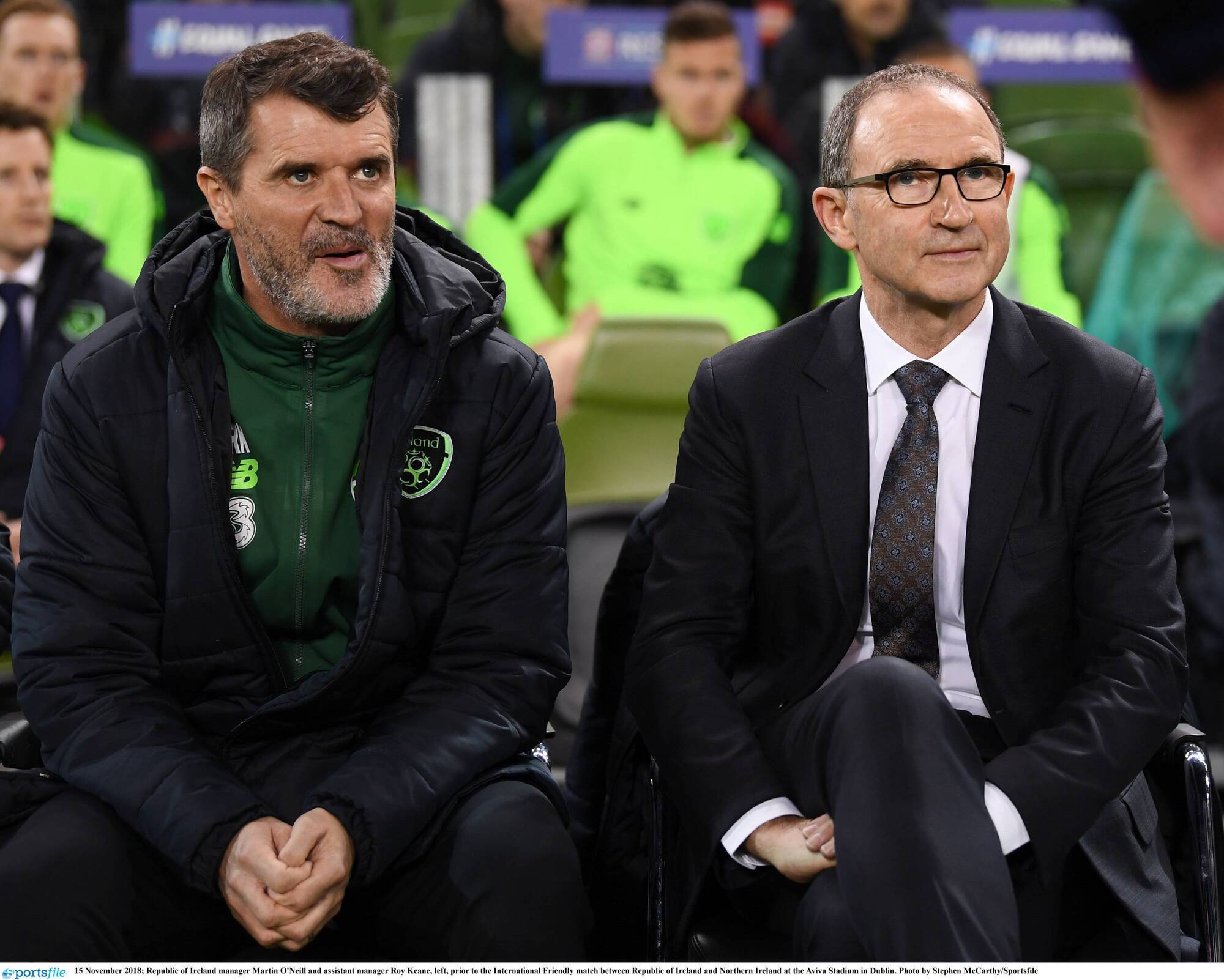
BOOTROOM: Ireland manager Martin O'Neill and assistant Roy Keane. Picture: Stephen McCarthy/Sportsfile


“My relationship with the press in Ireland is not good at the best of times, with any poor result it can only worsen and constant critical reproof can be draining.

“I feel I have been viewed as an outsider. Early on I told Roy that I thought the press thought of me as an interloper and occasionally I was being referred to as ‘The Northerner’ by the media – he didn’t agree with me. But more recently he’s come round to my viewpoint.” Martin O’Neill, On Days Like These - 2022 

I DON’T doubt that Martin O’Neill thought long and hard about choosing to record such an agonised account of his time as manager of the Republic of Ireland team, instead of what was and will remain a period of sharp-line success.

He will have methodically worked out how he best portray this period of his life, before finally deciding to blur those lines with rancour, painting himself as victim rather than righteous hero.

As someone who worked closely with Martin for more than two years, the version of the man I met in his autobiography – On Days Like These – is indeed an interloper, an alien, not the real Martin O’Neill.

O’Neill’s true legacy is a twice-Champions League (European Cup) winner, a World Cup captain, the conqueror of Spain in 1982 and a man who created a tactical masterplans to beat the world’s best team.

To overshadow all of the success he had with Northern Ireland and Nottingham Forest, with a final chapter about his Rep of Ireland days – which he laces with such resentment – is a tragic closure.

Martin O’Neill has every right to portray the various stages of his life however he chooses, but it makes no sense to shroud in a permanent casket his relationship with the press or Keith Andrews or Eamon Dunphy as defining features of his time as Ireland manager.

And while Martin may have seen himself as an interloper or an outsider, it’s simply not accurate to give an impression that because he was from Northern Ireland people saw him as a foreign agent.

As someone who formed a link between the manager and the press, never once was O’Neill described to me as ‘The Northerner’ - it simply didn’t happen.

What he may be recalling are stories or features where he was described as ‘the Northerner’, in the same way as Roy Keane might be described as ‘the Corkman’ or Robbie Keane as ‘the Dubliner’ – an adjective to avoid repetition.

We don’t know who called Martin names, we don’t know an awful lot, because with this revision there is a lack of detail, where he delves into a fascinating yet troubling viewpoint and then abandons it.

IN FOCUS: Martin O'Neill speaks to RTE's Tony O'Donoghue. Picture David Maher/Sportsfile

Certainly he doesn’t say it, but the impression given is that because Martin O’Neill was from the six counties he was viewed as being less-Irish, and it’s a terrible pity that this is his interpretation.

Do Shane Duffy or James McClean feel less Irish because of their Derry roots?

It’s important as someone who was around Martin O’Neill during his best and most challenging days with the Irish team to offer a more objective analysis of this relationship which cruelly goads him to this day.

I began working with the Irish team, and as a press advisor to the management and players, just before the epic Germany win at the Aviva Stadium in 2015, until soon after the devastating FIFA World Cup playoff defeat to Denmark in late 2017.

I saw both sides of the relationship between the manager and the media, the highs and low, the good and the bad – the moments of laughter and banter and the crueller side when things got sour in the aftermath of Denmark.

It’s crucial that Martin realises at some point in the future that he was not as deeply unpopular with the press as he wants you to believe, in fact he was idolised by many journalists who wanted more time with him, more access to his fascinating insight on football and more of those anecdotes from a glorious past.

He was effectively applauded after the press conference in the media centre at the Aviva following that exceptional victory over Germany and how wildly he was celebrated following that win over Wales in Cardiff.

In Lille in France, following the win over Italy to qualify Ireland to the last 16 of Euro 2016, a packed Uefa press conference post-match was a heaving mass of warm tribute from the Irish reporters, amid a sea of admiring international press.

Yes, the Denmark aftermath was deeply traumatic and the media conference was the worst experience I witnessed in football or journalism, which finished up with a viciously delivered barb from one reporter asking had O’Neill “finally run out luck”.

He was also forensically unpacked by RTÉ moments before, and he mentions in his book that “the RTÉ reporter questions me on whether this result is a sackable offence”.

I stood beside Martin during that interview with the ‘RTÉ reporter’ who was, of course, Tony O’Donoghue and while I didn’t agree with the tone or insensitivity of the question, I got it – tensions had been bubbling between the two in the full public gaze for too long.

RTÉ might also say it pays large amounts of public money for their football rights and so deliver whatever treatment they deem gets them bang for their buck, particularly having just missed out on what would have been an extraordinary financial bonanza of covering Ireland at a World Cup.

Certainly Martin didn’t help himself with Tony O’Donoghue, weeks earlier stepping in on a live interview at the Cardiff City Stadium in the aftermath of that glorious victory over Wales, pulling James McClean from the camera and telling the correspondent he had gotten enough already.

The relationship with RTÉ generally was a tricky one, but no different to those of Jack Charlton or Mick McCarthy.

Certainly football coaches are treated much differently by RTÉ than GAA and rugby managers, and particularly in times of trauma and disappointment.

Would I say that Martin O’Neill was treated any differently by RTÉ than Stephen Kenny? Absolutely. But when it comes to post-match inquisitions Tony O’Donoghue has forensically roasted the current manager also, particularly in the wake of his own disappointing performances.

The media should come as no mystery to Martin, himself a highly accomplished broadcaster on BBC, who could also deliver strong critique when necessary.

More generally I thought the media were fair to O’Neill during his time here, and he was nearly always fair back, but could he have tried harder?

Certainly one issue above all else had a devastating effect on his relationship with football writers - and that was favouritism towards British media.

HOW HIGH: O'Neill celebrates at the final whistle of the UEFA Euro 2016 Group E match between Italy and Republic of Ireland in Lille. Picture: Stephen McCarthy / Sportsfile

It was abundantly clear that Martin favoured the UK press, occasionally sitting for interviews exclusively with a small number of journalists from the north east of England, who would be sent to Dublin to cover Ireland game weeks.

While the Ireland team was in camp stories would appear in UK titles, with exclusive storylines, that hadn’t come out at that day’s press conference.

That’s not to say that Martin didn’t do exclusive interview with Irish media, he did, and one with Paul Kimmage took place while the team prepared for Euro 2016 in Fota Island, and another after the Euros with Off The Ball.

But the gatherings with favoured reporters rankled amongst their Irish counterparts who saw this as a deliberate tool to undermine them – I don’t think that it was, I just think that O’Neill had grown close to their English colleagues during his time with Sunderland.

The Soccer Writers Association of Ireland occasionally complained about these interactions and a perceived lack of access they had with the manager, and I will always credit them for being measured in their delivery of such objection.

So while Martin may have felt that he was an outsider with the Irish media, very often, he was, but that was of his own making and not reflective of a seemingly geographical viewpoint of where he came from.

I texted Martin before writing this piece, pointing out I’d much prefer if he sat with me and expanded on the various points he made in his book, so he could perhaps offer a more detailed perspective and to try to delve deeper into why he feels such disillusionment with Ireland.

The great man, as is his absolute right, didn’t respond even though he has been all over the media in recent weeks conducting interviews, offering soundbites and reflecting on his first autobiography.

While I have no doubt a huge element of this response is due to something I wrote last year, another part of it is that Martin O’Neill may very well be starting to regret painting such a clouded picture on what should have the very best of ‘Days Like These'.

More in this section

Sport

Newsletter

Latest news from the world of sport, along with the best in opinion from our outstanding team of sports writers. and reporters

Cookie Policy Privacy Policy Brand Safety FAQ Help Contact Us Terms and Conditions

© Examiner Echo Group Limited