Beth Mead calls for wide-ranging study into prevalence of ACL injuries
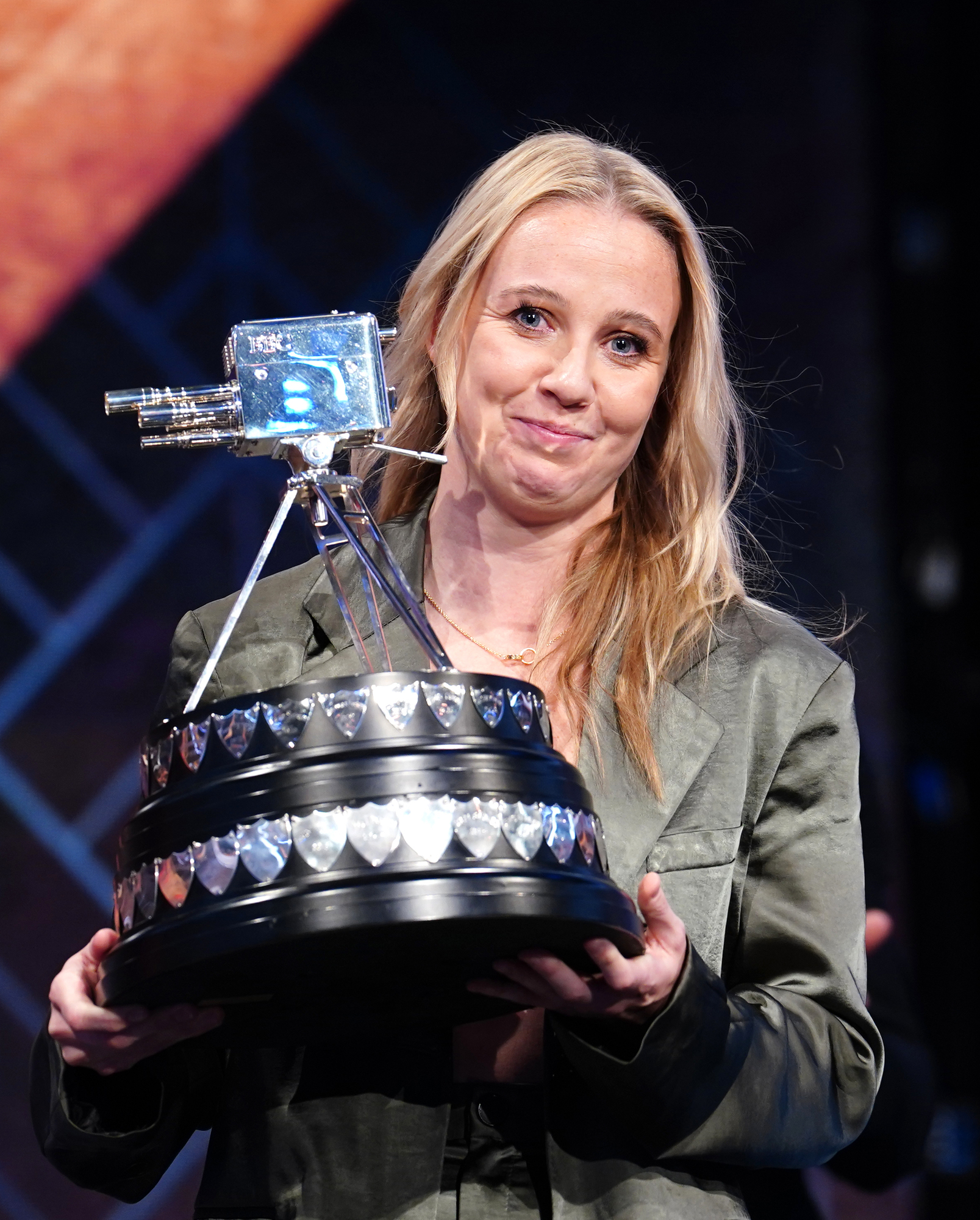
PROBE: Beth Mead has called for a wide-ranging study into the prevalence of ACL injuries in the women’s game (David Davies/PA)
Beth Mead hopes the anterior cruciate ligament injuries she and her partner Vivianne Miedema have suffered can be the “kick up the a***” the women’s game needs to look at the frequency of such injuries more closely.
Mead was voted BBC Sports Personality of the Year for 2022 on Wednesday evening after top-scoring in the England women’s team’s Euros success in the summer.
However, she faces a race against time to be fit for the Lionesses at next year’s World Cup after suffering an ACL injury in a match for Arsenal against Manchester United last month.
Her Gunners team-mate Miedema suffered the same injury in a Champions League match last week, with Spain superstar Alexia Putellas missing the Euros with an ACL injury as well.
Mead was asked whether there was a need for a broad study on this topic, and said: “I would say so. I think something, anything (would be good), and there doesn’t seem to be a lot going on.
“Unfortunately this has happened to us, but hopefully it can kick somebody up the a*** to go on (and) start doing something.
“If you look, it’s 50 per cent of the top 10 (in the) Ballon d’Or (vote) who have done it or something silly like that, so you have to look at that I think. I see myself as quite a robust player but this has still happened. You look at Viv, she’s quite a robust player and we’ve not been players generally hit with injuries so I do think we need to look into it a lot more.
STRONGER TOGETHER! ❤️🩹 So I was given sympathy for 3 weeks and now she has to go get some of her own 😂🤦🏼♀️ but we got this, YOU got this. 2 new signings incoming @viviannemiedema 😉 ❤️ pic.twitter.com/y5PbzBiPpM — Beth Mead (@bmeado9) December 19, 2022
“I think if that happened with a Messi, a Ronaldo, a Griezmann, there’s probably going to be a lot more done when those things happen.”
In actual fact, five of the top 16 in this year’s Ballon d’Or vote are at some stage in their rehabilitation from an ACL injury, but nevertheless the frequency of these injuries is a concern to the Football Association.
An FA spokesperson said a study on the prevalence of ACL injuries in women’s football had been conducted over the last four seasons.
“The study has shown that the overall incidence of ACL injuries reported by teams in the Barclays Women’s Super League and the Barclays Women’s Championship was 0.1 injuries per 1,000 hours,” the spokesperson said.
“This included 0.4 ACL injuries per 1,000 match hours and 0.04 ACL injuries per 1,000 training hours. ACL injuries represent 1.3 per cent of the total number of injuries in the top two tiers of women’s football in England, with hamstring injuries the most common at 11 per cent.
“The overall injury rates across these leagues have decreased in the past four seasons; however, we will continue with our injury and illness surveillance work, which will continue to give us important medical insight into women’s football.”

The rate was half that found in a Swedish study of the women’s game there and comparable to match injury rates in men’s football.
Mead says she and Miedema are happy to participate in any study on this issue.
“There’s a lot going on with players and I do think it’s something that needs to be looked into, and something I would like to push forward – I’ve plenty of time to do so now,” she said.
“Me and Viv would really like to get involved and put it out there a little bit, hopefully we can look into some stuff and it would be a positive use of our time.”
England coach Sarina Wiegman said: “We talk about it all the time and we need to find a way to let the game grow and to look at the schedule.

“We also have commercial things so I don’t think it is so easy to change schedules, but we have to find a way because now we get too many injuries.
“We also have to look at who has got an ACL, what’s her programme, what does it look like, get the bigger picture so you get the right things out of this research. FIFA, UEFA and the federations have to do something about this.
“There hasn’t been that much research about women’s football. Women are built differently to men, the hips and the knees are different, the angles are different. There’s lots of research in the men’s game, not the women’s game.”
CONNECT WITH US TODAY



Be the first to know the latest news and updates