FAI to impose suspensions of three years or more to prevent abuse of match officials
Incidents of serious assaults in Cork and Dublin have blighted the amateur game in recent years, with referees threatening an all-out boycott of soccer, prior to the change of approach by the FAI
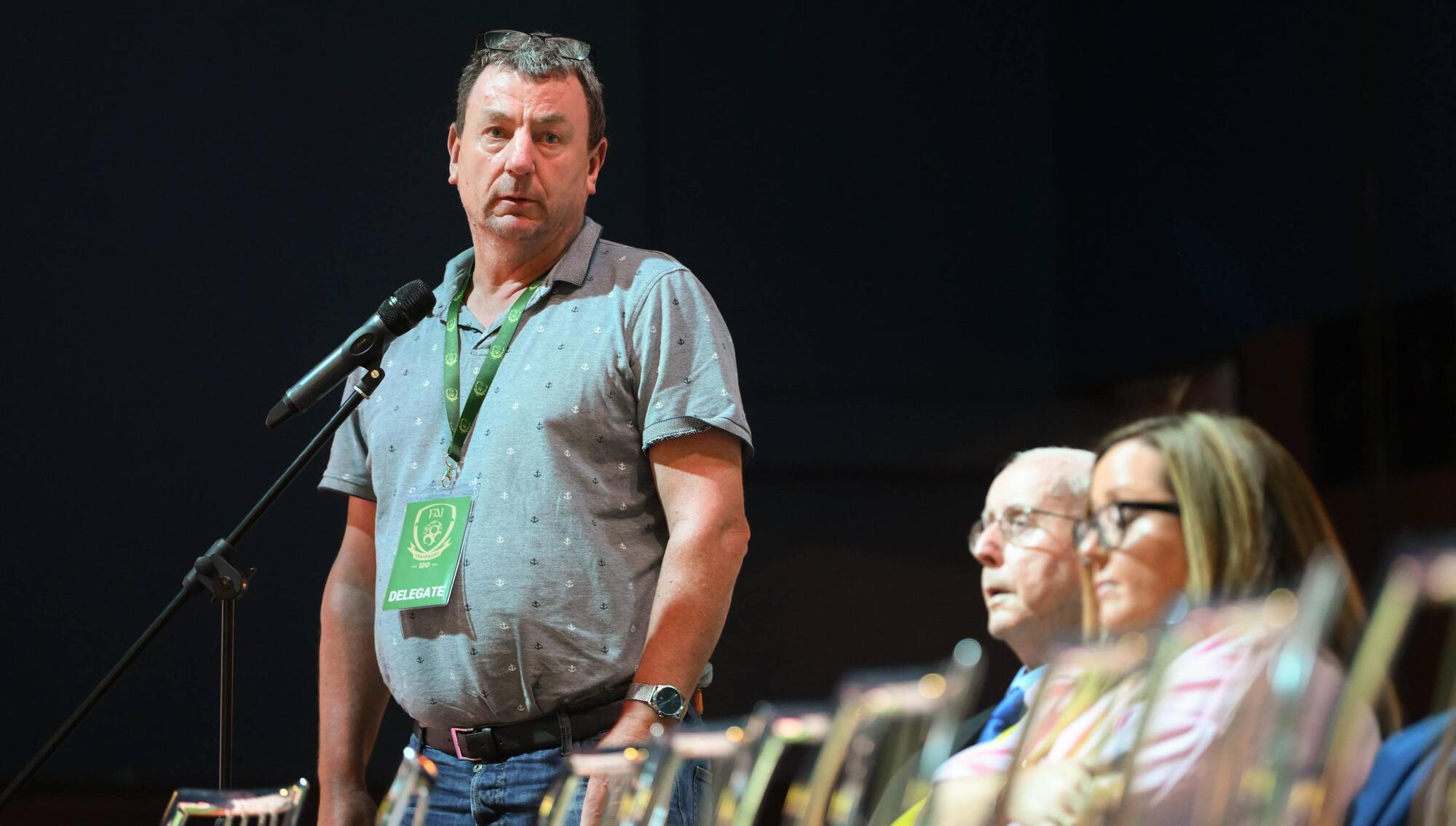
WELCOME: National Vice President of the ISRS Sean Slattery welcomes new rules and also the speed of their approval. Pic: Stephen McCarthy

WELCOME: National Vice President of the ISRS Sean Slattery welcomes new rules and also the speed of their approval. Pic: Stephen McCarthy

Sweeping anti-violence and abuse penalties, which carry up to three year suspensions – and possibly longer - have been introduced across Irish football.

Leagues will inform member clubs in the coming days of the tough new sanctions which have been approved by the FAI Board and Assembly to deal with the growing issue of assault and intimidation of referees at amateur and schoolboy level.

Anyone found guilty of “assaulting (ie) deliberately striking a match official that involves head butting , repeated punching/kicking and/or assaults involving more than one player and/or Official from the same team” will receive ‘at least 36 months’ suspension.

Perpetrators guilty of “assaulting - deliberately pushing, pulling, spitting at, striking, elbowing, punching, kicking” a match official will be banned for a minimum of one year.

A 12 match ban ‘at least’ will be imposed for those “deliberately placing a hand on, brushing against or obstructing a match official”.

Swearing at referees will also result in significant sanction, with “foul, insulting or abusive language directed towards a match official” securing an automatic three game ban.

Of most significance - say the Irish Soccer Referees Society (ISRS) – is the ‘at least six match’ suspension for anyone whose “behaviour is aggressive, intimidating or threatening towards a Match Official”.

The new rules are part of the ‘Governance Disciplinary Section 7’ regulations which have recently been approved and passed by the FAI and follow an eight-month consultation process since the issue was first raised last November.

A player or club official who even attempts to assault a referee, without actually achieving their aim, will immediately be suspended pending an investigation, while clubs where repeat offences are reported “may be subject to a separate investigation by the Disciplinary Regulations Officer”.

An added layer of insurance that the FAI expects will guarantee the consistent delivery of justice, comes with the administration of sanctions under ‘Section 7’ rules.

No longer will penalties be at the discretion of the leagues across the country, with all sanctions for the various offences fixed, leaving no room for those bodies who are seen as a soft touch, or those who traditionally impose lenient sentences.

The new disciplinary laws have been pushed through for the start of the new amateur season – those leagues which don’t play during the summer – and will come into force for all leagues once the local administrators have communicated the measures to their member clubs.

The FAI has not formally announced the changes to the public or media, but the Irish Soccer Referees Society say it hopes that the impact will be immediate once up and running.

The ISRS described the changes as “most welcome in the protection of match officials and for the good of the game in general” and believe they will encourage younger people into football as match officials.

National Vice President of the ISRS Sean Slattery told the Irish Examiner that credit must go to the FAI for the speed in which the rules had been agreed and approved by the association.

“We certainly welcome these new rules, we are glad to see them coming in and we do welcome the speed of that process,” Slattery told the Irish Examiner.

“At the recent AGM our two representatives on the assembly thanked the FAI for these developments and I would echo that I am delighted that they’ve stuck to their word on this, from where we were last November.

“We will now wait to see how long the process of realising there are tough new rules in place takes, to seeing actual changes in the game, but at least we’re off and running.” 

The stiffer penalties imposed across football follows an extremely challenging period for match officials and the FAI, which was first highlighted following the suspension of matches by two Dublin schoolboy and schoolgirl leagues last year.

Incidents of serious assaults in Cork and Dublin have blighted the amateur game in recent years, with referees threatening an all-out boycott of soccer, prior to the change of approach by the FAI.

The rules are also set to see changes being introduced around social media and public remarks made about referees by players and club officials on various digital channels – which will also be in place across the League of Ireland.

Those involved in brawls or fights will also face six match suspensions, while the issue in relation to schoolboy and schoolgirl (juvenile) players will see automatic one match suspensions for red cards, with investigation to follow more serious incidents.

The boycott of matches by secretary of the NDSL and MGL, Tony Gaines, last year was a significant step in changing the attitude of football towards officials.

That single act saw 13,000 players and 870 teams without matches over a weekend programme of more than 400 games, and hit home the seriousness of the situation.

The action was taken after a female match official was badly traumatised following a ferocious verbal assault at a match in Dublin, which forced her to leave refereeing.

The new rules will also impose severe sanctions against clubs where repeat offenders operate with clubs facing penalties (to be imposed by the FAI’s disciplinary committee) for failing to effectively manage trouble-makers within their membership.

Another significant development comes in how an incident, which may lead to a multiple of rules broken, will now be treated as a series of individual offences, rather than as one single event.

If, for example, a player is sent off for a foul or another red card offence – that will be dealt with on its own - but then if the player becomes involved in an act which is threatening or violent towards the referee following the red card, that will be a second offence.

If after the game the player or others then confront the referee then that will be another separate offence.

The referee will then file three separate reports, with the player, and possibly the club, facing sanctions for the individual offences, where previously that would have been treated as a single incident.

Recently the Oireachtas Joint Committee for Sport recommended that national governing bodies would face funding sanctions if they failed to tackle the scourge of abuse against match officials, which is also an issue in GAA and other sports.

Since the issue of violence and intimidation was raised last November more serious assaults have taken place against referees.

In Dublin two incidents took place this year - in one a schoolboy player punched a referee while in an alleged attack a referee was kicked severely in the knee and subjected to further abuse by a perpetrator.

x

More in this section

Sport

Newsletter

Sign up to our daily sports bulletin, delivered straight to your inbox at 5pm. Subscribers also receive an exclusive email from our sports desk editors every Friday evening looking forward to the weekend's sporting action.

Cookie Policy Privacy Policy Brand Safety FAQ Help Contact Us Terms and Conditions

© Examiner Echo Group Limited