Qatar 2022: Full steam ahead for a winter World Cup like no other
The world awaits. Literally. The 2022 FIFA World Cup — just before next Christmas — will be like no other with a money-no-object host desperate to reshape the world view of its opulence and oppression
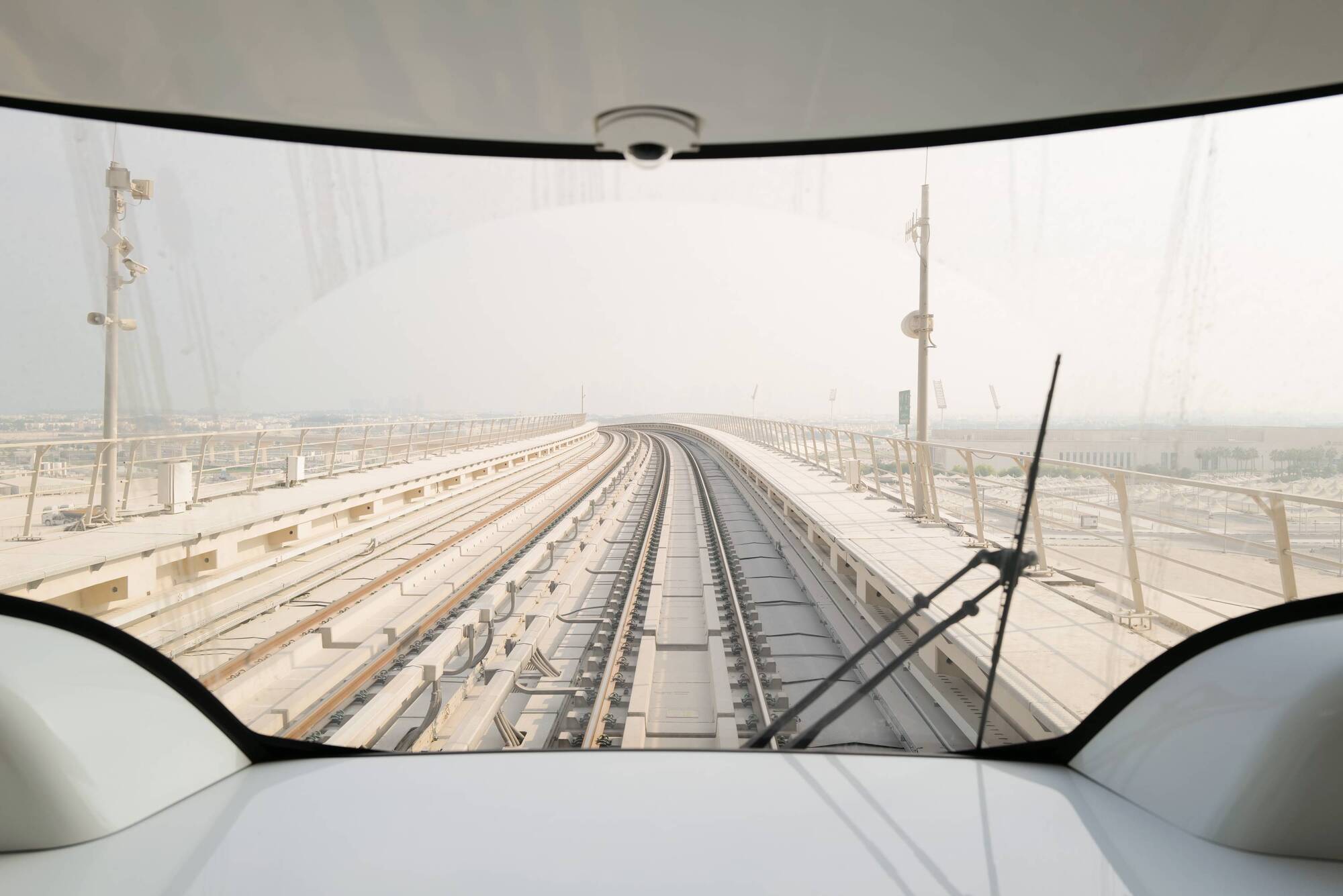
The view looking ahead from a Doha Metro Train, the automated rapid transit system underground and overground railway built for the Qatar 2022 World Cup in Doha, Qatar. 	Picture: Matthew Ashton - AMA/Getty Images

The view looking ahead from a Doha Metro Train, the automated rapid transit system underground and overground railway built for the Qatar 2022 World Cup in Doha, Qatar. Picture: Matthew Ashton - AMA/Getty Images
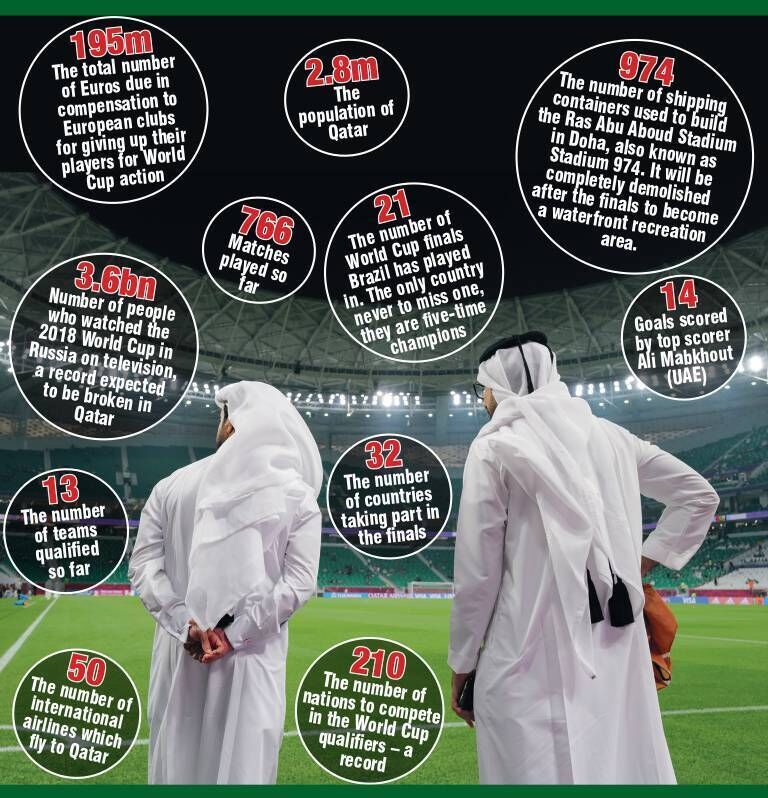
Imagine a country so small it would fit into Munster twice and so rich that it could spend a figure close to Ireland’s entire national debt on hosting a football tournament, and you’ll begin to realise why FIFA World Cup 2022 is being billed as something very very different.

This, we’re told, is going to be a World Cup like no other. A spectacular money-is-no-object tournament in oil-rich Qatar that breaks new ground for football and delivers a fan experience so different as to obliterate anything supporters have ever seen before.

Think football in the desert with up to four games a day, spectacular new stadia located close together with high-tech public transport between them, a traditional Arab welcome, quirky accommodation and miles of sandy beaches.

If you believe the hype — and there’s every reason to do so — it promises to be the biggest show on earth, taking place on a peninsula in the Persian Gulf which measures just 11,600 sq km. That’s less than half the size of Munster which, by the way, comes in at 24,67km2 in all its glory.

“For all those who love football, this will be like a toy shop is for a child,” was FIFA president Gianni Infantino’s take on the tournament in a recent press conference. Even if the absence of Irish green diminishes the product from this corner of the world.

Not just a World Cup but a holiday

That doesn’t mean, however, that Irish fans won’t be in Qatar. Travel experts point to a growing trend of fans, families and friends combining an annual holiday with a sporting experience, and the Middle East provides an opportunity to take in sunshine, football and culture all at once. It may be winter there now, but temperatures still top 24 degrees which is more than warm enough to feel like a real holiday.

In fact, what better way to upgrade a winter vacation than by watching your team’s Premier League heroes take on the world in between trips to the beach, whether that’s Mo Salah for Egypt, Cristiano Ronaldo for Portugal (if either make it there) or Paul Pogba for France. And, for those of a more cynical nature, there’s always a chance to join the ‘anyone but England’ brigade and cheer on whoever is drawn against Gareth Southgate’s side in April’s group draw.

Whatever your reason for watching, at home or in Qatar, Fatima Al-Nuaimi, communications executive director of Qatar’s supreme committee for organising the tournament, is certain the first World Cup in the Middle East will be a success.

“Fans can look forward to a unique experience. A tournament that will show the best of Arab and Qatari hospitality and open the doors to an entire region,” she said. “A compact World Cup, bringing them all together in one place, with the possibility of watching two games in a day. It’s a tournament for everyone, a tournament of firsts, and a tournament where everyone will be welcome”.

That last statement is highly targeted because of the controversy surrounding Qatar’s selection to host given its stance on equality and a poor human rights record — something we’ll focus on in due course.

Organisation and preparation.

But what is not in question is the country’s ability to organise a high-quality World Cup. There will be no last-minute rush to remove the debris outside new stadia and no transport projects unfinished as players take to the pitch.

Seven out of eight new World Cup stadia have already been opened and the eighth, the 80,000-seater Lusail stadium which will host the World Cup Final, is expected to be unveiled in January.

In addition, 82,500 hospitality packages have already been sold — that’s 500% up on Russa 2018 at the same stage, whilst 23 teams have already visited Qatar to select a base camp.

Several major transport infrastructure projects have also been completed to link stadia, with estimates that Qatar has spent $220bn on the tournament so far. That’s almost enough to wipe out the entire national debt of the Republic (€240 bn or $272bn according to Finance Minister Paschal Donohoe’s budget in October).

It sets the bar for hosting a World Cup incredibly high at a time when most countries are desperately trying to hold their economies together in the face of a pandemic — which is something for Ireland and the FAI to think about as they discuss a potential joint bid with the UK for the 2030 edition.

Controversy behind the hype.

It’s also a reminder that not everybody is happy to see the World Cup taking place in Qatar.

So, before we address the highlights of a winter World Cup in the Middle East, it really isn’t possible to celebrate it without balancing the conversation with Qatar’s dismal human rights record, particularly in relation to the way it has historically treated migrant workers — including those who built the World Cup stadia. which has been heavily criticised by Amnesty International and many other political commentators.

The fact that homosexuality is illegal and punishable in Qatar is another significant barrier which FIFA conveniently ignored in the chase for big bucks and global reach. FIFA has promised rainbow flags will be allowed inside stadia to promote equality, but that doesn’t go anywhere near to addressing whether the LGBTQ feel comfortable to attend.

Whatever Qatar does between now and November it won’t please and convince everyone, especially those who accuse it of ‘sports washing’ its reputation by spending so much on a World Cup that will be shown across the globe.

The moral dilemma.

It leaves many with a conundrum. Do we just enjoy the World Cup for what it is and celebrate the experience? Or should we make a statement? The Danish national side has opted to make a statement, printing messages in support of human rights on the front of its shirts to be worn at the finals. Other teams are likely to follow suit and Qatari organisers are keen to be seen as tolerant.

FIFA says the country has made big strides in addressing human rights issues, bringing in new legislation to stamp out some of the worst practices in the building trade — although Amnesty points out this hasn’t always made a difference on the ground.

Infantino remains buoyant, however.

“We will enjoy being all together in one place,” he insisted “Fans will be treated to top-class football in eight state-of-the art stadiums. We are looking forward to the opportunity to bring people from different backgrounds together.

“What I see here is a country that is preparing to welcome the whole world, and every fan, but also looking into where improvements are needed and taking real steps to do so in many different areas, particularly in relation to human rights and workers’ welfare.”

That’s a story that will run and run, and don’t’ expect it to go away even when the football kicks off.

The upside behind the offside.

There’s no denying that the Qatar World Cup will be a fascinating watch. In football terms it’s got everything. A winter World Cup, played in mid-season and in unfamiliar surroundings, could really shake up the competition and provide added story lines.

Could it be time for an African side to finally deliver and reach the latter stages? Will the big guns of Brazil, Argentina, Germany, Spain, Belgium and France be able to adapt? Will European champions Italy or Portugal’s Ronaldo even be there? Will Denmark again prove to be a surprise package and can Messi triumph in what may be his last tournament?

Hassan Al-Thawadi, secretary general of Qatar’s Supreme Committee for Delivery & Legacy, believes it will be remembered for more than just the football played, saying: “It will be a tournament that will forever be remembered as innovative, sustainable and transformative when people came from all over the world to visit the Middle East and Arab world for the first time and have life-changing experiences.”

Let’s hope he’s right because football, and the world, could do with a lift.

More in this section

Sport

Newsletter

Sign up to our daily sports bulletin, delivered straight to your inbox at 5pm. Subscribers also receive an exclusive email from our sports desk editors every Friday evening looking forward to the weekend's sporting action.

Cookie Policy Privacy Policy Brand Safety FAQ Help Contact Us Terms and Conditions

© Examiner Echo Group Limited